Closed Loop
Deep Dives
Explore related topics with these Wikipedia articles, rewritten for enjoyable reading:
-
Fischer–Tropsch process
13 min read
The article references 'chemistry perfected by the Germans a century ago' for coal-to-liquids technology. The Fischer-Tropsch process is this exact technology, developed in 1920s Germany and used extensively by Nazi Germany during WWII to produce synthetic fuels from coal when cut off from oil supplies. Understanding this history provides crucial context for China's current strategy.
-
Thorium-based nuclear power
14 min read
The article discusses China's experimental thorium molten salt reactor as a potential breakthrough for energy independence. This Wikipedia article explains the science behind thorium fuel cycles, why they've been pursued as alternatives to uranium, and the technical challenges that have prevented widespread adoption despite decades of research.
-
Power of Siberia
10 min read
The article mentions 'Power of Siberia 2' pipeline bringing Russian gas to China. Understanding the original Power of Siberia pipeline—its geopolitical origins, construction challenges, and role in Russia-China energy relations—provides important context for why China still pursues coal-to-gas despite having access to cheap Russian natural gas.
“Few would venture to deny the advantages of temperance in increasing the efficiency of a nation at war.” – William Lyon Mackenzie King
In northern China’s Inner Mongolia Autonomous Region, a sprawling petrochemical facility converts thousands of tons of coal per day into chemicals and fuels traditionally derived from crude oil. Commissioned in 2008, the Shenhua Ordos Coal-to-Liquids (CTL) plant was the first of its kind in the country. Leveraging chemistry perfected by the Germans a century ago, CTL technology is quite flexible, allowing for the production of diesel, gasoline, and precursor chemicals for plastics.
According to a recent Reuters report, China’s CTL industry consumed 276 million tons of coal last year, a staggering total that is expected to double within the next five years. If those plans are carried out, China’s CTL capacity would offset roughly 1.2 million barrels of oil per day. Not all of this coal is used to make oil products, though—an unexpectedly large share is being used to produce synthetic natural gas:
“The fastest-growing sector in the industry is expected to be coal-to-gas.
The capacity under construction is around four times what was built over the past decade, according to Reuters’ analysis of figures from Agora Energy China, the China National Coal Association and Guosen Securities.
That would more than double annual capacity to 19.5 billion cubic metres (bcm), equal to roughly a fifth of China’s LNG imports last year.
Most of the new plants are slated for coal-rich northwestern China, where 12 bcm per annum of coal-to-gas capacity is under construction, mostly for energy, with another 10 bcm planned, according to Guosen Securities.”
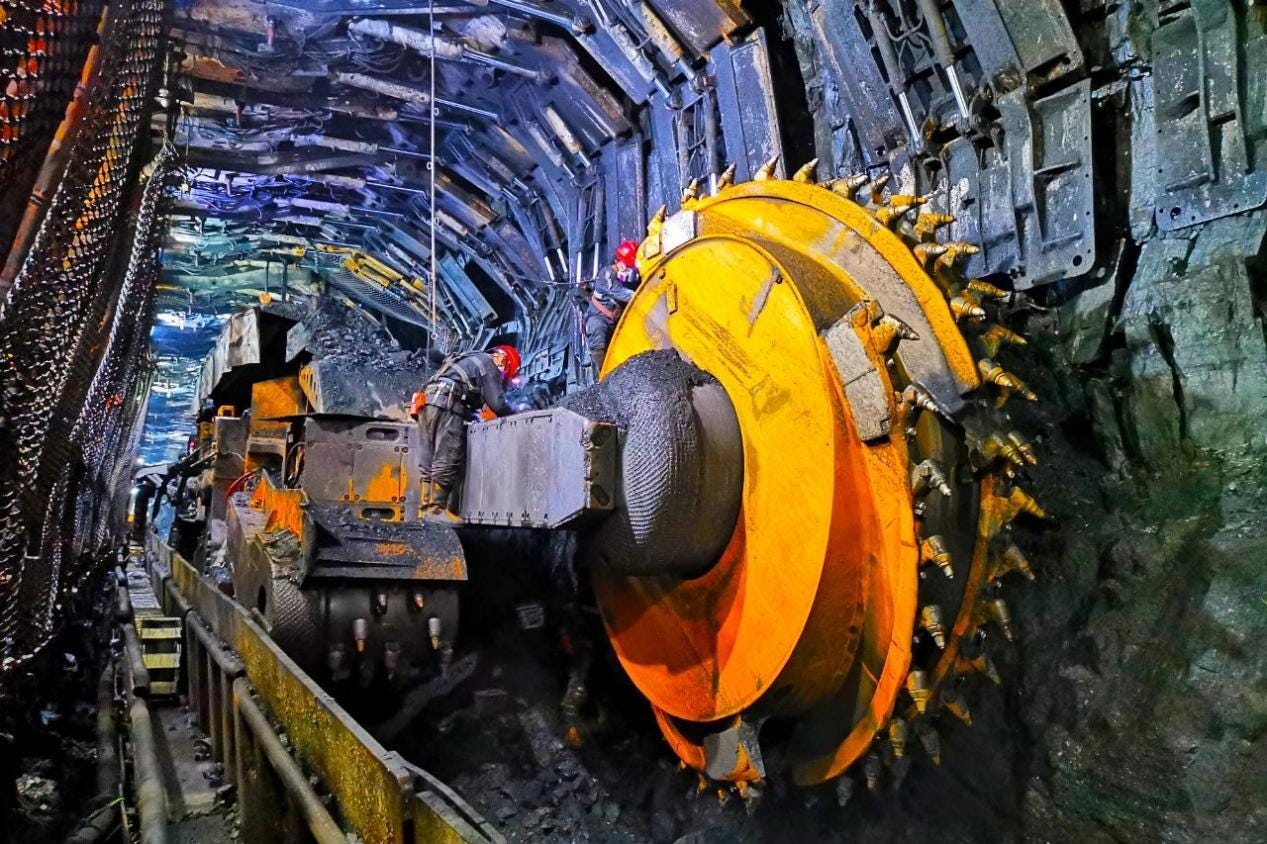
For a sense of scale, 19.5 billion cubic meters is equivalent to 1.9 billion cubic feet per day (bcf/d), roughly the capacity of Canada LNG’s new export facility in Kitimat, British Columbia.
There is, of course, little in the way of economic or environmental justification for these projects. Natural gas is in abundant supply globally, and LNG prices are at their lowest levels in years. Russia has begun construction of the Power of Siberia 2 pipeline, which will bring an additional 5 bcf/d of cheap gas into China. The capital intensity of CTL projects is huge, and the carbon footprint of coal-derived natural gas is substantially higher than drilling for it directly.
Instead, China is jumping through such elaborate
...This excerpt is provided for preview purposes. Full article content is available on the original publication.