The Biology of Female Aging: Hormones, Health, and Longevity (Part 1)
Did you know? The ovary is the first organ to age in humans. This reality shapes the trajectory of women’s health starting at around age 40—sometimes even as early as 35 - when they experience accelerated health deterioration that leaves them living, on average, 9 years in poorer health than men. This simple yet profound fact exposes the blind spot in today's "longevity" conversation: for women, aging well isn't primarily about optimization—it's about addressing the fundamental hormonal cliff happening in midlife, that traditional medicine still largely ignores.
I was lucky (or unlucky) to confront hormonal imbalances early, which led me down a deep dive into the intricate dance of female hormones, lifestyle, and life stages. Over the past couple of years, I’ve immersed myself in research, from conferences to books to podcasts. And while menopause and perimenopause are finally having their cultural moment (if you haven’t heard Gwyneth Paltrow & Oprah talk about menopause, you live under a rock), we’re still light-years away from truly informing—and, most importantly, treating—women properly.
This gap between knowledge and action has become my mission. I’m working on something new in this space, starting in France, to help bridge this divide (Know a top OB-GYN here or are a physician interested in collaborating? Reach out here: maud.pasturaud@gmail.com).
In this two-part newsletter series, I'll map out the biological changes affecting women 35+, their health implications, and the current landscape of treatments.
Let’s go.
Disclaimer: I am not a doctor, and this is not medical advice. This newsletter simplifies complex biological concepts.
Ovarian Aging = Female Aging
Science Fact
In women, the ovaries are the primary producers of hormones that regulate not just reproduction, but virtually every system in the body. Ovarian function—particularly egg (follicle) production—begins to decline before birth and continues to do so steadily throughout a woman’s life:
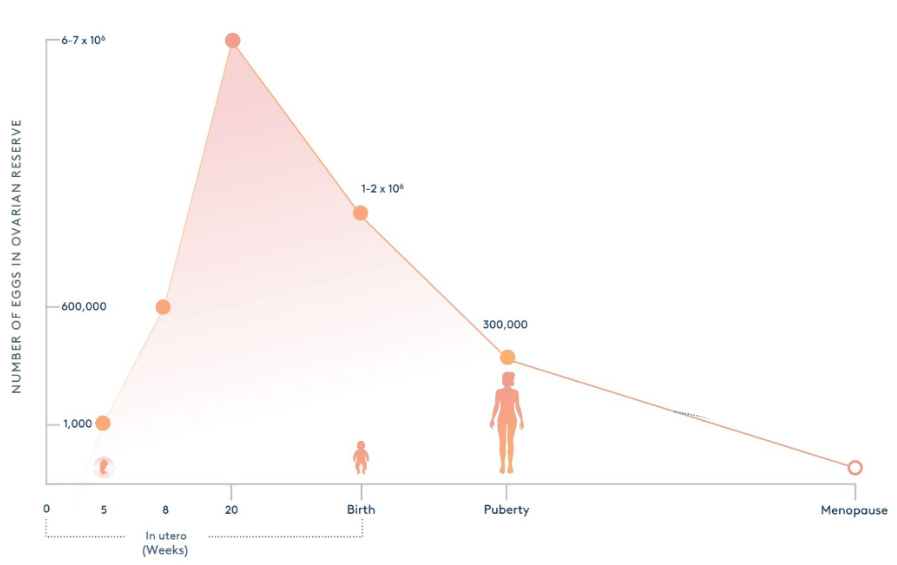
Women’s Ovarian Function Over Time
Eggs (follicles) are more than just reproductive cells—they also drive the production of estrogen and progesterone, the key hormones that influence everything from metabolism to brain function. As a woman’s egg pool depletes over time, this hormonal factory becomes less efficient, leading to major shifts in hormonal balance:
First, ovulation becomes less predictable.
Then, cycles become irregular (perimenopause).
Finally, menstruation stops (menopause, officially defined as 12 months after the last period).
This is why defining menopause solely by
...This excerpt is provided for preview purposes. Full article content is available on the original publication.