Flu antivirals: What to know and when to use them
I (Katelyn) have escaped to the Amazon, where the internet cannot even reach me. So this week, I left the YLE keys with my team and our good friend—and scientific communication rockstar—Dr. Jess Steier. You’re in good hands. Jess, take it away…
I have two kids in elementary school, a petri dish if there ever was one. Every day during flu season feels like a game of Russian roulette. My husband (an ER doc), the kids, and I got our flu shots before Halloween—we follow the “flu before boo” guidance, though it’s not too late if you haven’t gotten yours yet. We’ve had a few colds this season, but have miraculously dodged the flu so far, even as it tears through their school like a rumor in the cafeteria.
With flu activity surging, so are the questions (including from YLE readers), falsehoods, and concerns about antivirals. One viral TikTok blames Tamiflu for a child’s hallucinations, but the flu itself is a much more likely cause. A popular homeopathic account shared a “Tamiflu tea” recipe (an herbal drink with no proven antiviral effect) to nearly half a million followers. Posts warning parents to “never take Tamiflu” are racking up thousands of likes.
It’s scary to see your child sick, and you want to make the right decisions in a world saturated with conflicting information. So let’s cut through the noise.
Before we begin, though, a quick note: This isn’t meant to be medical advice (we can't diagnose you), and you should consult with a clinician for any diagnosis or treatment advice.
What flu antivirals actually do
There are four FDA-approved antiviral medications for flu. All require a prescription. Here’s a quick rundown:
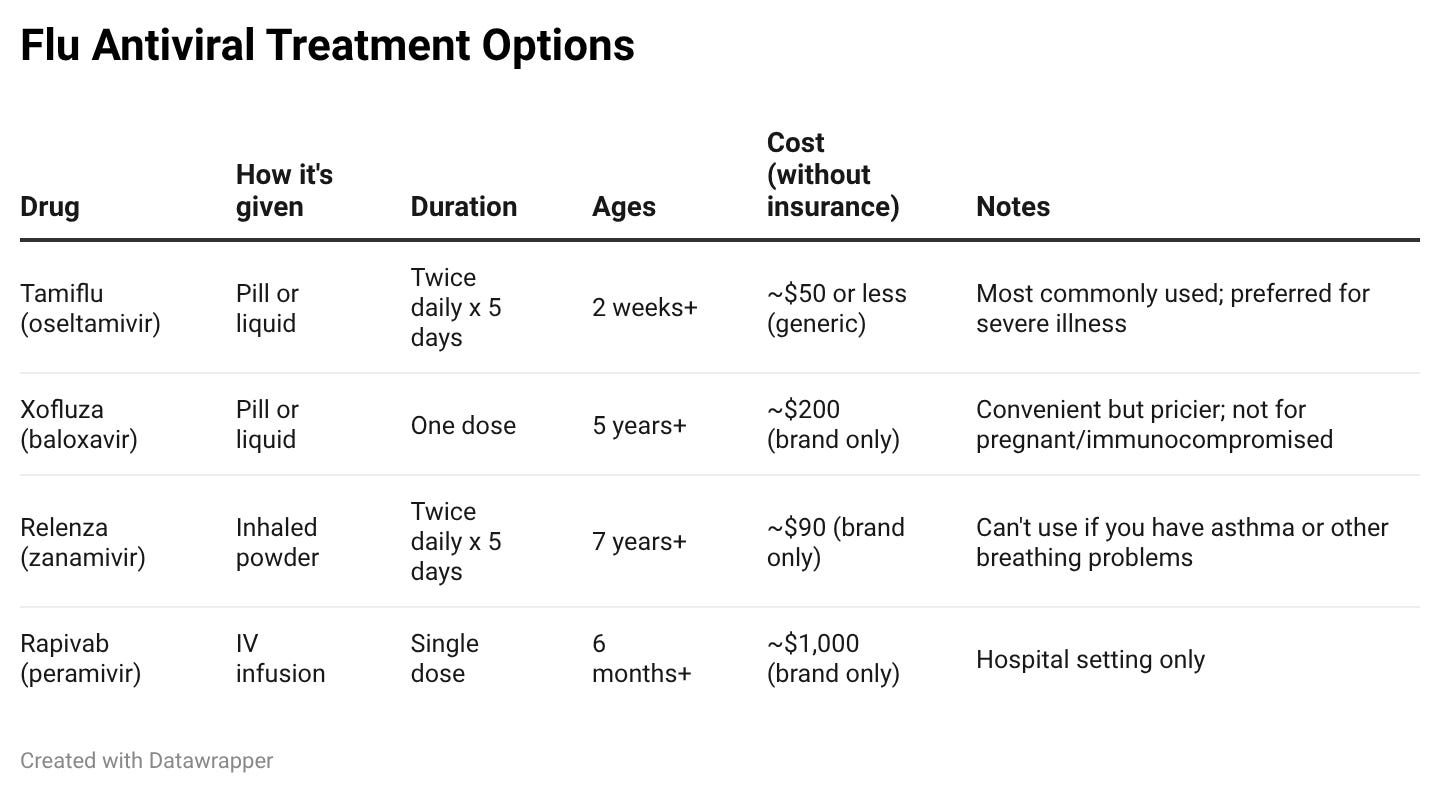
For most of us, we’ll be choosing between Tamiflu and Xofluza. The others have specific limitations—Relenza requires an inhaler device and isn’t safe for people with respiratory conditions, and Rapivab is IV-only, typically reserved for hospitalized patients.
Here’s what antivirals can do:
Shorten illness (how long you’re sick) by about one to two days (potentially three days in young kids when started within 12 hours of infection)
Reduce severity of symptoms (how crappy you feel) and risk of certain complications (e.g., ear infections in kids)
Reduce risk of death in high-risk groups (especially older adults)
Prevent flu after a known exposure (if someone in your household has the flu, taking antivirals right away can cut your risk of
This excerpt is provided for preview purposes. Full article content is available on the original publication.