Are the Epstein Survivors creating false memories?
Deep Dives
Explore related topics with these Wikipedia articles, rewritten for enjoyable reading:
-
False memory
17 min read
The article directly questions whether survivors are creating false memories, referencing 'recovered memory techniques' and the phenomenon of memories being 'excavated' by third parties years after alleged events. Understanding the science of false memory formation is central to evaluating these claims.
-
Recovered-memory therapy
10 min read
The article alludes to memories being 'discovered by others' and 'impressed onto' the subject 16 years after the alleged events. This controversial therapeutic practice and the 'memory wars' of the 1990s provide essential scientific and historical context for the skepticism expressed.
-
Jeffrey Epstein
17 min read
While readers may know the name, the full scope of Epstein's trafficking operation, legal history, 2008 plea deal, 2019 arrest, death in custody, and the subsequent civil litigation landscape provides necessary factual grounding for understanding the survivor claims and settlement dynamics discussed.
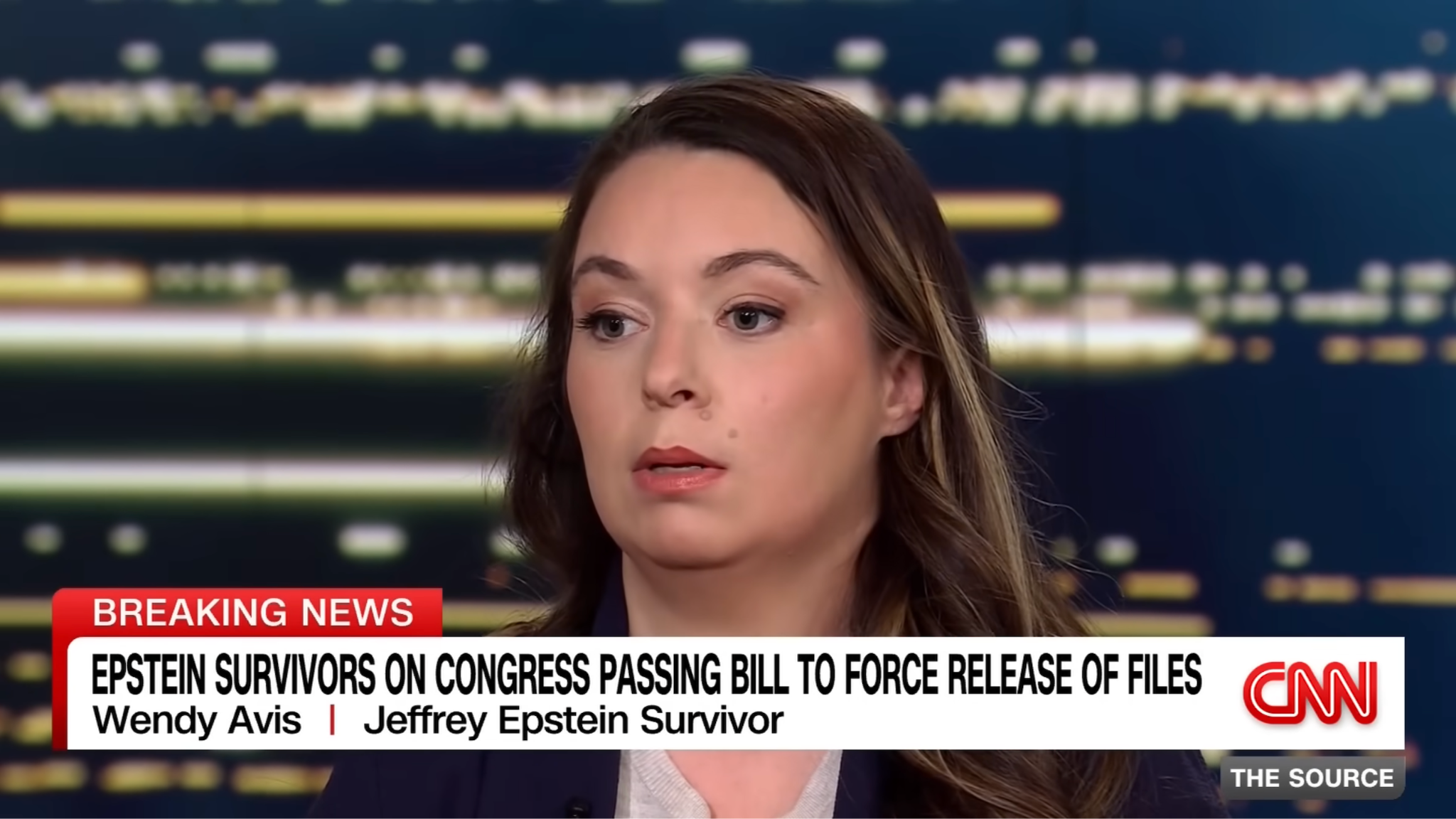
One of the new “Epstein Survivors” to have recently emerged, at least in public, is Wendy Avis, who also goes by the name Wendy Pesante. She made her debut in connection with the first round of Epstein-related brouhaha at the US Capitol on September 3. There, Wendy spoke at a rally organized by the “trafficking awareness” NGO with which she is now loosely affiliated, called “World Without Exploitation” — the same outfit that produced a heavily-circulated video last week featuring “survivors” demanding the passage of legislation to ostensibly release the “Epstein Files.” Wendy appeared in the video, holding up a photo of herself at age 14, which is how old she says she was when she met Jeffrey Epstein. She held up the same photo when she spoke in front of the Capitol on November 18, flanked by allied members of Congress and a crew of kindred “survivors.”
The intended PR impact of Wendy’s public unveiling was obvious: here was yet another “survivor” coming forward, for the very first time, to reveal she’d been sexually abused at the youngest age on the generally-accepted spectrum of purported Epstein victims. No one in their right mind is going to condone a man in his 50s having any kind of sexual contact with a 14-year-old girl, nor would such contact be legal in any US state. While a great many “Epstein survivors” were adults at the time of their claimed victimization — a fact consistently elided in the blusterous media coverage and overall public perception — Wendy’s case would be much more straightforward and devoid of moral qualifiers. So it’s easy to see why the “survivors” and their representatives would want to put her front-and-center. She’s precisely the type of “survivor” who’s most likely to generate sympathy for their cause. Whatever that cause might be, exactly.
So… what does Wendy claim happened to her? What are her accusations? What were the circumstances of her purported victimization, such that she’s now being held out as a prime example of Epstein’s (and Ghislaine Maxwell’s) rampant predation — with her experience being cited to fuel a prolonged political uproar, unusually concerted Congressional action, and saturation-levels of media coverage?
In short: she won’t say what happened to her. When I saw Wendy on the evening of November 18, at a “vigil” hosted by the Democratic Women’s
...This excerpt is provided for preview purposes. Full article content is available on the original publication.