Chartbook 421: The end of American soft-power? From Coca-colonization to Fanta-ization
Deep Dives
Explore related topics with these Wikipedia articles, rewritten for enjoyable reading:
-
Soft power
11 min read
The theoretical framework underlying the entire article. Joseph Nye's concept explains how cultural influence and attraction operate as forms of power, which the article argues is now eroding for America.
-
Marshall Plan
11 min read
Mentioned as a key example of American soft power that Europeans experienced as 'a visceral encounter with a better world.' Understanding its scope and cultural impact illuminates why American hegemony was so durable.
“I felt a great disturbance in the force, as if millions of voices suddenly cried out in terror”.
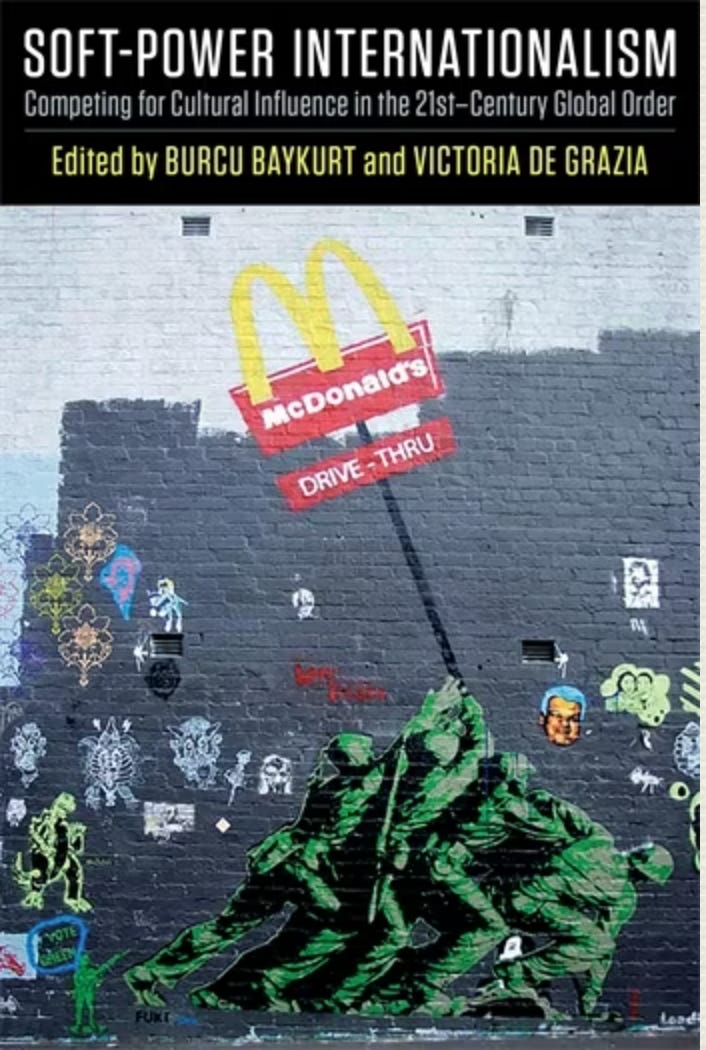
Source: Columbia University Press
American power in its heyday was hegemonic. It was anchored in soft power. Not only that, it spawned a theory of something called “soft power”.
The most dynamic and vital element of that system were not agencies of the American state but private or public-private networks. A short list might include:
The financial networks of a JP Morgan.
The alumni of influential American universities.
American philanthropy and religious and other civil society organizations - think everything from the Gates Foundation to evangelical missions.
The inspiration of American politics from civil rights to MAGA.
The production systems of American multinationals, from Fordism to the platform economy.
The worldwide consumption of distinctive American products e.g. SPAM.
Broad cultural influences such a Hollywood and Hip-hop.
“Iconic” corporate branding.
As one of the smartest interventions in the cultural history of the Cold War pointed out, this was always a matter of a circulation of influence. American development through the mid 20th century was powerfully shaped by the hopes and dreams of European migrants whose real impact then reverberated back in the “old country” as a “dream come true”.
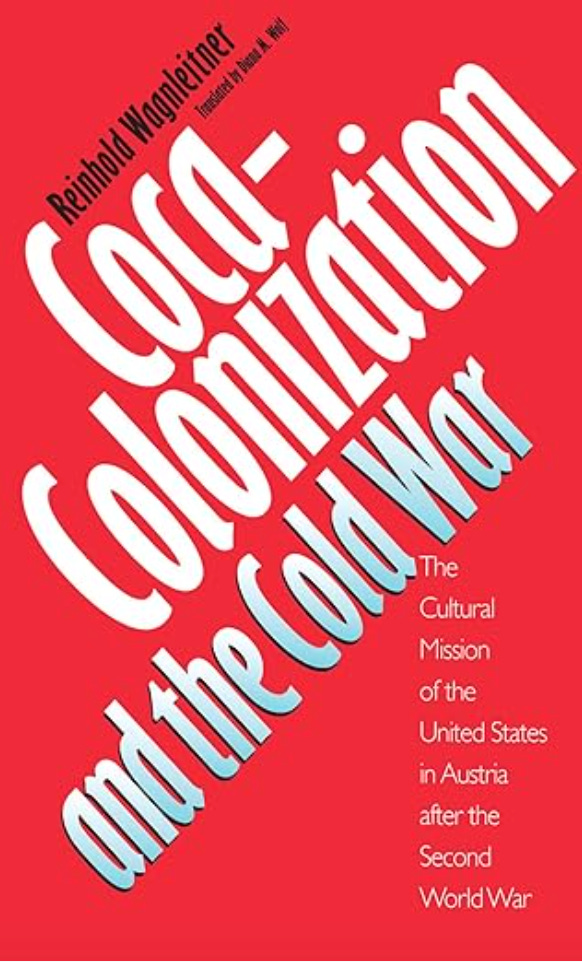
The Marshall Plan was for many Europeans experienced as a visceral encounter with a better world. My father growing up in wartime Britain never forgot the experience of running after GIs begging for gum. And Britain’s situation was relatively easy compared to that of the rest of Europe.
But such circuits - soft as they are - are malleable. Influence and money can run in different directions.
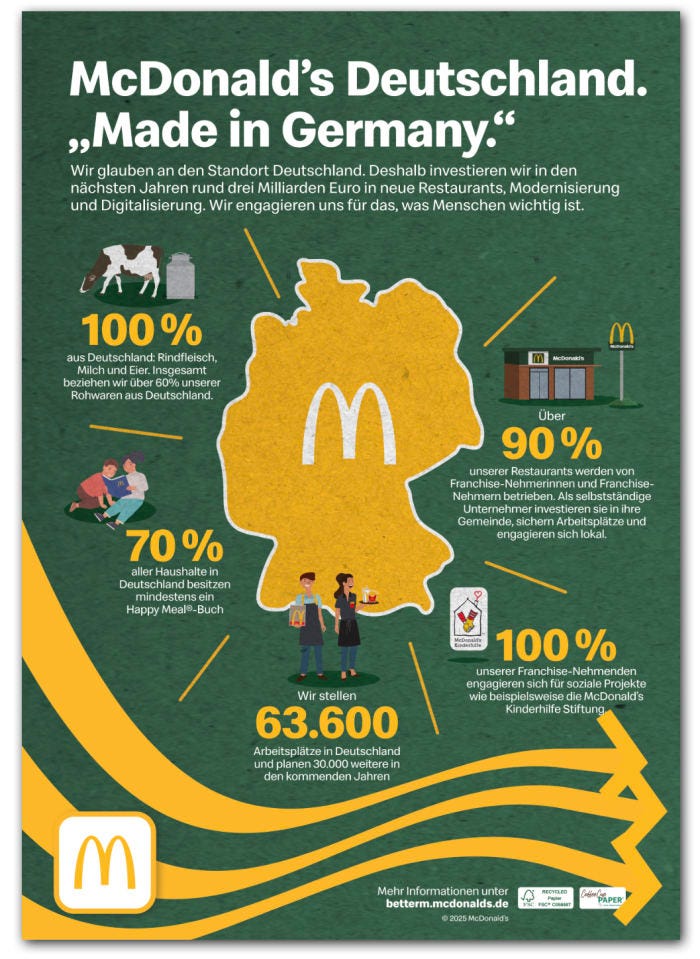
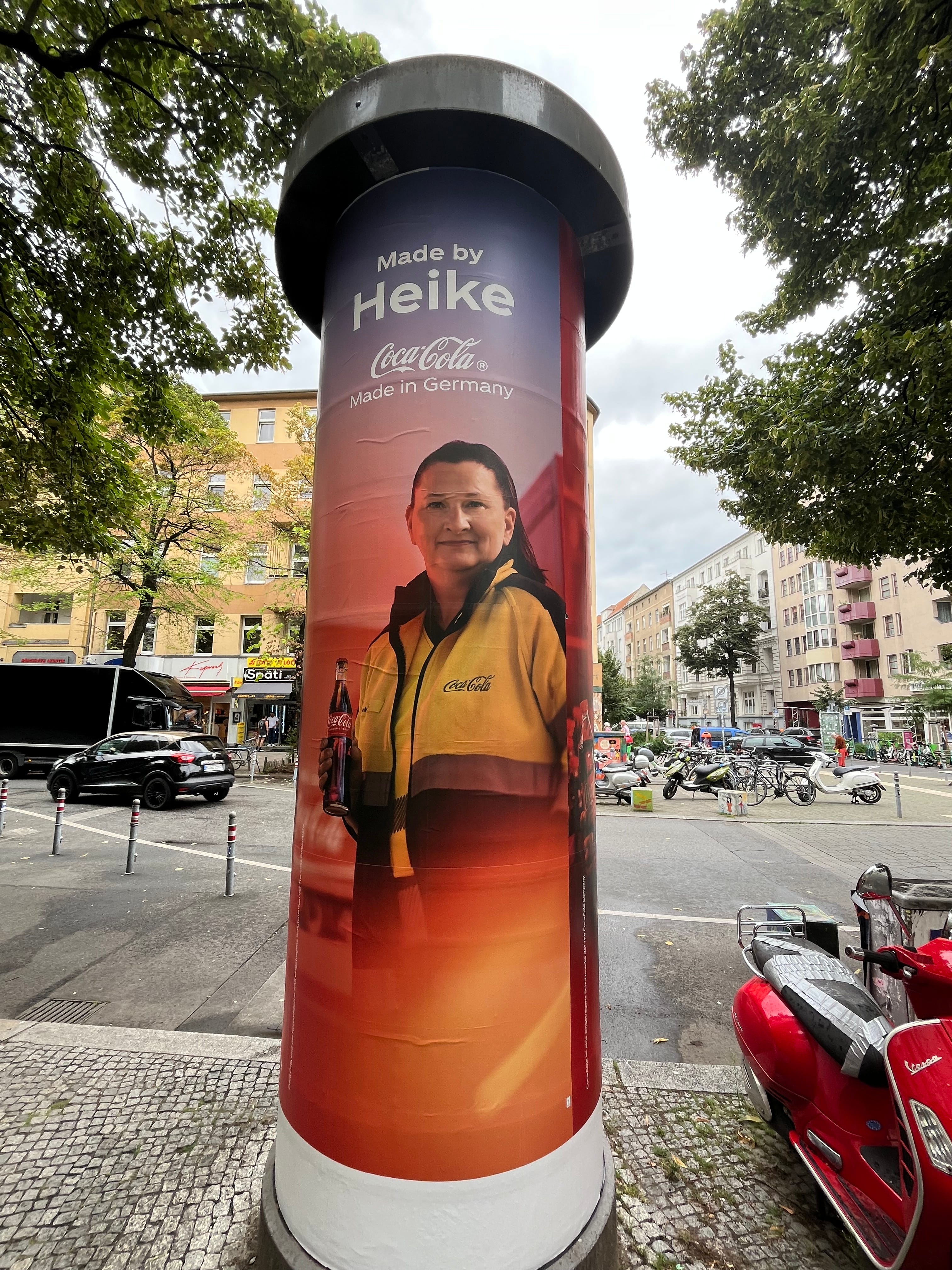
All the more striking to see this year in Berlin a series of branding efforts by local branches of US multinationals engaged in a deliberate and knowing localization - uncoupling German consumer desires from their familiar American attachment.
McDonald’s “Made in Germany”:
And Coca-Cola made by “Heike”.
As Bertrand Benoit reported in the WSJ:
...McDonald’s CEO Chris Kempczinski told CNBC earlier this month that the company had commissioned four global consumer surveys since the end of last year. “Maybe the aura around America has dimmed a little bit… We are seeing in those surveys as well that consumers are making choices to not maybe frequent American brands as much,” Kempczinski said, though he added traffic at McDonald’s restaurants didn’t seem to be affected. …
This excerpt is provided for preview purposes. Full article content is available on the original publication.