Diaspora Dialogue: Aymann Ismail is Redefining the Muslim Memoir
Deep Dives
Explore related topics with these Wikipedia articles, rewritten for enjoyable reading:
-
Tafsir
11 min read
The article centers on Quranic interpretation and how different Muslims approach understanding verses like the controversial 'daraba' passage. Tafsir (Quranic exegesis) is the formal scholarly tradition of interpretation that Aymann's mother references when she says 'there are scholars who do this.' Understanding this tradition illuminates the tension between institutional interpretation and personal spiritual seeking that drives the memoir.
-
Egyptian Americans
11 min read
Ismail is described as 'a son of Egyptian immigrants' and the memoir explores his bicultural identity. The Egyptian American community has a distinct immigration history, settlement patterns (including New Jersey where Ismail grew up), and relationship to both Islam and American identity that provides crucial context for his specific diaspora experience.
-
Islamic schools and branches
13 min read
The article highlights how Ismail's wife Mira, raised Muslim in Kentucky, practiced Islam very differently from his Egyptian-influenced upbringing—reading Quran 'for fun' versus following pre-packaged rules. Understanding the diversity of Islamic theological schools and interpretive traditions explains why two Muslims can have such radically different relationships to the same faith.
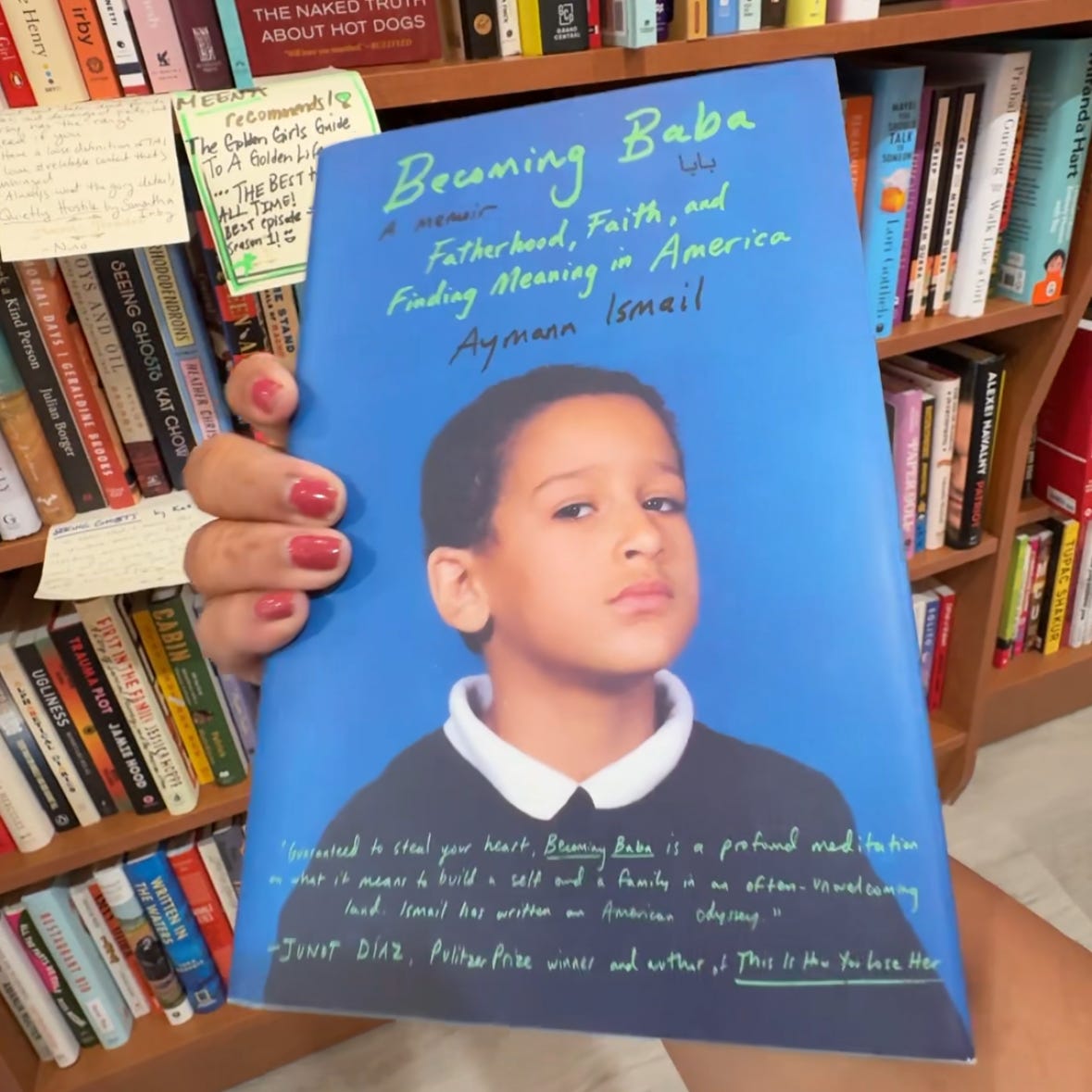
For decades, Muslim American stories have followed a familiar script: explain, defend, humanize, repeat. In the long shadow of 9/11, Muslim writers have been expected to soothe Islamophobia rather than tell the truth of their lives. Aymann Ismail, a journalist and son of Egyptian immigrants, tears up that script in his debut memoir, Becoming Baba.
His coming-of-age story moves from gender-segregated Islamic school classrooms in New Jersey to getting high and praying with his wife after their second child is born—embracing the contradictions many Muslim writers have been afraid to voice publicly.
In our conversation, Ismail was as candid as his prose, bracing for the criticism he knows is coming both from within his own community and the usual suspects outside of it.
I read your book in a day and a half, which, as a parent, is saying something. What I loved most was how messy it is, how you don’t try to tie everything together neatly. Throughout all these different chapters of your life, there’s this central question: what kind of Muslim am I supposed to be?
Aymann Ismail: You’re on the money. When I first sat down to write the book proposal, my first draft was all about the trauma—here’s why I blame the world for who I am. When I read it back, I felt disgusted with how little I appreciated the experience. I started thinking about who was telling our stories as a community and what they were prioritizing.
As Muslims, we spend so much time trying to explain our humanity that we’re stuck having the same conversation over and over. What people were saying in defense of ourselves after 9/11 are the same things you’ll hear someone say 25 years later. We’re constantly trying to meet people where they are rather than being honest about what we’re actually experiencing.
But, I thought what’s more valuable than rehashing trauma? Celebrating the love stories. Understanding your parents better than you could when you were younger. Finding the joy. The way I approached the book totally changed—it wasn’t about the biggest factors in how I thought about Islam or identity. It was about these unbelievable stories, these strange vignettes in the life of an ordinary kid who just wants to do better because his parents set the bar somewhere, and he wants to reach it.
Let’s talk about Islamic school, which you first went to and
...This excerpt is provided for preview purposes. Full article content is available on the original publication.