The Battery of Southeast Asia: A Laos Hydro Play
Landlocked and with a population of only 7.6 million, Laos is one of the less visible economies in Southeast Asia. Yet this tiny country could play a critical role in the region’s energy transition because of its abundant hydro resources.
To put it simply, Laos has bet the farm on hydroelectric exports. Financed with Chinese money, Laos is expanding its hydroelectric production at a breakneck pace. But the financial, ecological, and social sustainability of this strategy is unclear.
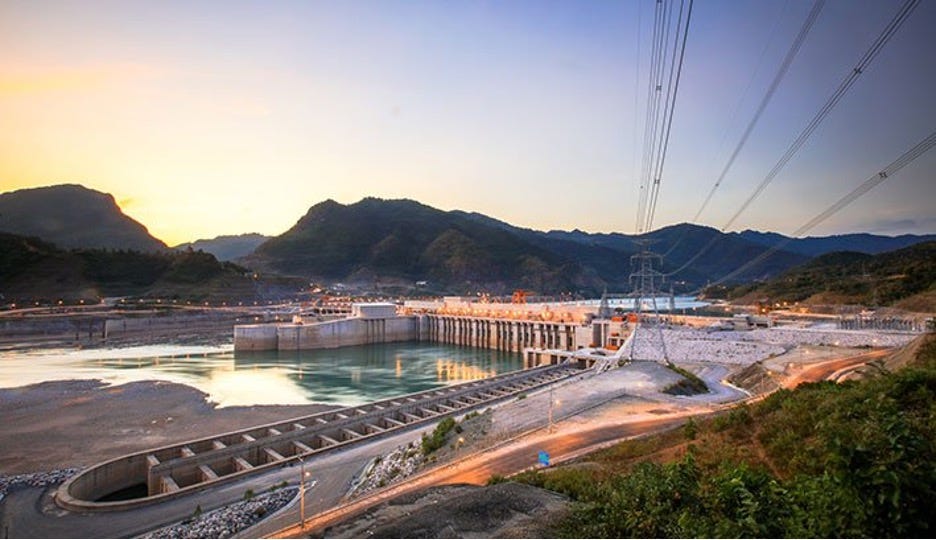
Xayaburi Hydroelectric Power Plant
1. Southeast Asia’s energy transition
Southeast Asia is a dynamic region, with a real GDP growth rate of 4.6% in 2024, well above the global growth of 3.2%. According to the International Energy Agency, Southeast Asia could account for 25% of global energy demand growth till 2035. The region also produces and uses a lot of coal. In 2023, half of the region’s electricity was generated with coal.
As Southeast Asia adapts to the energy transition, meeting the growth in energy demand without fossil fuels becomes critical. The economic success of the region’s large economies – Indonesia, Malaysia, The Philippines, Thailand, and Vietnam – creates robust demand for alternatives.
Given that the region consists of multiple major economies with different energy and economic profiles, electricity trading can play a role. Since 1997, the Association of Southeast Asian Nations (ASEAN) has pursued a regional strategy for a regional power grid. One study estimates that decarbonization in the ASEAN could cost US $800 billion less with regional electricity interconnection and coordinated energy storage investments.
This situation creates an opportunity for the small, landlocked country of Laos. Laos is one of the most hydro-rich countries in the world, with a vast river network, namely the Mekong River and its major tributaries. This river network provides the country with approximately 23,000 MW of untapped hydropower potential. Currently, Laos’ hydropower capacity stands at 9.6 GW and accounts for more than 80% of the country’s electricity generation.
In the past decade, Laos government has taken decisive action to realize this opportunity. Largely supported by foreign investments, the government has rapidly undertaken initiatives to expand its hydropower capacity, with over 80 operational hydropower plants supplying both domestic needs and electricity exports. Moreover, Laos has actively pursued power purchase agreements (PPAs) with Thailand Vietname Cambodia, and China, much in part with the ASEAN Power Grid’s goals of interconnected electricity in Southeast Asia.
A major
...This excerpt is provided for preview purposes. Full article content is available on the original publication.