What is the Time of Courage?
At such a moment Man forgets himself and the God and, like a traitor, but in the way of holiness, he turns about. For at the furthest frontier of suffering nothing else stands but the condition of time and place.
— Hölderlin, Commentary on Sophocles’ Oedipus
I believe that this subjective figure, whose dialectic is built on anxiety and the superego, always prevails in times of decadence and disarray, both in history and in life.
— Alain Badiou, Theory of the Subject
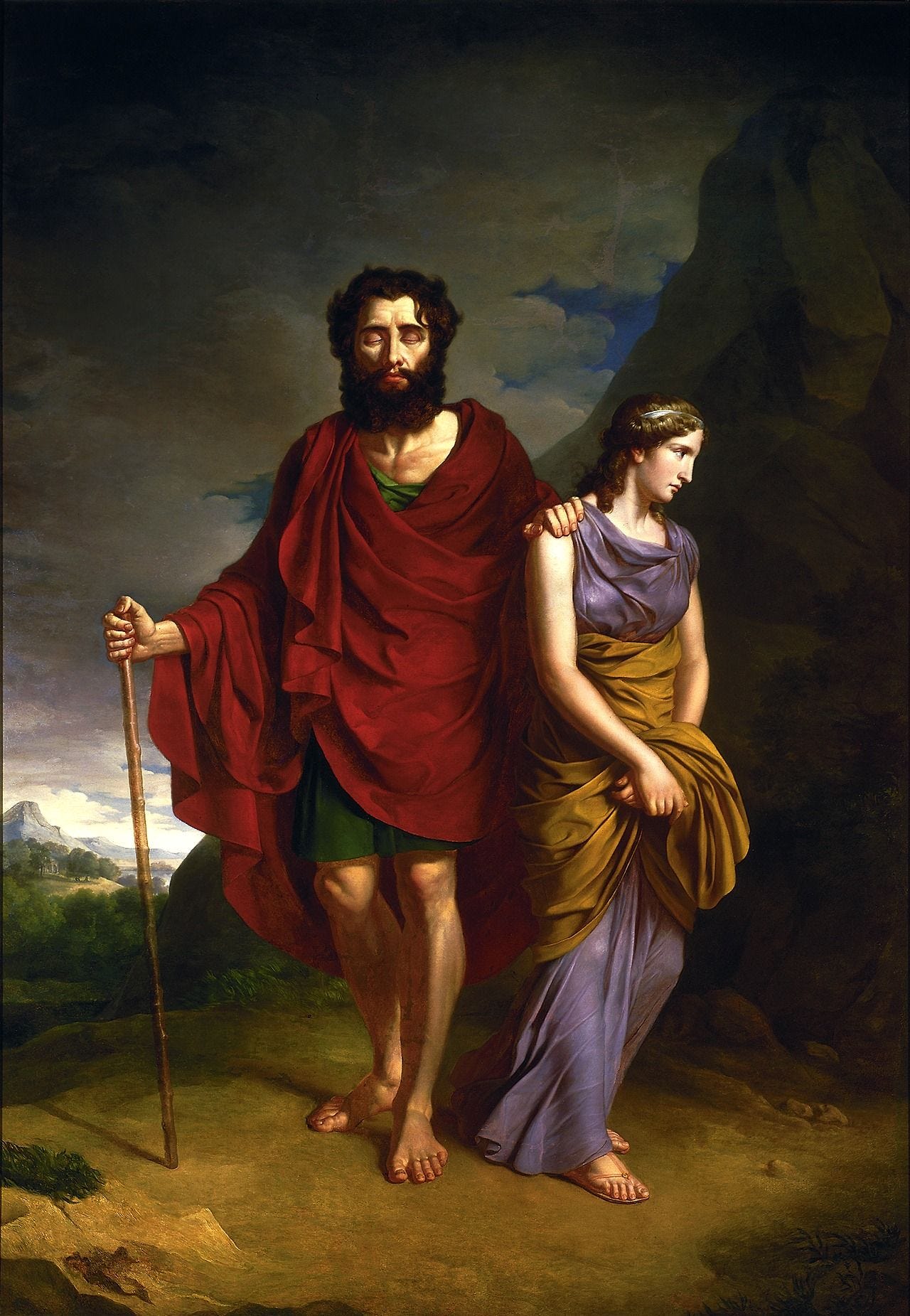
A few summers ago I read Stephen Crane’s classic American novel The Red Badge of Courage for a second time. The first time I read this novel it didn’t strike me as particularly noteworthy, and it certainly did not seem to elevate to a work that was communicating a profound philosophical message or series of themes. But I returned to this book after a surprising comment from my philosophical mentor Alain Badiou; he once wrote that it is the “best manual” for how courage produces the subject in his Theory of the Subject (1980). Badiou takes this even further and cites The Red Badge of Courage as one of the best examples of the theory of the event. This is high praise for such a seemingly modest and unambitious novel. It thus only made sense that I read the book again and in doing so I discovered what all the fuss is about.
In Badiou’s account, the novel not only describes what an event is, it offers up an account of courage that is distinctly Sophoclean. It is not common that we think of Sophocles as a figure of virtue ethics but Badiou cites Hölderlin’s short commentary on Oedipus and Antigone as opening an entirely new window into the importance of Sophocles. Similarly, in After Virtue, Alasdair MacIntyre juxtaposes Aristotelean to Sophoclean conceptions of the virtues in the following way. For Aristotle, courage is bound up with the Homeric conception of courage as a form of glory bestowed on the soldier who acts courageously for the sake of his household and his community.1 To act courageously is to bring a balance to the wider community and to affirm one’s place in the wider society. This is how we can understand Aristotle’s wider notion of the virtues, they are based on a balancing of the Golden Mean. In the case
...This excerpt is provided for preview purposes. Full article content is available on the original publication.