The Sanctity of Literacy
Deep Dives
Explore related topics with these Wikipedia articles, rewritten for enjoyable reading:
-
Dyslexia
12 min read
The author's personal journey with undiagnosed dyslexia and discovering it through their children is central to the article. Wikipedia's comprehensive coverage of the neurological basis, hereditary factors, and educational interventions would deepen understanding of this learning difference.
-
Whole language
13 min read
The article discusses the 'reading wars' between whole language and phonics instruction, citing Emily Hanford's criticism of balanced literacy. Understanding the theoretical foundations and controversy around whole language pedagogy provides essential context for the education policy debate.
-
Jeanne Chall
12 min read
The article references Chall's seminal 1967 study 'Learning to Read: The Great Debate' as evidence for phonics instruction. Her research career and influence on reading education policy offers valuable historical context for the ongoing literacy debates.
I first learned that I was dyslexic when my middle son was diagnosed in the second grade. My wife, and her entire family, are excellent readers, so given the hereditary nature of the learning disability, and my lack of childhood reading experiences, it made sense that my son’s dyslexia came from me. When we discovered that our youngest daughter was also dyslexic, it confirmed that my school struggles and lack of positive reading memories came because of my dyslexic brain. Now, as a veteran teacher, in hindsight, I’m amazed that I was never labeled with a learning disability. I never had an IEP or spent any time in a SPED classroom. Somehow, despite my dyslexia, I learned how to read; I progressed through each grade level without note.
I read my first novel in the fifth grade. Little House in the Big Woods by Laura Ingalls Wilder introduced me to a world that was larger and more significant than my suburban world. Laura’s life, while an idealised depiction of living in the woods of Wisconsin in the 1870s, felt more real to me than my privileged one. Pa smoked venison inside a hollow log, hunted alone all day in the bitter cold of the Big Woods, and played the fiddle in the evenings. The work he did was vital to his family’s survival and wellbeing. My dad, and the other dads in the neighborhood, wore suits and “went to work” doing something in offices. We never really knew what our fathers did every day. But, I remember sitting in my classroom, reading Winter DAYS and Winter Nights, and thinking that a meaningful life comes from hard work, family, and making a tangible difference in the lives of those you love. Reading about the Ingalls gave me a perspective of what family life could look like. Their lives were immeasurably more difficult than my own, but they were happy. I didn’t realize a family could be that close, and that happiness can come from hard work, togetherness, and loving care.
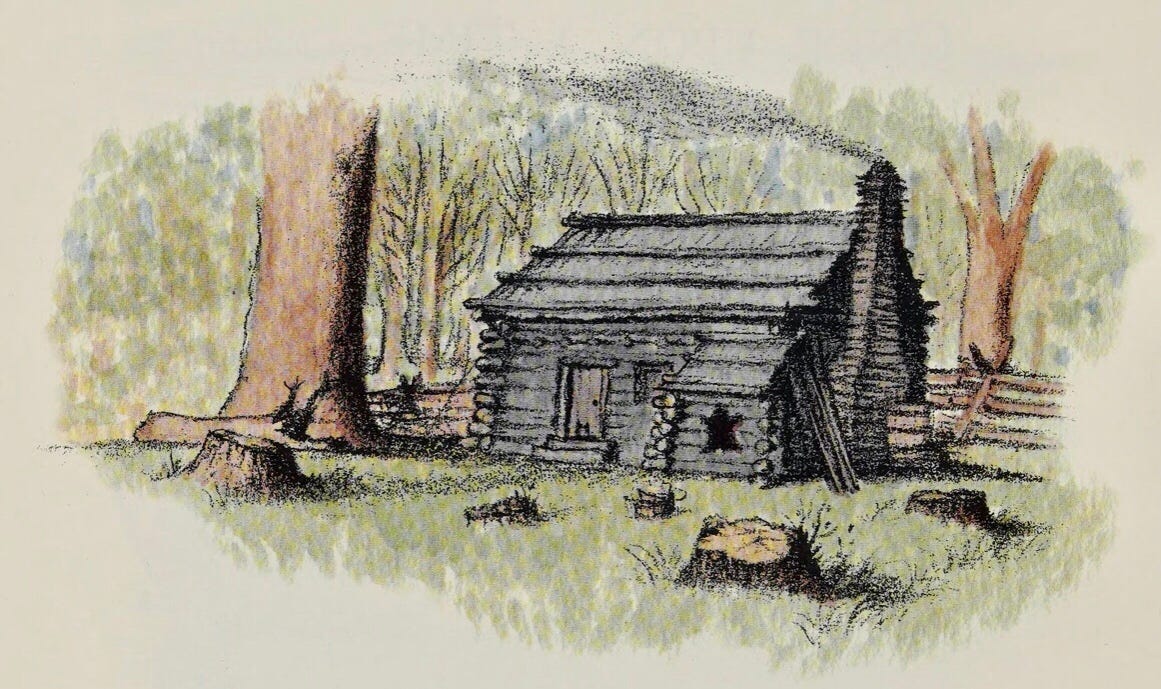
I don’t remember reading Little House anywhere, but at my desk. I don’t remember what my other classmates were reading. I don’t remember talking about the little log cabin with my teacher. I definitely didn’t talk about what I was reading at home. All I remember is losing myself in the Big
...This excerpt is provided for preview purposes. Full article content is available on the original publication.