Shining in Darkness
Deep Dives
Explore related topics with these Wikipedia articles, rewritten for enjoyable reading:
-
Seasonal affective disorder
13 min read
The article explores the 'Christmas mood crash' and how the dark winter season heightens both joy and depression. Understanding the science behind seasonal depression provides context for why the contrast between expected holiday cheer and internal dreariness is so pronounced.
-
Arnold Lobel
11 min read
The article quotes extensively from Lobel's 'Tear-Water Tea' story to illustrate how contemplating sadness can lead to contentment. Learning about this beloved children's author and his philosophical approach to storytelling enriches the reader's appreciation of the referenced work.
-
Contrapposto
15 min read
While an art term, contrapposto represents the artistic principle of opposition and tension creating beauty—the same 'opposition in all things' the author describes as necessary for appreciating joy. This concept from classical sculpture provides a visual metaphor for the article's central thesis about needing darkness to see light.
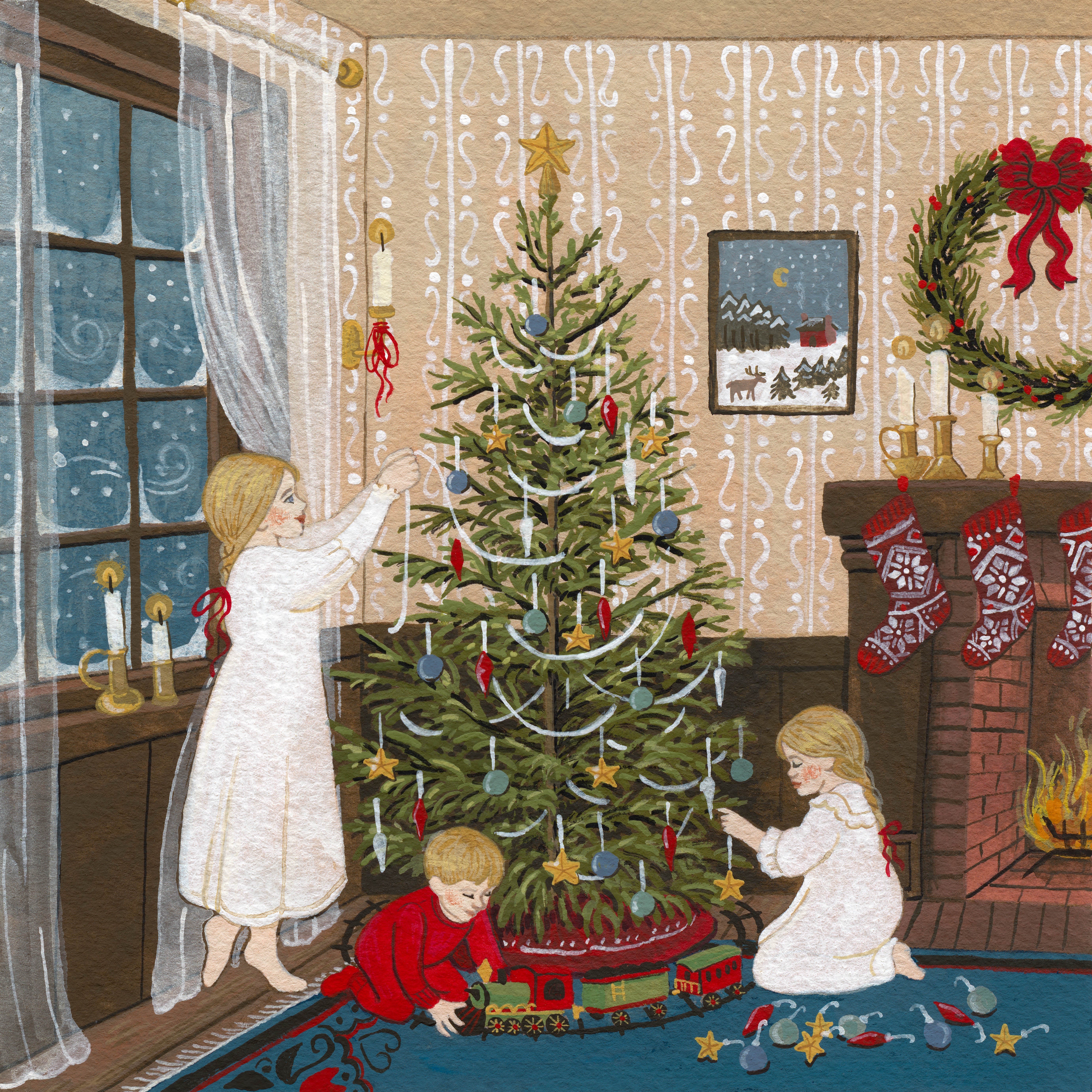
If you and I were collaborating to set up an ideal backdrop for Christmas joy, here are my first thoughts: We start with the enticing smell of cinnamon, nutmeg, and cloves, perhaps from hot cider or cookies just coming out of the oven. Fresh greenery wraps around the banister, giving off the spicy, resinous scent of a winter forest. Next, some temperature contrast: Warmth from a crackling fire is answered by a chill breeze swirling around the ankles as dear friends come through the front door, which can’t be shut right away because hugging everyone must happen first, this minute. There is music, of course—and here’s where you and I might choose differently—I hear choral music, or perhaps some mandolin and Irish flute. Do you hear soft jazz, or perhaps something orchestral? A tempting spread is laid out on a long table, bare winter branches in tall vases presiding, with holiday offerings, savory and sweet, nesting among loose cranberries and fir cones, yellow and red berries of bittersweet vines twining among sprays of pine needles. Upstairs, solitary candle flames surrounded by darkness shine in hall windows.
Our stage is set for the joy we expect at Christmas.
Come with me some evening to a busy town square during the early part of December. If we were to station ourselves next to a towering, brilliantly lit Christmas tree there, I’m sure we could find many people ready to cheerfully describe how much they love this time of year. Others might be more reluctant to admit that the Christmas season is among the hardest of times for them. At other times of the year, the rattle of keys in the lock of an empty apartment, answered by no human voice, may go unremarked, but at Christmas it’s another matter. Especially in periods of what we might euphemistically call a blue mood, there can be a pronounced gap between the cheer that’s evident around us—expected of us—and the dreariness of our internal atmosphere. The effervescence of the season may heighten the simple pleasures, but it can also accentuate the pains.
While there are bound to be many different elements that contribute to the Christmas mood crash, I can put forward one likely possibility. A regular day in mid-December might not be any harder than a regular day in mid-January, but the expectations of how great a Christmas-season day will be are sky high,
...This excerpt is provided for preview purposes. Full article content is available on the original publication.