The Week Observed: September 19, 2025
What City Observatory Did This Week
The Interstate Bridge Project continues to fall behind schedule. In 2020, IBR told legislators they’d have a record of decision in the summer of 2023. It now appears that the earliest a record of decision will be released is April of 2026 more than two and a half years late.
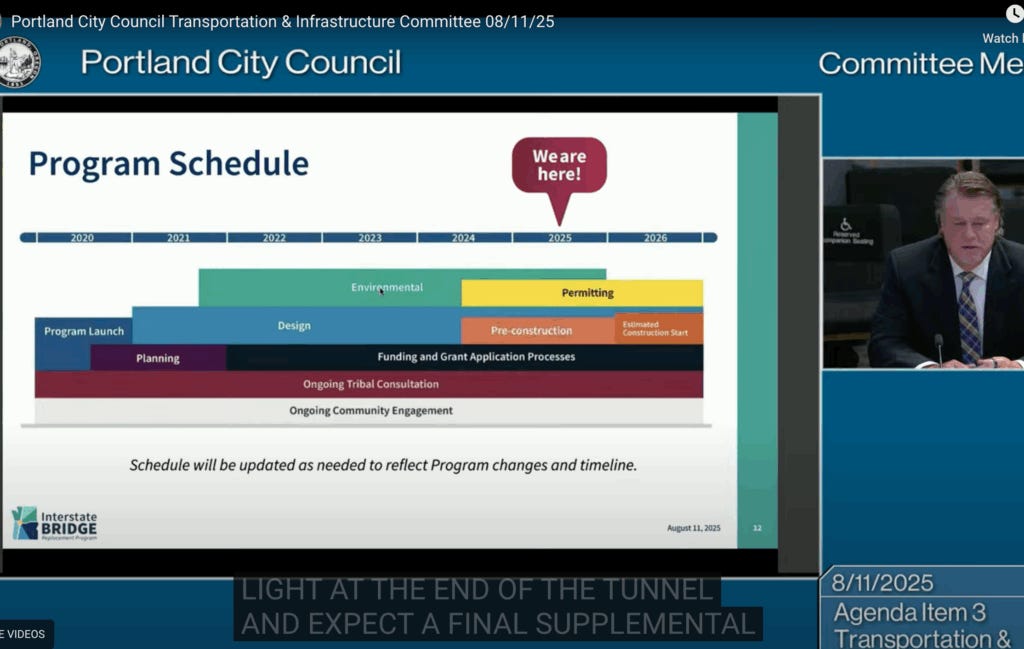
These delays contribute to driving up project costs–and creating more billable hours for consultants. State transportation officials routinely miss their own deadlines, provide vague and misleading claims about being “on schedule”–never acknowledging that they’ve failed to execute their own plans, and that this is the reason for higher costs.
Metro's Climate and Transportation Plans are failing. Testifying to the Metro Council on September 18, Joe Cortright called out the failure of the region's climate plans. Transportation is the largest source of greenhouse gases in the Portland area, and is increasing, at a time when our plans call for GHGs to be decreasing.
Metro's Regional Transportation Plan (RTP) counted on congestion pricing to reduce driving and greenhouse gases, lower traffic congestion and help pay for roads, but is now headed for repeal in the Oregon Legislature. Repeal turns the Regional Transportation Plan into a dead letter.
Billions of dollars of highway expansion projects—the Interstate Bridge, Rose Quarter and Abernethy Bridge—are predicated on traffic forecasts that assume total driving in Metro Portland increases by 20-25 percent in the next two decades, when the Metro climate plan and RTP promise to reduce total driving by about 10-12 percent.
Metro needs to acknowledge, disclose and act on these facts: The region's climate plan and transportation plans are failing and need to be revisited immediately.
Must Read
Chuck Marohn of Strong Towns digs deep into a highway expansion project being peddled as an economic tonic for rural Minnesota. Here, the state highway department is proposing a massive, auto-oriented interchange to speed traffic around and through a largely suburban, big-box retail area.
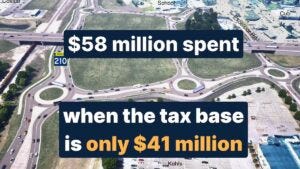
As Marohn points out, the total cost of the project actually exceeds the value of the commercial property it serves.
...The entire system of highway funding is treated like economic development, when in reality, it has become the single greatest source of wealth destruction in our local communities. The absurdity runs deep. In Baxter, Corridors of Commerce is spending $58 million to serve commerce on $40.8 million of property. It doesn’t have to be
This excerpt is provided for preview purposes. Full article content is available on the original publication.