Slack’s Recent Antitrust Complaint Against Microsoft: Important Takeaways For Startups
We cannot limit ourselves to continuing on the path we have already opened — Amancio Ortega.

Source: cnbc.com
November 2, 2016, Slack put out an audacious message to Microsoft just before the latter launched Teams, a competitive application that directly competed with Slack.
The message was a full-page letter in the New York Times stating how Slack was genuinely happy to have the competition. The letter went on to offer a lesson to Microsoft on how to get the job done and why it would be difficult to replicate the success Slack has had.
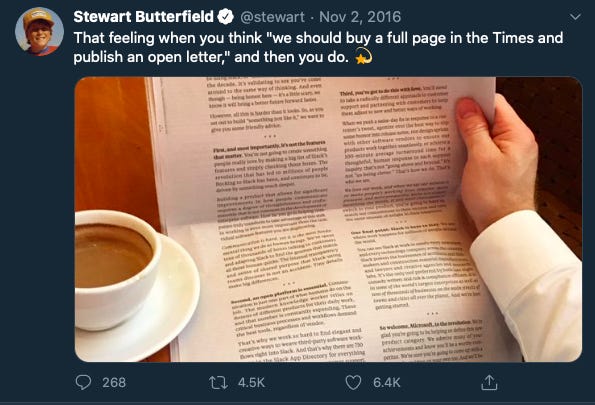
From Slack CEO, Stewart Butterfield’s Twitter Handle
At the time, most people were optimistic about Slack’s prospects and what they stood to accomplish from the single product they provided to people and organizations across the world. In hindsight, I think we can all agree that everybody overestimated the growth of Slack and underestimated the influence of Microsoft.
In July of 2020, Slack filed an EU competition complaint against Microsoft for bundling their Teams application with the Office Suite.
Here is a small excerpt of the complaint:
“Microsoft has illegally tied its Teams product into its market-dominant Office productivity suite, force installing it for millions, blocking its removal, and hiding the true cost to enterprise customers.”
Slack’s General Counsel reportedly said, “They created a weak, copycat product and tied it to their dominant Office product, force installing it and blocking its removal, a carbon copy of their illegal behaviour during the ‘browser wars.’”
A couple of things are evident from the complaint filed by Slack. Contrary to what they once said in the New York Times letter, they are not genuinely excited to have Microsoft as a competitor. And, more importantly, a single product company will need to reinvent itself more often than expected to stay ahead of the competition.
There are a few takeaways from this lawsuit that comes to light for startups, especially those that launch with a single product or service.
A caveman shouldn’t battle with a T-Rex
A bit of initial business success tends to make one feel proud, excited, and— sometimes—slightly arrogant. However, it is essential to be aware of those feelings to help make rational decisions for your company.
Instead of taking up an entire page on advising Microsoft on how to run a glorified Messaging Application, Slack may have better spent their time learning from them. If you have a product
...This excerpt is provided for preview purposes. Full article content is available on the original publication.