Justice and Virtue
Deep Dives
Explore related topics with these Wikipedia articles, rewritten for enjoyable reading:
-
Original position
11 min read
The article centers on Rawls's Veil of Ignorance thought experiment, which is formally called the 'original position' - understanding this foundational concept in political philosophy would give readers deeper insight into the justice framework being debated
-
G. A. Cohen
11 min read
Cohen is presented as the main intellectual counterpoint to Rawls in this article, and his luck-egalitarian critique is central to the author's argument - readers would benefit from understanding his broader philosophical contributions and background as an analytical Marxist
-
Mondragon Corporation
13 min read
The article discusses worker cooperatives and market socialism as alternatives to capitalism - Mondragon is the world's largest worker cooperative and provides concrete context for the theoretical model being proposed in 'The Blueprint'
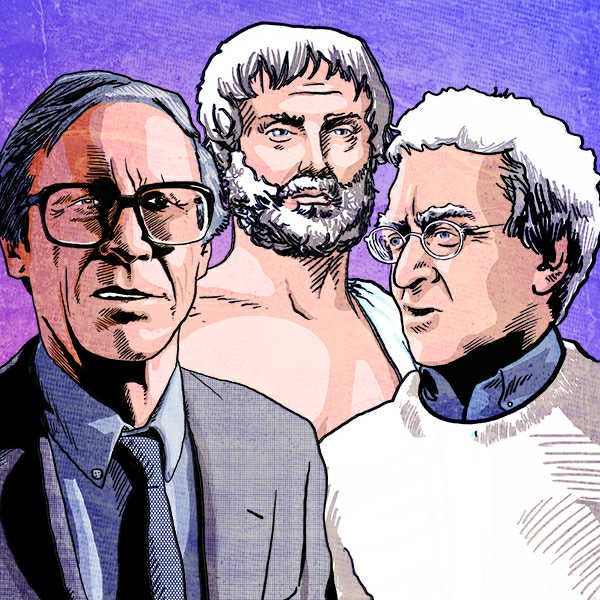
John Rawls famously claims that a just society is that one rational agents would endorse from behind the Veil of Ignorance. As he explains in A Theory of Justice, the society-designers in his thought experiment are maximally well-informed about all of the relevant third-person facts about, for example, how different economic systems would play out in practice, but
no one knows his place in society, his class position or social status, nor does any one know his fortune in the distribution of natural assets and abilities, his intelligence, strength, and the like.
Many of the consequences of this limitation are clear enough. Not knowing their race, they wouldn’t endorse anything like the racial laws of apartheid-era South Africa. Not knowing their gender, they wouldn’t endorse anything the gender laws of contemporary Saudi Arabia.
When it comes to economics, though, things are more complicated. Rawls thinks the society-designers (who are, remember, just trying to advance their own interests) might permit some distributive inequalities, if they were necessary to raise the economic floor for everyone. It’s true that, for all you know from behind the Veil of Ignorance, you’ll end up with the worst-off position in a less equal arrangement. But, you might still be better off than you would be in the more equal alternative with a lower floor. Rawls thinks that, as long as inequalities pass this test, and the better-off positions are available to all under conditions of “fair equality of opportunity,” there’s nothing unjust about the resulting distribution of resources.
G.A. Cohen disagrees, although Rawls and Cohen don’t disagree about as much as you might think. For one thing, this feels like a disagreement between a socialist and a defender of “the free market” but it’s really not. Many of the inequalities built into capitalist ownership relations pretty clearly fail Rawls’s tests, which Rawls himself—in a characteristically cautious and tentative way—acknowledged in his 2001 book Justice as Fairness: A Restatement. I wrote about that here.
Let’s put capitalism aside, then, and think about what could come next. I recently wrote a book with Bhaskar Sunkara and Mike Beggs called The Blueprint: How Socialism Can Work in the Real World. (Out next year!) In it, we try to think through a grounded, realistic view of the kind of economy that we’d know how to implement “five minutes after capitalism.” Perhaps one day future
...This excerpt is provided for preview purposes. Full article content is available on the original publication.