Dreams Come True
Deep Dives
Explore related topics with these Wikipedia articles, rewritten for enjoyable reading:
-
Sichuan cuisine
11 min read
The article discusses sauerkraut fish originating in Chongqing in Sichuan Province and describes its characteristic spicy-sour flavor profile. Understanding Sichuan cuisine's distinctive use of málà (numbing-spicy) flavors, fermented ingredients, and regional variations would deepen appreciation for how this dish fits into a broader culinary tradition.
-
Wolfgang Puck
16 min read
Spago is mentioned as a fantasy destination where a client wanted his wife to work in the kitchen. Wolfgang Puck's role in creating celebrity chef culture and California cuisine in the 1980s-90s Los Angeles food scene that Reichl describes provides essential context for understanding why working at Spago was considered a dream fulfillment.
-
Peking duck
9 min read
Reichl describes Yujean Kang's tea-smoked duck as combining 'the crisp skin of Peking duck' with jasmine tea smoking. Understanding the elaborate traditional preparation of Peking duck—the air-drying, glazing, and roasting techniques that create its famous crackling skin—illuminates how Kang was innovating within a centuries-old culinary tradition.
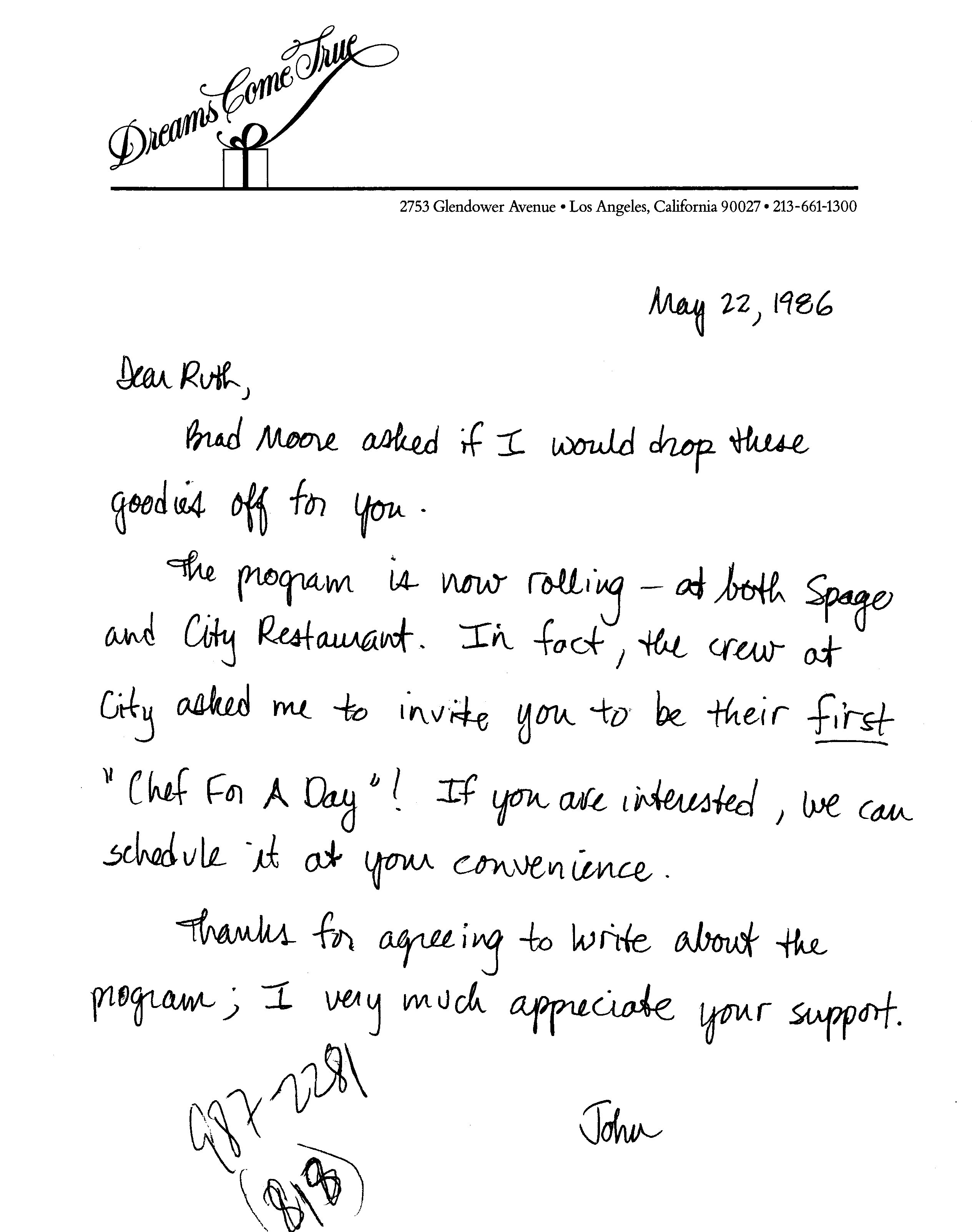
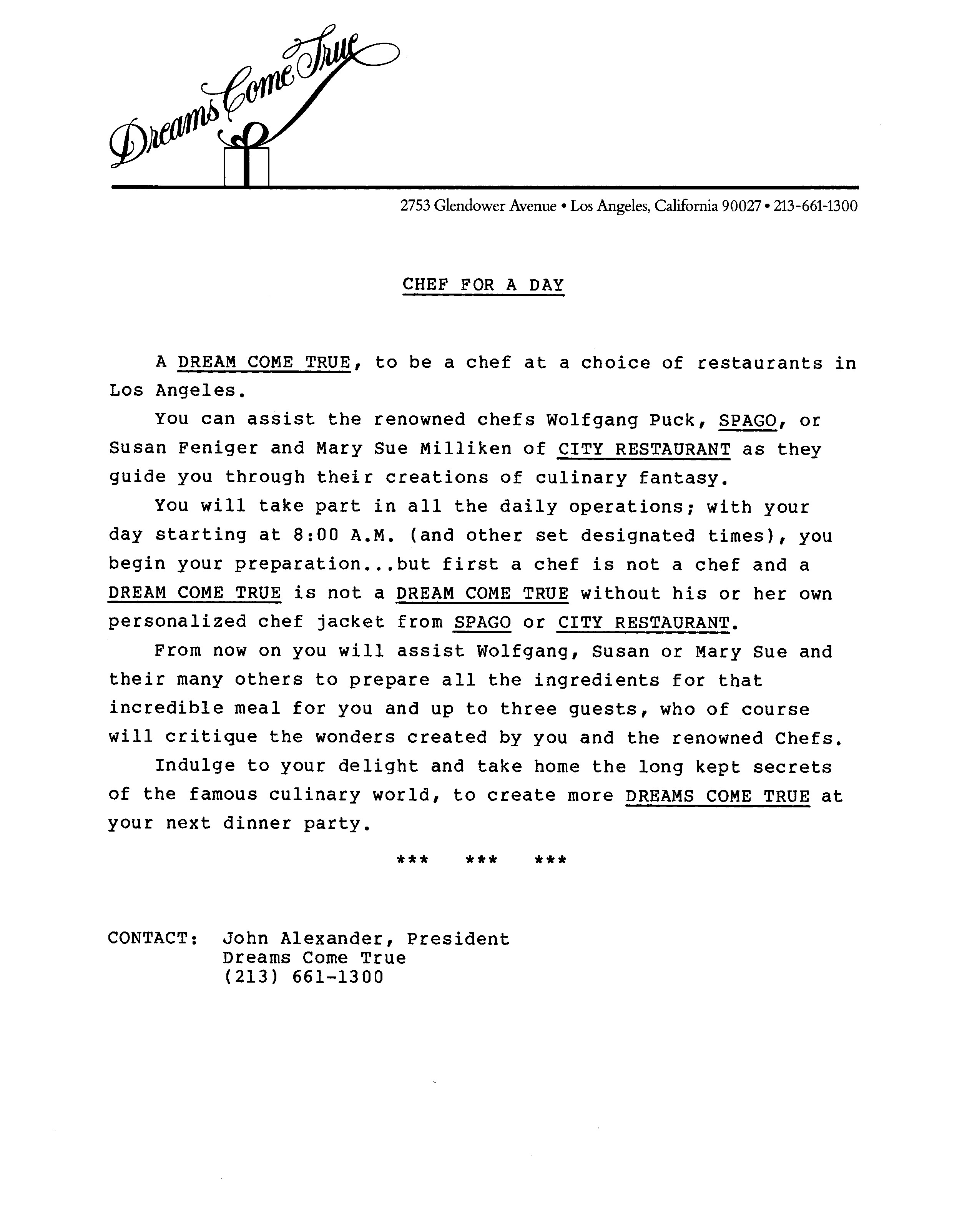
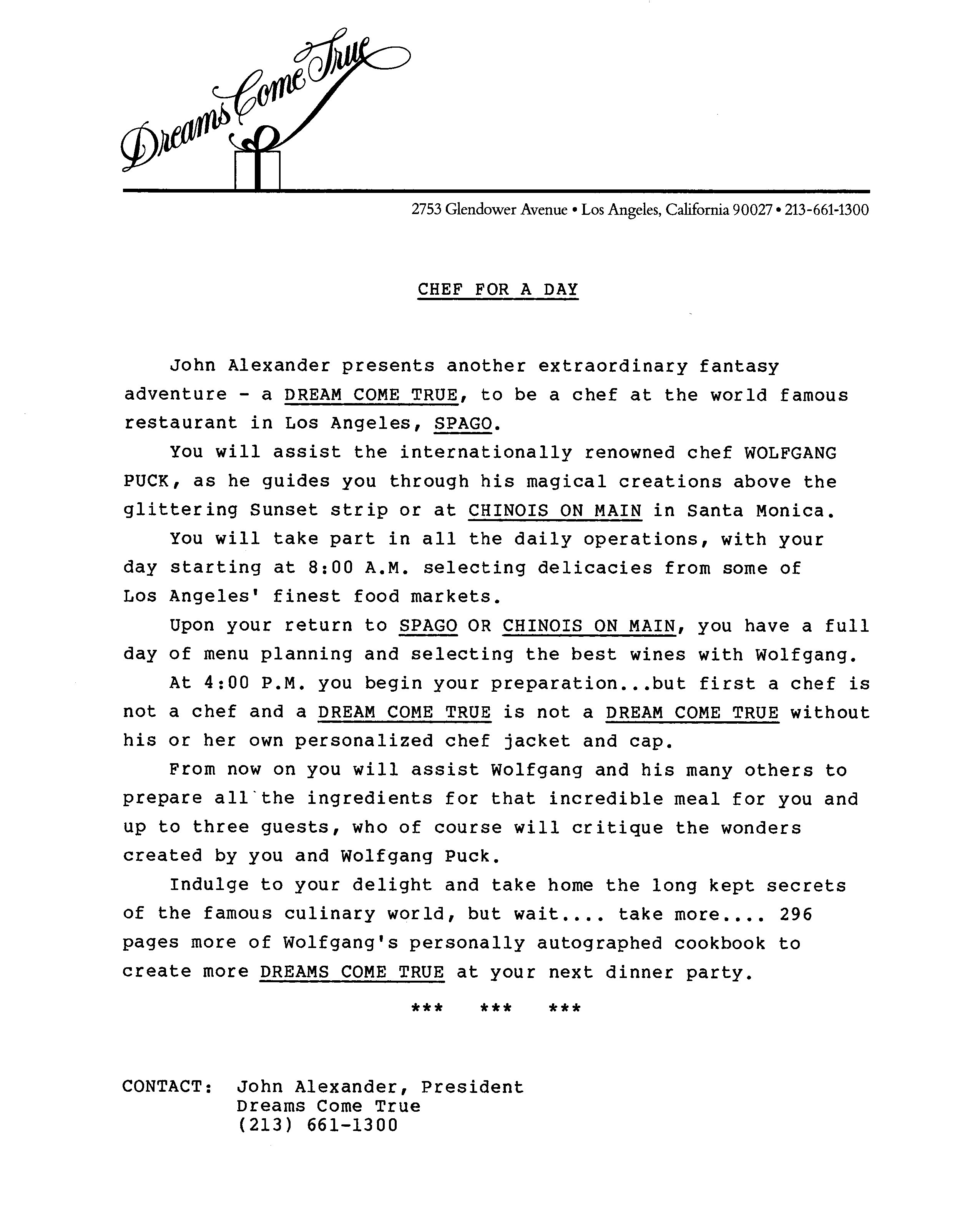
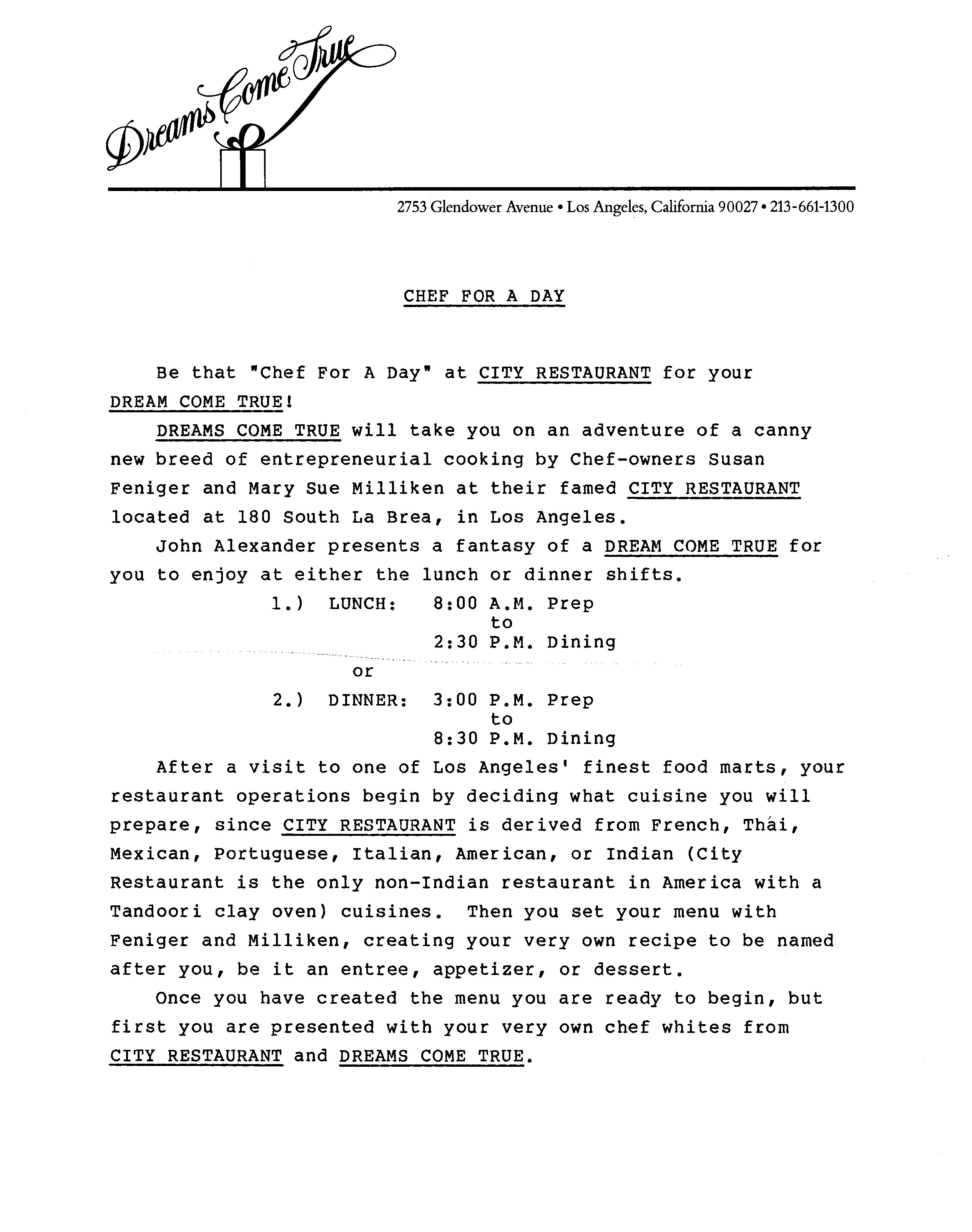
Going through a box of old menus I came upon this strange little artifact that made me smile. Have we ever had a greater need for dreams coming true?
What’s interesting about this enterprise is what it tells us about how much the world has changed in forty years. And what a different place restaurants now occupy in the culture.
John Alexander, who lived next door to me in Los Feliz, was in the business of fulfilling people’s deepest fantasies. His motto: “We do anything that’s fun and legal” intrigued me. He arranged for a big-deal doctor to become Tom Cruise for a day by piloting a supersonic jet. He got people into the Academy Awards (and the Governor’s Ball), served breakfast in bed for a well-bred dog, and arranged for a shoe-obsessed woman to work with a famous French shoe designer. One day a client asked if he could figure out a way for his wife to work in Spago’s kitchen - and a whole new business was born.
Incidentally, I did take Mary Sue and Susan up on their offer and spent a wonderful day at City Restaurant learning, among other things, how to use the tandoor oven they’d installed in the kitchen. (I tried to find the article I wrote about that in the Los Angeles Times, but the paper’s search engine is so annoying that I finally gave up.)


Since we’re talking about a long-gone Los Angeles, here’s a menu from the much-loved restaurant, Yujean Kang, where the chef was reinterpreting the classics of Chinese cuisine in a very personal way. This is what I said in the review: Although he often borrows ingredients and techniques from Western cooking, the result is quite the opposite of the fey East-West mix to which we’ve become accustomed. There is no butter here, no toning down, no softening of edges; Kang’s flavors are aggressive and exciting.
Consider the tea-smoked duck ….. which combines the crisp skin of Peking duck (the skin actually crackles when you bite into it), with the deep smokiness of meat that has been set over burning leaves of jasmine tea. The duck arrives regally arranged on an elegant platter; the breast is then sliced, scattered with scallions and wrapped up in flour crepes that have been spread with plum sauce.
I loved the tiny dumplings too which were served in a pungent chile-soy sauce
...This excerpt is provided for preview purposes. Full article content is available on the original publication.