Week signals: From pirates to PMSCs
Deep Dives
Explore related topics with these Wikipedia articles, rewritten for enjoyable reading:
-
Private military company
15 min read
The article discusses the growing role of 'security-as-a-service' and 'guns for hire' in modern geopolitics. This Wikipedia article provides comprehensive historical and legal context for PMSCs, from their origins to modern companies like Blackwater and Wagner Group.
-
Golden Age of Piracy
14 min read
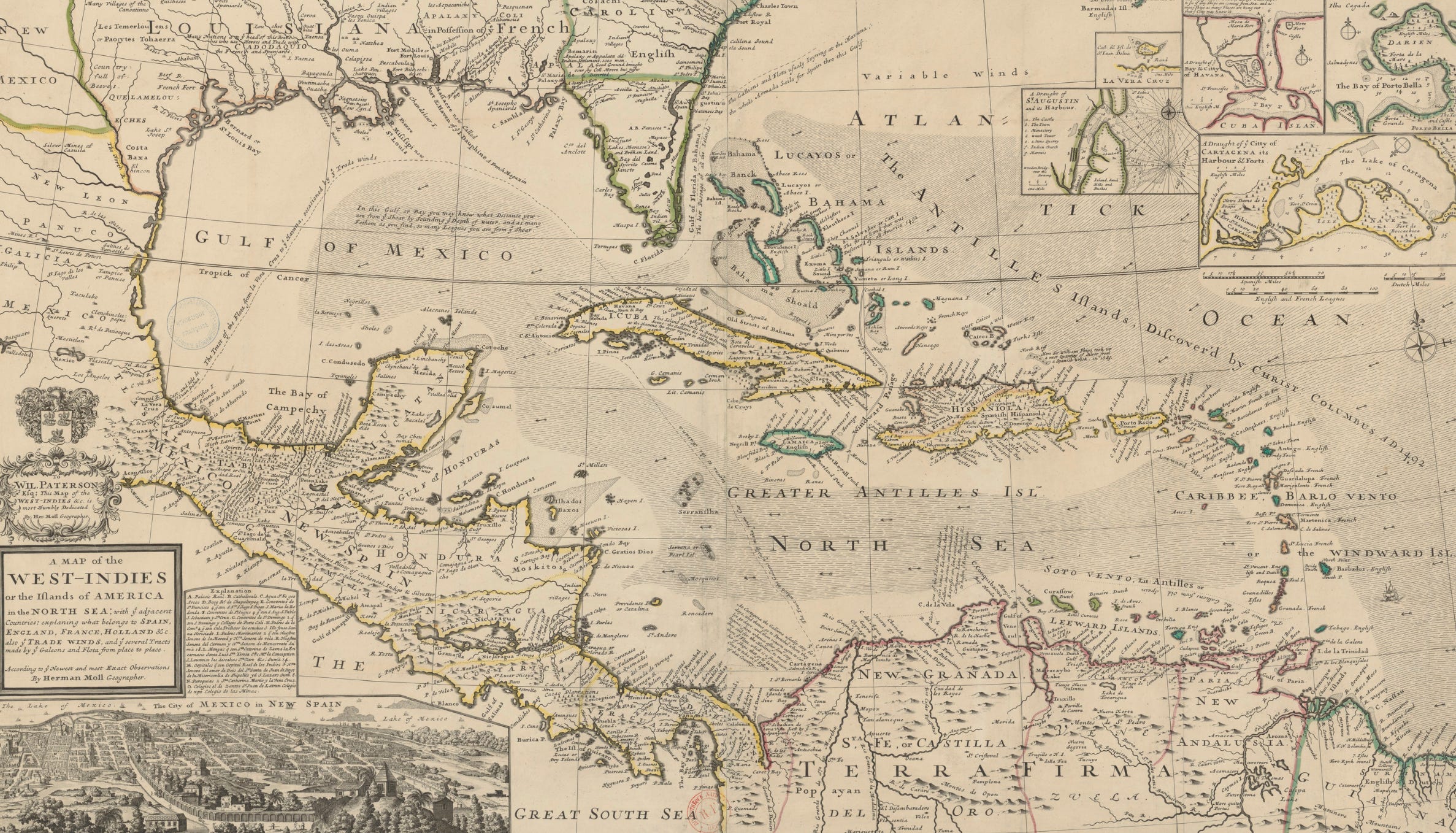
Directly referenced in the article as a historical parallel to private military forces. The 1715 Herman Moll map of the West Indies shown dates from this exact period, and understanding how privateers blurred the line between state and private violence illuminates modern PMSC dynamics.
-
Letter of marque
11 min read
The historical legal instrument that authorized private individuals to conduct warfare on behalf of states - the direct ancestor of modern PMSC contracts. Relevant to the article's discussion of 'gaps in international law' and the commercialization of statecraft.
Hello,
In this week’s edition of Week Signals:
IN REVIEW. The commercialisation of statecraft, the commerciality of war, four developments for private security, and the gaps in international law.
UP AHEAD. Russia and China go on the ballot, Carney and FIFA go to Washington, while Putin goes to Delhi.
And don’t forget to connect with me on LinkedIn.
Week Signals is the Saturday note for clients of Geopolitical Strategy, also available to GD Professional subscribers on Geopolitical Dispatch.
The Week in Review: The world’s second-oldest profession
Co-authored with Oscar Martin.
The week began with talks between Marco Rubio and Andriy Yermak on the Ukraine-Russia peace plan. It ended with Yermak resigning after his house was searched by anti-graft officers, and reports that Rubio would skip a meeting of NATO foreign ministers. Around the same time Yermak quit, we wrote that he might be working to push Zelensky out. We hit the send button too soon.
There’s a lot of flux over how the Ukraine war may end. Meanwhile, there’s a similar amount of flux over how the Venezuela war may start. Odds remain better than even that the US will strike on land, even if only to say it’s done so. You don’t bring an aircraft carrier to a knife fight, and Trump has a lot of credibility on the line – both political and strategic – after threatening Nicolas Maduro for weeks (reports in the New York Times of a Trump-Maduro phone call may not amount to much in the circumstances).
Elsewhere, there’s also a lot of flux in Israel’s wars, which neither seem to start nor end, but merely blend into each other. Beyond a strike earlier this week against Hezbollah’s military commander in Beirut, Israeli troops have clashed with militants in southern Syria and summarily executed two Palestinians in Jenin. Phase two of the Gaza peace process remains, as ever, uncertain.
But one thing that’s for certain is that as the geopolitical order continues to fragment, and as statecraft becomes more subordinate to self-interest, we will see in these conflicts and others a greater role for the private sector.
The growing intersection of geopolitics and commerce was the driver behind our company, Geopolitical Strategy. With a breakdown
...This excerpt is provided for preview purposes. Full article content is available on the original publication.