Trump Is Going For Regime Change in Venezuela
Deep Dives
Explore related topics with these Wikipedia articles, rewritten for enjoyable reading:
-
De-Ba'athification
14 min read
The article discusses how Iraq's strong Ba'athist state was dismantled after US intervention. De-Ba'athification was the controversial policy that removed regime supporters from power, creating the exact problem Fukuyama warns about in Venezuela—what to do with generals and officials who have no future in a new regime.
-
Colectivo (Venezuela)
15 min read
Fukuyama references the Maduro regime's 'militias' organized from poor neighborhoods. These are the colectivos—armed civilian groups that form a crucial pillar of regime power. Understanding their structure and role illuminates why regime change in Venezuela faces unique challenges beyond the formal military.
We are delighted to feature Francis Fukuyama in the pages of Persuasion once again. Some of you may not know that he writes a regular column, “Frankly Fukuyama,” which is proudly part of the Persuasion family, and which you need to manually opt in to receive.
To get all of Frank’s writing—and to get articles from American Purpose, the magazine he founded, and its culture-focused podcast, Bookstack—simply click on “Email preferences” below and make sure you toggle on the relevant buttons.
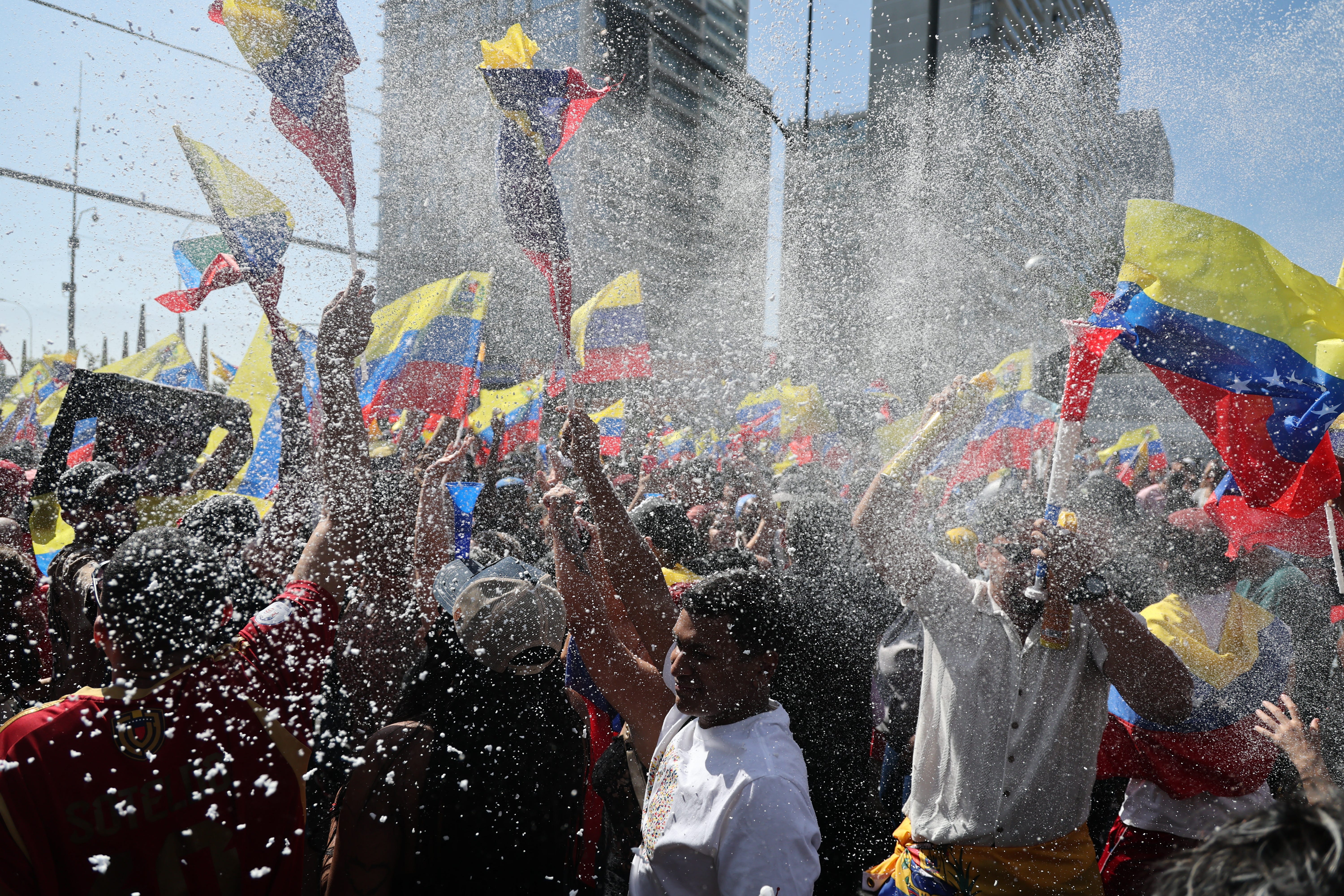
Now that the Trump administration has gone ahead and captured Venezuela’s leader Nicolás Maduro, we need to shift quickly from debating the wisdom of the intervention to thinking about how to deal with the aftermath. I don’t think that the legality of the American action should be our critical focus right now, for reasons I will get into at the end of this article. The real issue should be how to restore democracy to Venezuela, and how to create the conditions under which the 8 million people who have fled the country can return home.
The Trump administration is now engaged in bringing about regime change in Venezuela, and will be embroiled in a nation-building exercise there for the foreseeable future. This is very ironic, of course, given Trump’s earlier attacks on America’s “forever wars” in the Middle East. There is a powerful logic to regime change, however, since bad international behavior stems largely from bad domestic politics, and you’re not going to change one without changing the other. The problem, of course, is that nation-building is really, really hard, and the United States doesn’t have a good track record in this regard.
The United States has had a lot of experience with regime change in recent years, most of it pretty unpleasant. It was not able to transform either Afghanistan or Iraq into stable democracies, despite the expenditure of hundreds of billions of dollars and tens of thousands of lives—Afghan, Iraqi, and American. America has also used military force multiple times in the Western hemisphere: in Cuba in the 1890s, in Mexico in the early 1900s, in Nicaragua in the 1930s, in Central America in the 1980s, and in the Dominican Republic, Panama, and Grenada. Only the latter three interventions could be deemed successful in
...This excerpt is provided for preview purposes. Full article content is available on the original publication.