The Cost of Tariff Chaos
Thanks for reading! If you haven’t subscribed, please click the button below:
By subscribing you’ll join over 60,000 people who read Apricitas!
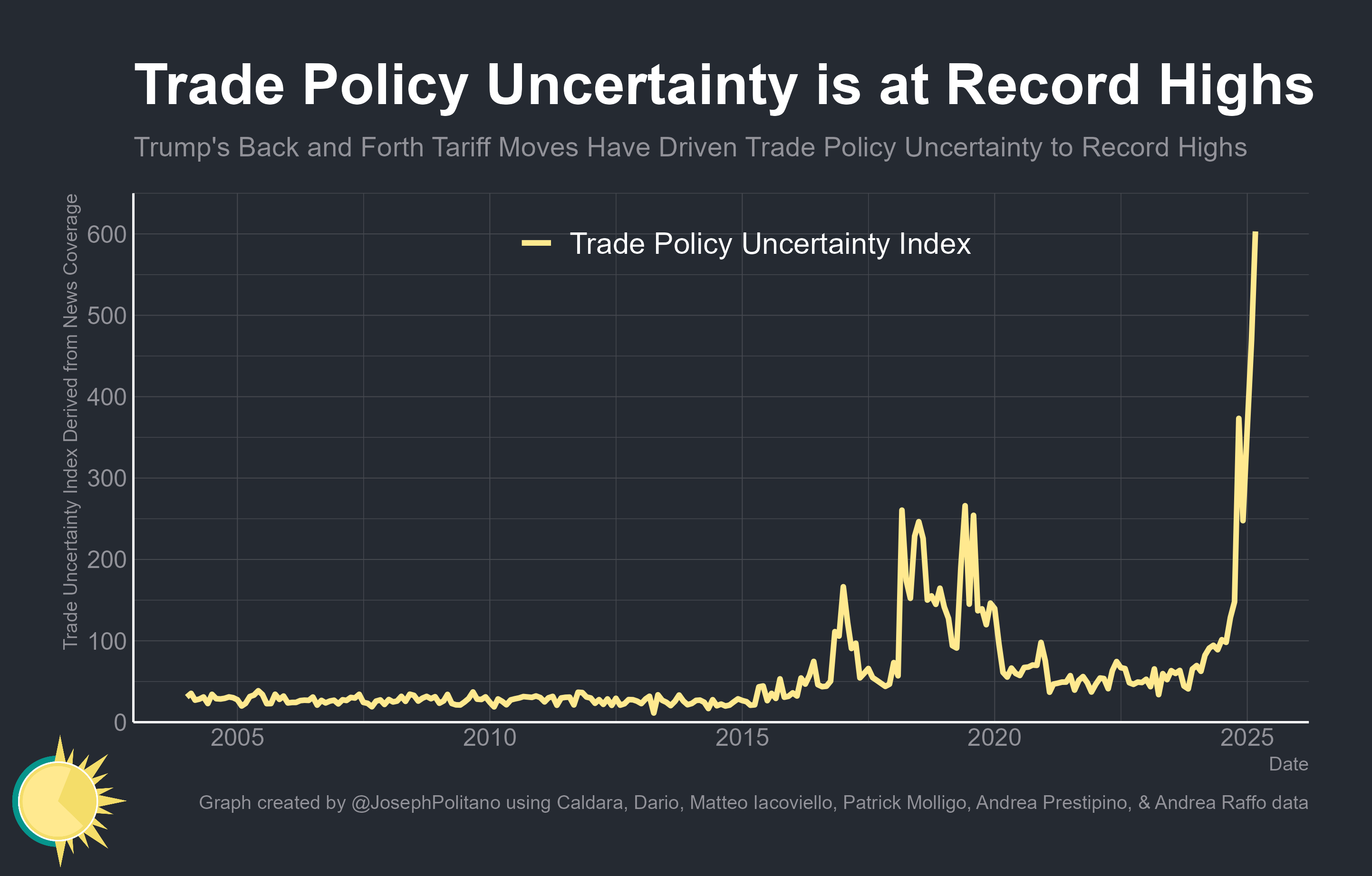
This afternoon, Donald Trump is set to implement possibly the single-largest tariff hike in modern American history—and we know functionally zero details about it. Reporting indicates the White House team was still cooking up possible options for the president as late as yesterday, with basic information like the tariff rates and countries affected still up in the air. These tariffs will supposedly go into effect “immediately”, likely having the same midnight-on-April 3rd implementation date as Trump’s automobile tariffs, thus leaving businesses zero time to digest the information and formally prepare. This chaotic approach has sent measures of trade policy uncertainty skyrocketing to record high levels—and that alone imposes significant economic costs by making spending, investment, hiring, and transport decisions harder.
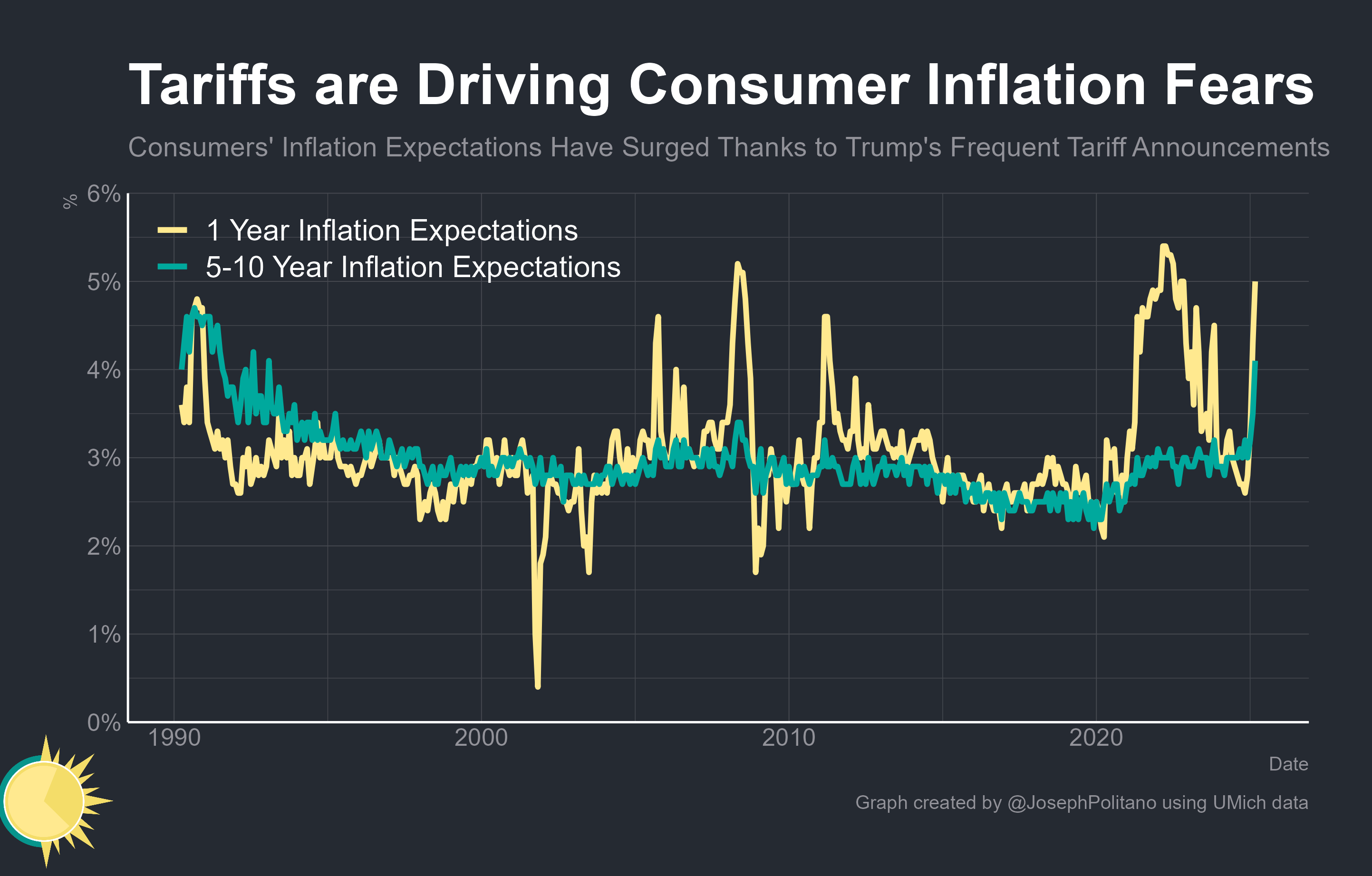
Indeed, unclear and belligerent trade policy has already terrified American consumers, who are increasingly scared about tariffs’ impact on prices and the wider economy. Inflation expectations have risen dramatically in the University of Michigan’s national survey, with long-run expectations jumping to the highest levels in more than 30 years. Variance in inflation expectations has also skyrocketed, underscoring the profound uncertainty most people have about the near future. A record high share of respondents are complaining about government economic policy, mostly citing the negative impact of tariffs, and a record high share are also expecting business conditions to get worse over the next year. Survey data from The Conference Board showed households’ forward-looking economic expectations at a 12-year low, and most Americans are now planning to cut back on vacations and other leisure spending.

The one place consumers aren’t cutting back is in durable goods—in fact, it is here where Americans are rushing out to buy things before tariffs go into place. The share of consumers saying you should make large purchases now because prices will go up soon has jumped since the election, and those with the means to do are trying to stockpile what they can. The car industry has been one of the sectors most affected by the rush to get ahead of tariffs, with US vehicle sales jumping 12.7% in March as Trump announced universal 25% tariffs on motor vehicles & parts.

Consumers and businesses alike have also rushed to import goods before Trump imposes more tariffs, sending the US
...This excerpt is provided for preview purposes. Full article content is available on the original publication.