Flirting with Modernity(2)
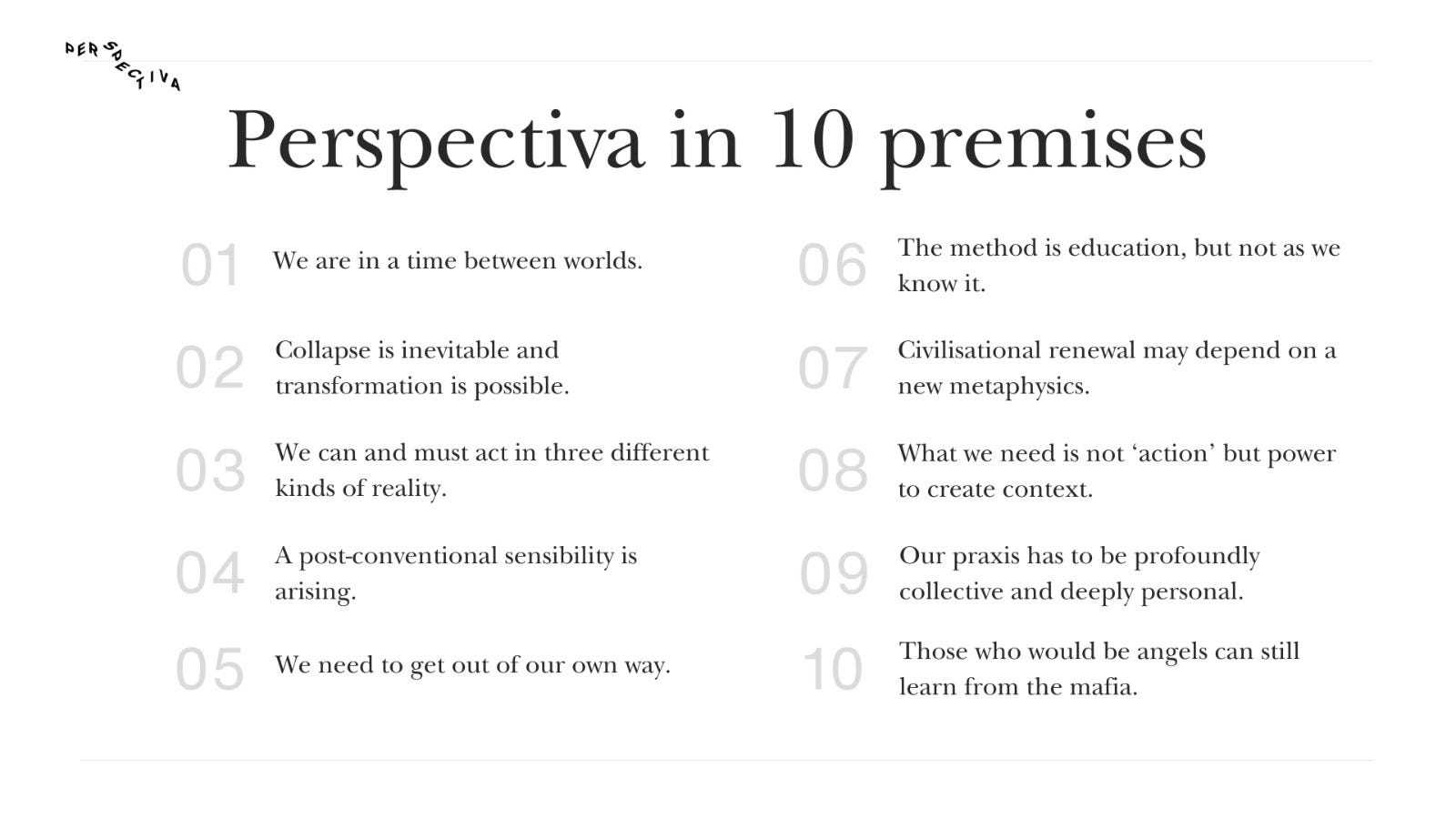
The first of Perspectiva’s ten premises is that we are in a time between worlds, which is our way of acknowledging the importance of history and the value of giving some shape and specificity to the character of this historical moment.
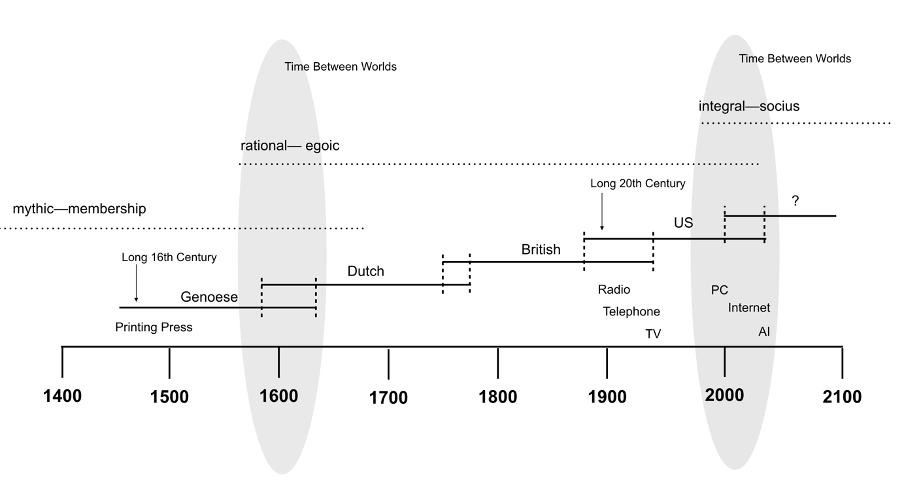
The expression ‘a time between worlds’ originated in Zak Stein’s excellent book Education in a Time Between Worlds, published in 2019. The claim is empirically grounded and theoretically elaborated in the first chapter, especially informed by models from metahistorical analysis (eg Peter Turchin) and world systems dynamics (eg Immanuel Wallerstein). In other words, it’s not just an elegant turn of phrase.
A little later, Zak further developed his ‘time between worlds’ idea in his Perspectiva essay on Comenius (see pages 18-21, especially), which includes an image (below).
We also spoke about this together in early 2022.
Despite the depth, acuity and richness of this analysis, recently I have noticed I lack conviction when I say ‘we are in a time between worlds’ and I’m trying to understand why. My qualm is not about any particular detail of Zak’s analysis but the experience of incredulity, discomfort, and perhaps even vainglory I feel when I speak of “a time between worlds”.
To function with a time between worlds as a premise is a kind of ‘conceptual practice’. This is a helpful idea of Matthieu Queloz from his book The Practical Origin of Ideas, where he defines it as follows:
A community’s practice of letting its thoughts, attitudes, and actions be shaped and guided by a given idea. Unlike mere practices, such as walking on one’s feet rather than one’s hands, conceptual practices are essentially shaped by sensitivity to conceptual norms or reasons—take away the idea in terms of which those norms and reasons are articulated, and the practice collapses.
My aim here is not to “take away the idea in terms of which those norms and reasons are articulated”, but to question what is implicit in the claim and what I touched on in the prior post, namely, that modernity is ending.
...This excerpt is provided for preview purposes. Full article content is available on the original publication.