Jesse Jackson and the rise of the progressive movement
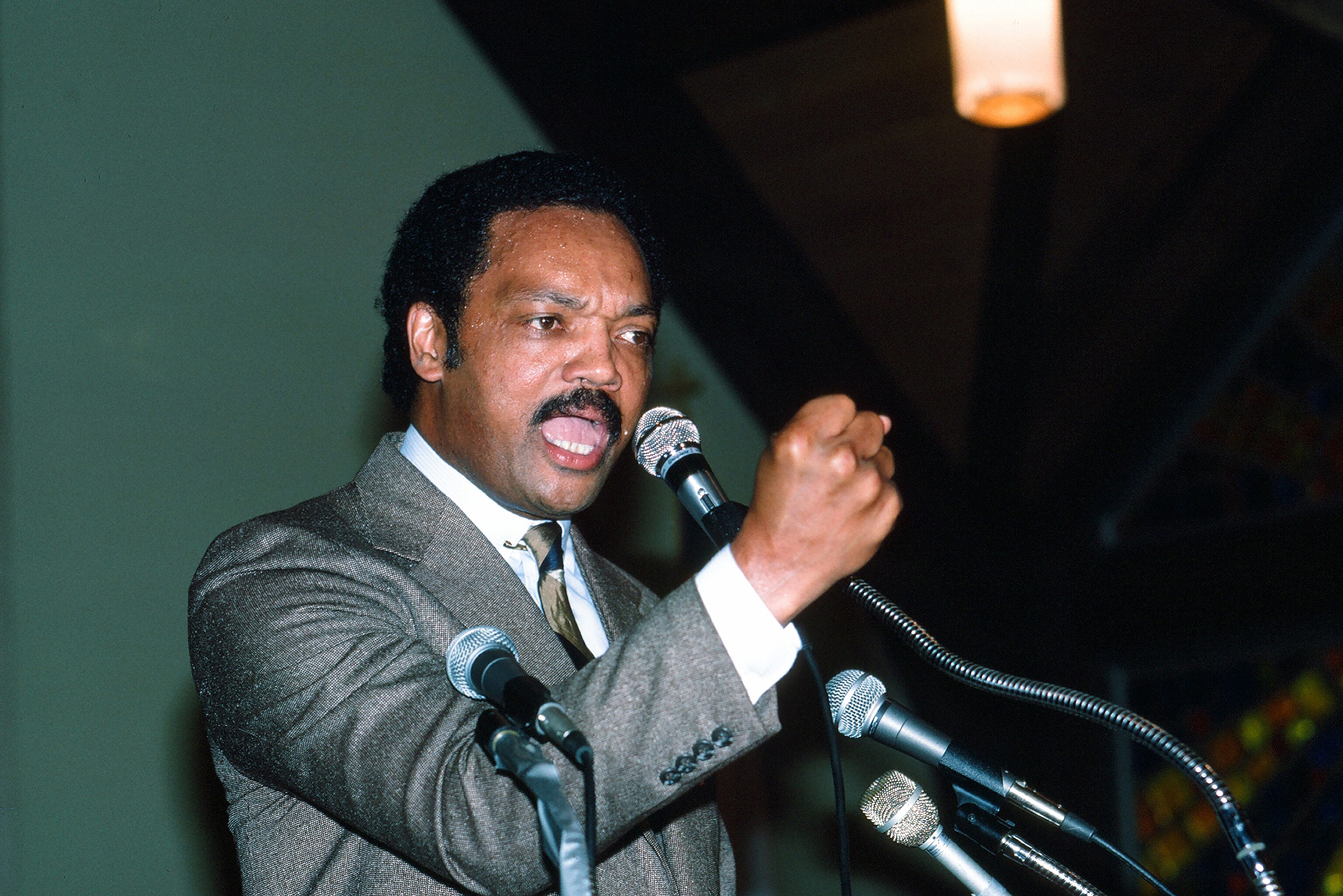
I wish I could say that I was old enough to have direct personal memories of the 1988 Democratic primary, because it was a fascinating moment in political history and my family — left-wing intellectuals on one side and Jewish liberals on the other — was very much at the center of dissension.
My home state of New York was essentially the Waterloo of Jesse Jackson’s primary campaign, where he ran into a solid wall of Jewish hostility led by ferocious attacks from the city’s then-Mayor Ed Koch.
The backstory is that in 1979 Jackson had flown to Beirut to meet with Yasir Arafat and P.L.O. leadership, which was an extremely spicy thing to do in the pre-Oslo days. And Black political leaders had long been conflicted as to whether they should follow the logic of a coalition logroll with liberal American Jews (who were largely friends to the civil rights movement and supporters of pluralism) or the logic of anti-colonial theory, which links Palestinian and Black liberation.
John Lewis’s 2002 op-ed about M.L.K.’s support for Israel and Hakeem Jeffries’s more recent reluctance to support Zohran Mamdani are examples of one approach; Jackson took the other.
This was a problem for him during his 1984 campaign, which led to an incident where he complained to an African-American reporter on background about the fact that “Hymies” (i.e., Jews) in “Hymietown” (i.e., New York City) were obsessed with Israel to the exclusion of other issues.
That information came out, along with questions about Jackson’s relationship to Louis Farrakhan, and became a huge issue for Jewish voters in the 1988 campaign. By that time Jackson had grown his base to include the kind of educated white voters who are today the backbone of progressive politics. But in New York a very large share of those white progressives are Jewish, so the perception that Jackson was antisemitic dealt his campaign a blow and helped crush his momentum.
Jackson was always apologetic about the slurs, and eventually ended his campaign with an iconic speech at the 1988 Democratic National Convention.
Jackson never pivoted to Lewis/Jeffries-style pro-Israel politics, but he did very successfully mend fences and build bridges with Jewish Democrats in subsequent years, earning lavish tributes upon his death from Rahm Emanuel and Chuck Schumer. That reflects his skill
...This excerpt is provided for preview purposes. Full article content is available on the original publication.