What Strategy for Labor?
What can we do to turn around decades of union decline? This is the key challenge of our era, because the power of a revitalized labor movement is needed to pull America off its descent into oligarchy and authoritarianism. There are no easy answers, which is why I welcome the responses of union organizer Peter Olney, Labor Notes co-founder Jane Slaughter, and labor scholar Ben Fong to my new book We Are the Union: How Worker-to-Worker Organizing is Revitalizing Labor and Winning Big.
Whereas Slaughter and Olney’s critical-but-comradely reviews accurately address my book’s major arguments, Fong’s dismissive polemic is marred by strawman claims and tendentious logic. Nevertheless, all of their pieces raise important questions about just how new worker-to-worker unionism is; the role and industrial scope of strategic targeting in our contemporary political economy; and the generalizability of the campaigns profiled in the book. I’ll do my best here to address their major criticisms.
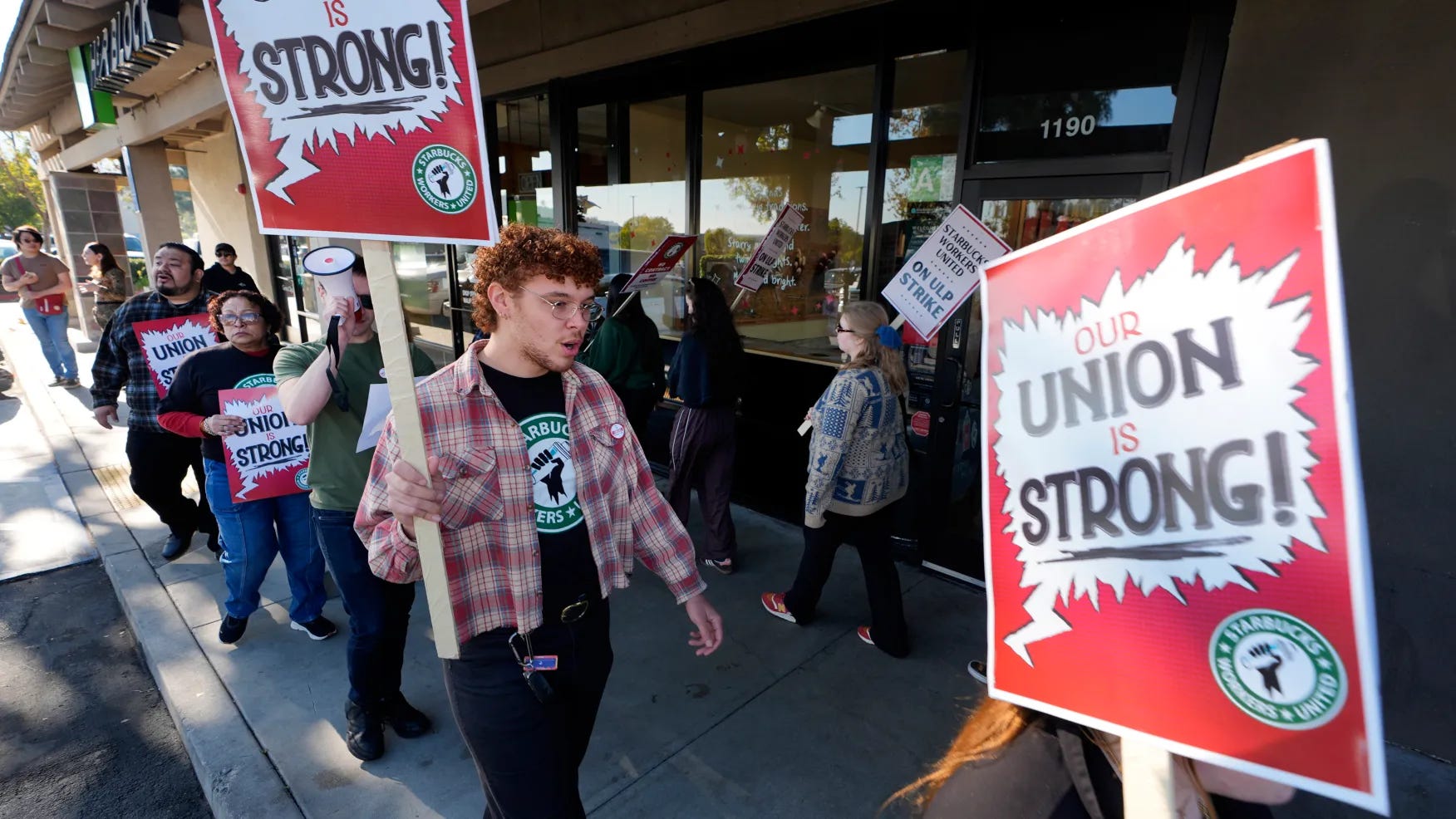
Is the Model New?
The starting point of Fong’s critique is his case that worker-to-worker unionism “is not a fundamentally ‘new model’ of organizing.” There’s a lot of truth to this. Indeed, I explicitly highlight the roots and commonalities of recent worker-led unionization campaigns with their historic predecessors in the 1930s and earlier. As I write in the book, “I’m definitely not the first person to make the case that putting workers into the driver’s seat is the key to building a powerful mass labor movement. … We Are the Union makes a new case for an old strategy.”
But contrary to Fong’s claims that I am self-servingly “overhyping a branded ‘model,’” the actual reason I conceptualize worker-to-worker unionism as “new” is that a) the specific organizing practices and structures of today’s worker-led efforts are significantly different than they were a century ago, and b) if labor is going to scale up, it’s necessary to be very specific about what worker-to-worker unionism refers to, since critics wrongly assume it requires romanticizing “spontaneity” and since so many unions continue to frame their unscalable, staff-intensive efforts as “grassroots” or “bottom-up.”
Here’s how I put it: “we need to replace a blurry image of worker-to-worker organizing with a high-definition picture. Without such clarity, it’ll be hard to diffuse a new grassroots model or to counter the claims of its skeptics.”
I define the worker-to-worker model as one in which organizing is relatively lightly staffed, and therefore scalable,
...This excerpt is provided for preview purposes. Full article content is available on the original publication.