The anti-Teflon chef
Deep Dives
Explore related topics with these Wikipedia articles, rewritten for enjoyable reading:
-
PFAS
13 min read
The article centers on PFAS/PTFE 'forever chemicals' in cookware, but most readers likely don't understand the chemistry, environmental persistence, or health mechanisms of these synthetic compounds that have contaminated groundwater globally
Yesterday’s story about celebrity chefs selling pans made with “forever chemicals” sparked a lot of conversation on Bluesky. My post racked up more than 300 reposts and a flood of replies—most of them expressing disappointment and outrage with the chefs themselves.
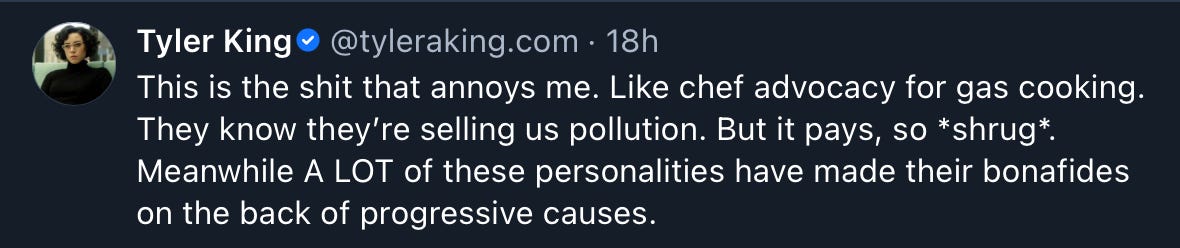
Tyler has a point. Polluting industries have been increasingly recruiting chefs and cooking influencers to serve as mouthpieces for their products. The propane industry, for example, has hired TV chef Dean Sheremet to promote cooking with the fossil fuel. And Southwest Gas has paid food and lifestyle influencers to post content framing methane gas as “clean” and essential for cooking.
As more stories like this come out, you’d be forgiven if you began to assume the entire celebrity chef ecosystem must be contaminated with industry influence. But that’s not the case.
Andrew Zimmern is the clearest counterpoint. The chef and restaurateur best known as the host of Bizarre Foods has long been an outspoken environmental advocate—from championing sustainable seafood regulations with the Global Seafood Alliance to pushing for food-system reform with the Environmental Working Group and highlighting food waste issues as a UN World Food Programme Goodwill Ambassador. And he was the only celebrity chef who publicly advocated for California’s proposed phase-out of PTFE-coated non-stick pans.
Zimmern’s most powerful piece of advocacy for a California ban came in the form of a New York Times op-ed this October. In it, he argued that phasing out PTFE-coated pans wouldn’t just be a win for communities polluted by Teflon production, but a win for cooking as a whole.
”I believe that preparing food isn’t about shortcuts; it’s about attention,” he wrote. “When we trade durable materials for throwaway ones, we lose not only our health, but also a small part of our humanity, the part that knows how to care for something, maintain it, season it and pass it down.”
I interviewed Zimmern by email for yesterday’s story, but I had to cut his comments as the draft crept toward 2,000 words. Still,
This excerpt is provided for preview purposes. Full article content is available on the original publication.