The FP-5 Flamingo Has Arrived: What Ukraine's 3,000-Kilometer Cruise Missile Means for the War and the Future of Europe
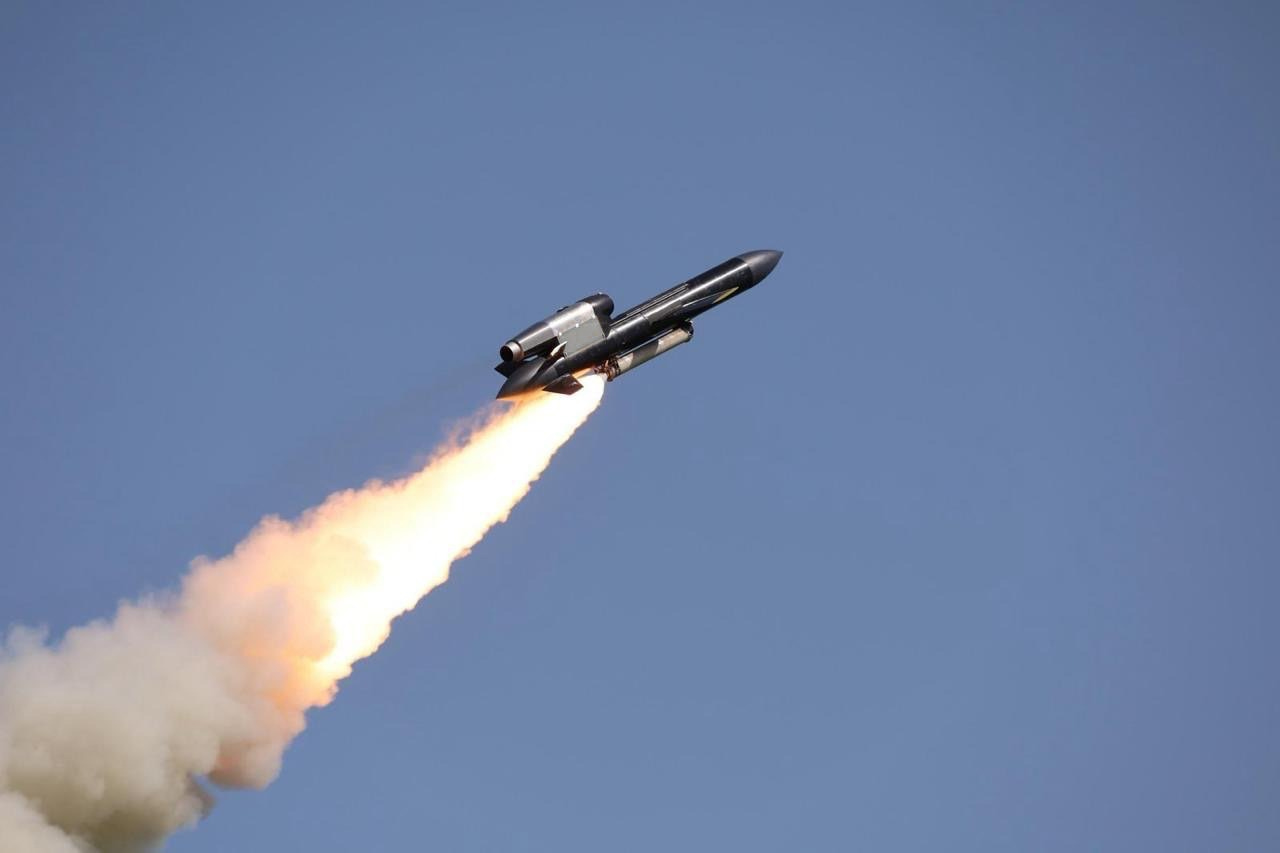
Image: Fire Point
On 17 August, imagery of a new Ukrainian cruise missile appeared, known as the FP-5 “Flamingo”. Since then, Fire Point, the Kyiv-based defense manufacturer, has launched a marketing offensive to showcase the missile internationally and pledged a substantial increase in production until the end of the year.
This post looks at what to make of the Flamingo. I first discuss the known technical characteristics of its capability profile to assess its expected performance before looking at the missile’s implications for the ongoing war in Ukraine, but also the broader deterrence architecture in a post-war Europe.
FP-5 Flamingo technical specifications
The FP-5 Flamingo is a large missile. According to the manufacturer, it has a wingspan of about six meters, a launch weight of around 6,000 kilograms, and a payload capacity of 1,150 kilograms.
This makes the Flamingo the first indigenously produced “heavy” missile system in Ukraine’s arsenal. Previous Ukrainian systems, including mini-cruise missiles and long-range drones, were much lighter in both overall weight and payload capacity.
The key visual feature of the FP-5, aside from its overall size, is the top-mounted engine, which, as observers quickly noted, gives it a resemblance to the Fieseler Fi 103, commonly known as the V-1, the world’s first cruise missile used by Nazi Germany in the final years of the Second World War.
But the similarities end there. Unlike the V-1, which used a simple and inefficient pulse jet engine by today’s standards, the Flamingo appears to employ a far more efficient turbofan engine, specifically the AI-25TL produced by Ukrainian manufacturer Motor Sich, as identified by missile expert Fabian Hinz on X, which is typically used in Aero L-39 jet trainers.
The use of this engine is notable for two reasons.
First, the combination of an efficient turbofan engine and the missile’s large size, which allows for ample fuel storage, explains the 3,000-kilometer range the Flamingo offers to Ukrainian operators.
Second, the engine is typically designed for manned aircraft and lacks the miniaturization found in Western and Russian cruise missile engine designs. The Flamingo is therefore likely a case of a cruise missile built around an engine rather than an engine developed specifically for a cruise missile.
Fire Point has stated that the missile travels at a velocity of approximately 950 kilometers per hour. This likely refers to the FP-5’s terminal velocity near the end of its flight, with the cruise
...This excerpt is provided for preview purposes. Full article content is available on the original publication.