From Munich to Moscow in 87 Years
Deep Dives
Explore related topics with these Wikipedia articles, rewritten for enjoyable reading:
-
Munich Agreement
11 min read
The article directly references the September 1938 Munich conference where Britain, France, Germany, and Italy met. Understanding the full context of this agreement—how Czechoslovakia was sacrificed, the diplomatic failures, and its role as a prelude to WWII—is essential background for the article's historical argument.
-
Appeasement
13 min read
The article's title suggests a parallel between Munich 1938 and Moscow today, implying a critique of appeasement policy. Understanding the historical debate around Chamberlain's strategy, its rationale, and its catastrophic consequences provides crucial context for evaluating modern parallels.
-
Sudetenland
11 min read
The crisis that brought leaders to Munich centered on Hitler's demands for the Sudetenland—the German-speaking border regions of Czechoslovakia. Understanding the ethnic composition, strategic importance, and how this territory was used as a pretext illuminates the mechanics of territorial aggression the article likely discusses.
From Munich to Moscow in 87 Years
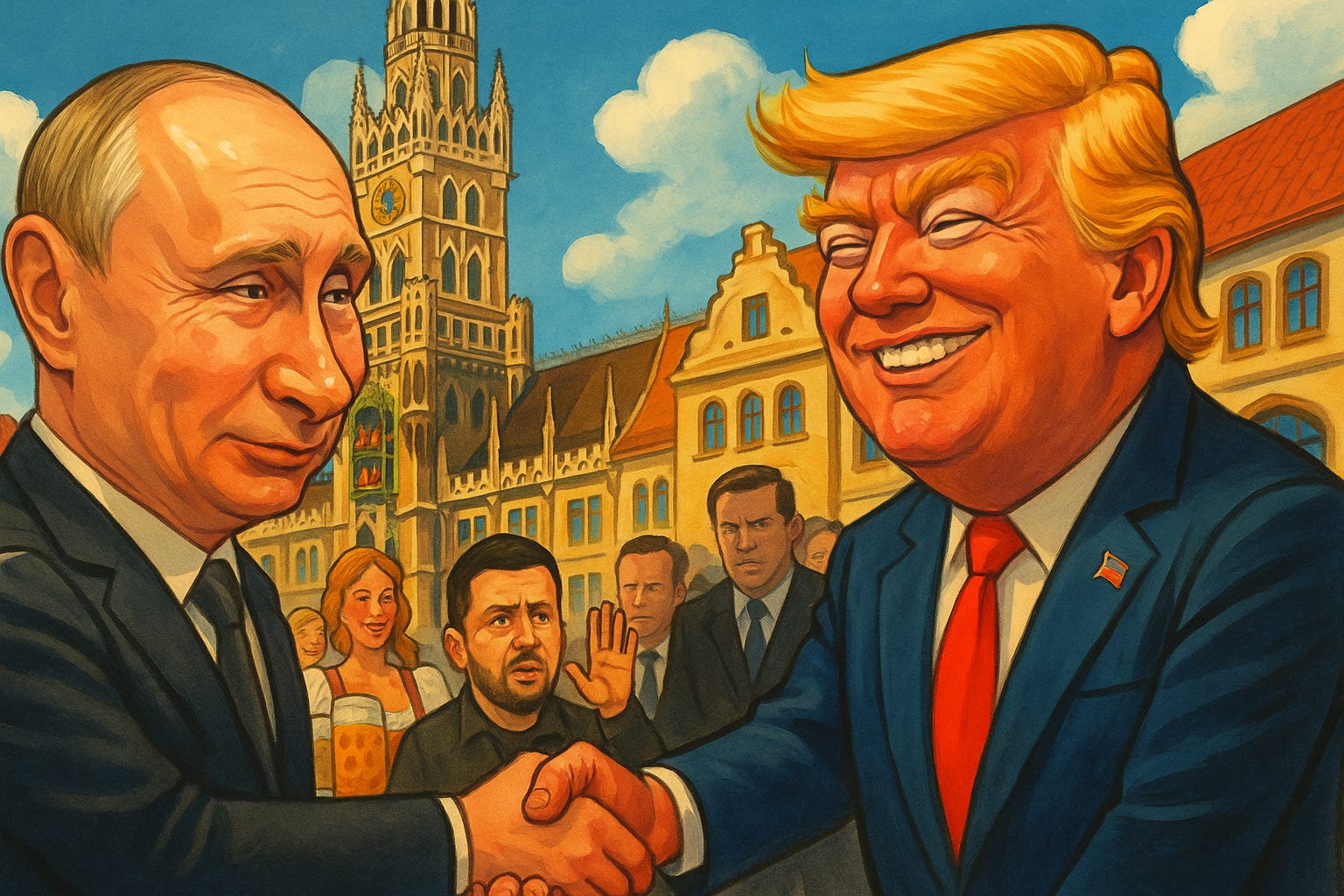
In late September 1938, as the leaders of Britain, France, Germany, and Italy converged on Munich, the sense of crisis in Europe was palpable. But in Prague, the emotion was something closer to disbelief. For years, Czechoslovakia had been assured, explicitly, that it would not stand alone in the face of German aggression. France had a treaty of mutual …
This excerpt is provided for preview purposes. Full article content is available on the original publication.