Dispatch #05: 'Otherness'
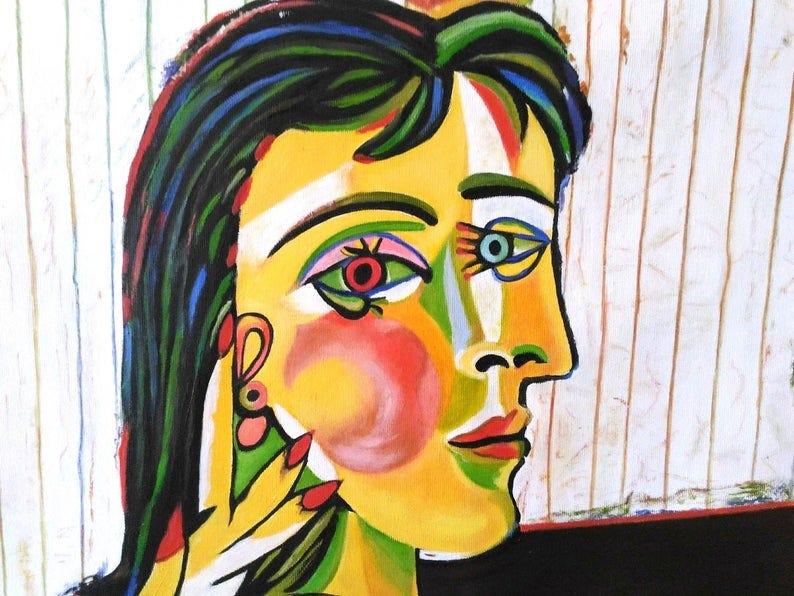
‘You look more like your mother.’
I can’t tell you how many times, as a kid I’d reel from these words being said to me. I remember I’d feel resentful and actually wonder why God (if you believe in him) didn’t make me the right kind of half-Asian. I didn’t want to look like my mother, I wanted to look more like my dad. I wanted to be half-White and half-Asian but the pretty kind. The sought after ‘mestiza’, with a light-skinned complexion, light eyes, straight hair, tall and probably freckled. Really simply, I wanted to be white passing with just a dash of Asian-ness, enough for people to look at me and think I was distinctive and unique.
For the majority of my life, I’ve been jealous of my brothers’ European features. My older brother has a straight nose, my little brother has rosy cheeks and fair skin. My complexion and my features have always been something I’ve been so sensitive about.
How could it not be?
I was always told that my older brother had the family nose, that he looked like a Stockinger. Each exclamation came with so much beaming pride that it just consolidated every insecurity I felt. It drew up the drawbridge to the other half of me and ignited an internal battle that resented parts of me. In some ways I just never felt good enough.
In the wider global context, this feeling is endemic. For countries like mine, a history of colonisation by the Spanish and then the Americans has cemented a power dynamic that undermines the local population’s ‘belief in themselves.’1In the case of the Philippines, U.S imperialism for example, has created a ‘massive form of pacification to systematically indoctrinate Filipinos on American culture and way of life…’ through education, media and culture.2 In essence, we put the latter above the former and we idealise it as something to aspire towards and hold it at a higher regard.
With respect to perceptions of beauty, for years we’ve been force fed venerated standards of it which we compare ourselves to resulting in highly strung feelings of inadequacy. The media has always stood firmly at the frontline, delivering and cementing these idealised standards. In her book, Constructing the Filipina: A History of Women’s Magazines 1891-2002, Georgina Encanto maps the obvious preference for mestizas through magazines - these women are portrayed as
...This excerpt is provided for preview purposes. Full article content is available on the original publication.