Amazon vouchers to fill school places
Today is the deadline for the capital’s parents to submit their applications for a primary school place. Ten years ago the media was full of headlines about London families being unable to get their children into schools due to a chronic shortage of places. Councils were rushing to build new classrooms to meet the demand caused by an early 2010s baby boom, high immigration, and an expanding city.
Today, the situation could not be more different. The number of children living in London is declining and schools are closing. I’ve been looking into a new, less well-known impact of that demographic change, as headteachers copy marketing tactics from private schools in a bid to persuade London’s parents to send them their kids – in many cases using limited school budgets to do it.
Scroll down to read that story.
London Underground on track to have 4G phone coverage in all tunnels by end of year
On Monday I was in a concrete room underneath active London Underground platforms, being shown the vast amount of telecoms equipment that has had to be installed to enable you to use your phone on a moving tube train.
This week Transport for London confidently declared that the entire Underground phone network will be live by the end of 2026, meaning there shouldn’t be a single location where you can’t stream video or check your emails. (Alternatively, if you’re a glass-half-empty person, there won’t be a single place that’s free from someone playing TikTok videos without headphones.)
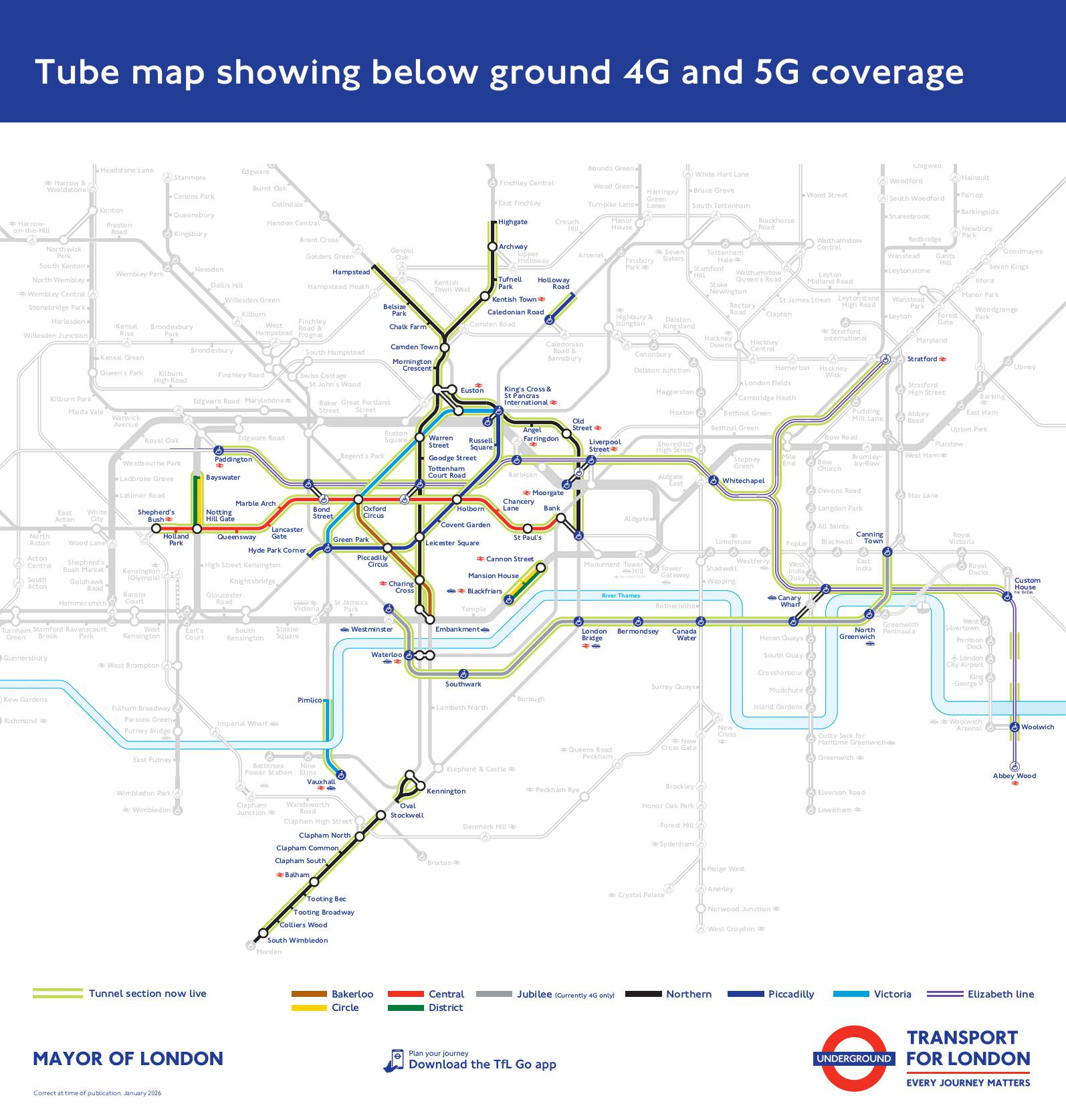
Previous attempts to introduce phone signal to the Underground have failed because the rival mobile networks couldn't agree how to do it. There isn’t the physical space to build multiple competing phone networks side-by-side and it didn’t make financial sense for EE or O2 to try to go it alone. In the end TfL struck a £1bn agreement with a company called Boldyn Networks, who have spent four years installing all the kit, running cables through tunnels and squeezing telecoms equipment into often-tiny gaps on almost every station on the underground.
Their solution involved building a network that serves all the phone networks equally. It then pops up above ground at various points across London, known as ‘hotels’,
...This excerpt is provided for preview purposes. Full article content is available on the original publication.