Strategic Blindness
By Simon Pearce
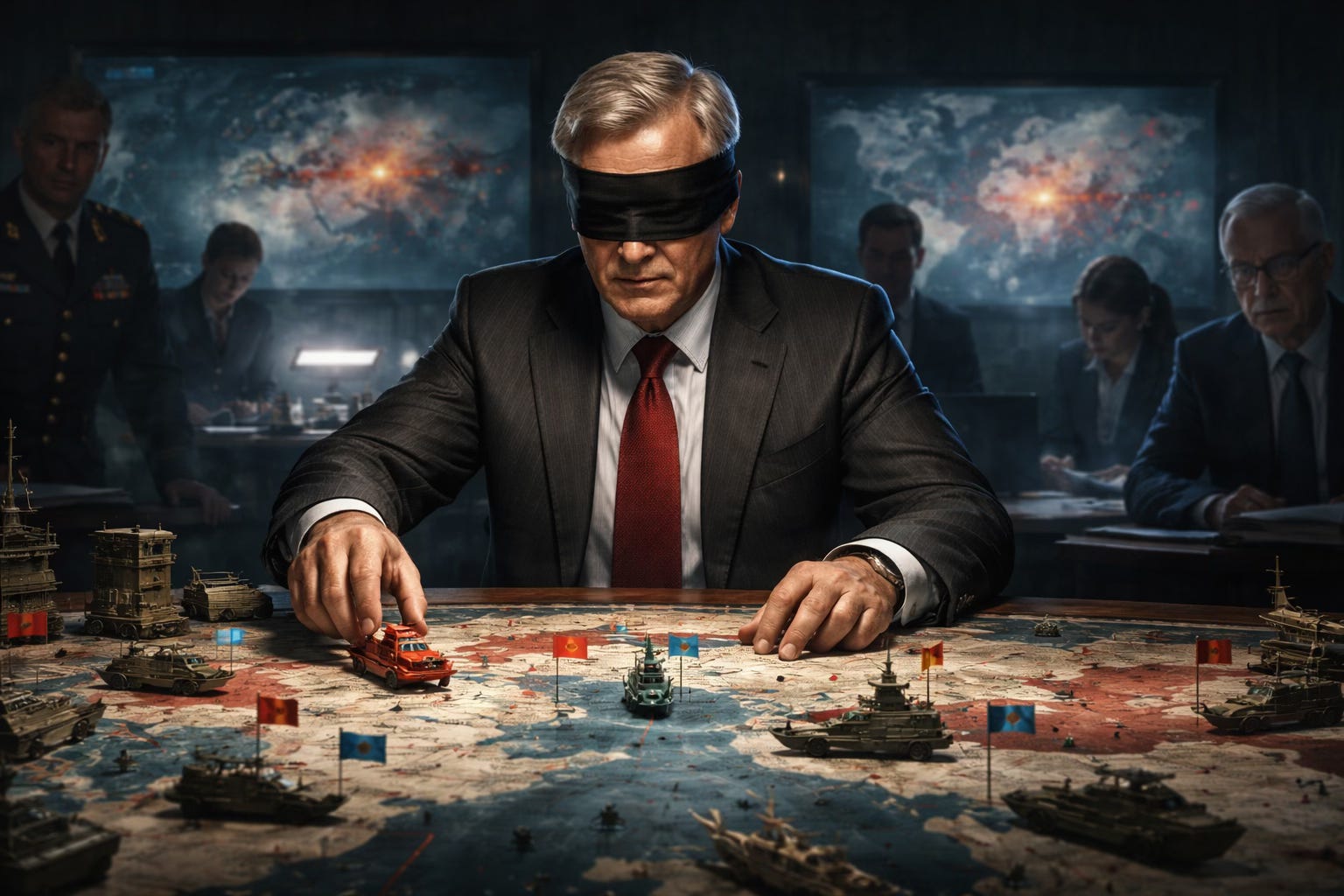
ARE ALL BAD SURPRISES INTELLIGENCE FAILURES?
When states suffer major strategic shocks—think of the United States, for example, when Pearl Harbor was attacked; or the USSR when Germany invaded in 1941; or the US again, on 9/11 and when Kabul fell—official postmortems tend to blame the debacle on an “intelligence failure.”
This explanation is usually incorrect.
In each of the cases above, intelligence agencies produced credible warnings of the impending catastrophe. Political and military leaders received those warnings, but chose not to act. As intelligence officials have been known to lament, it’s awfully convenient for politicians to attribute their policy failures to faulty intelligence—but it’s not so convenient for the intelligence officials.
Hamas’s attack on Israel on October 7, 2023, fits this pattern perfectly. Israel’s political and military leadership were in possession of detailed intelligence indicating that Hamas was preparing a major attack. Leaders even discussed plausible worst-case scenarios. But they chose to do nothing, because they couldn’t bring themselves to believe that Hamas would truly act on its plans.
WHY LEADERS FAIL TO USE INTELLIGENCE
Many political leaders have unrealistic expectations about how much certainty intelligence can provide. Intelligence agencies rarely say, “Event X will definitely happen on Date Y.” Political leaders and their military advisors must synthesize reports about capabilities and probabilities into effective plans of action.
Fear of international condemnation can be an impediment to aggressive preemptive action. Leaders fear they will be blamed for provoking precisely the scenario described in the intelligence warnings.
The worst failures occur when political leaders commit to a course of action before integrating new intelligence. Veteran CIA analyst John Gentry, for example, in an article titled “Intelligence Failure Reframed,” writes that CIA director Richard Helms failed to warn Lyndon Johnson that the war in Vietnam was going badly; he also quashed a CIA report warning against the 1971 invasion of Cambodia. He did so not because the CIA lacked relevant data and insight, but because Nixon had already decided to invade. The CIA did its job. It gathered and interpreted information. But by making it clear that this information would be unwelcome, the leadership failed.
During the Gulf War, Donald Rumsfeld warned of “unknown unknowns.” These days, the most dangerous unknown unknowns are not external. They’re within our own institutions and systems—and we don’t understand them well enough to address them. People within these institutions may
...This excerpt is provided for preview purposes. Full article content is available on the original publication.