Take Weird Ideas Seriously
Welcome to the 1,763 newly Not Boring people who have joined us since our last essay! Join 253,725 smart, curious folks by subscribing here:
Today’s Not Boring is brought to you by… Silicon Valley Bank

We are living through of one of the most interesting periods in startup history. Revenue is growing faster, rounds are bigger, funds are bigger, and companies are burning billions. Some categories are red hot and others can’t buy a bucket.
That’s why I found SVB’s new State of the Markets H2 2025 report so fascinating. It highlights a complex and uneven recovery across tech. While some sectors are experiencing renewed growth, others face persistent challenges with stagnant deal activity, depressed valuations, and limited exits.
50% of VC-backed tech companies having less than a year of cash remaining. Series A companies burn $5 to generate every $1 of revenue. One-third of US VC investment has come from deals involving the six largest funds. Things are changing fast.
Hi friends 👋,
Happy Thursday!
We haven’t done a weird essay (or a short one) in a little while, so with Halloween mere hours away…
Let’s get weird.
Take Weird Ideas Seriously
Jeova Sanctus Unus was an alchemist.
Before his death in 1727, he spent thirty years attempting to discover the vegetative spirit that made things grow and transform. He built furnaces, repeatedly mixed and heated various substances, and carefully recorded observations on color changes, crystallization patterns, and reactions between metals and acids. Over the course of those three decades, he would fill his notebooks with over one million words on the subject.
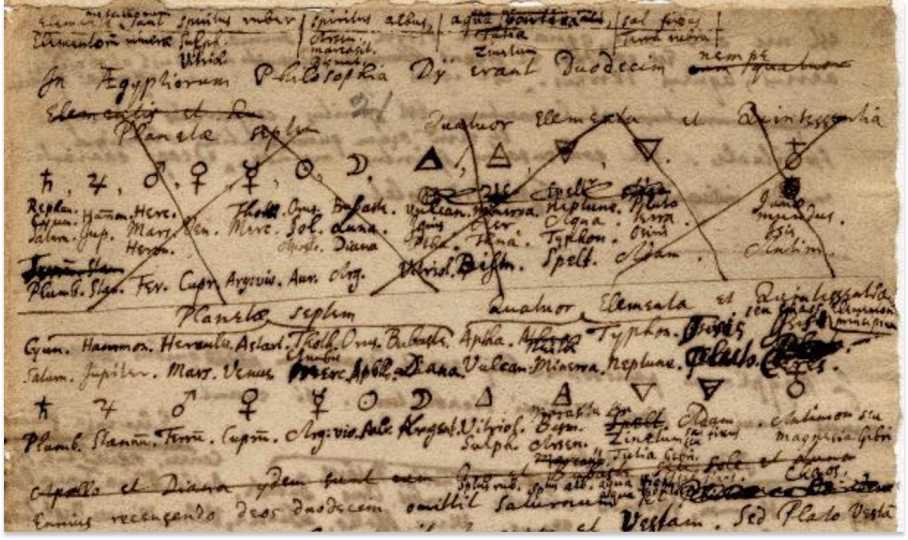
His family was so embarrassed by the work that when he died, they hid the notebooks. They didn’t want Jeova Sanctus Unus to destroy the reputation of the man who wrote under that pseudonym. His real name was Isaac Newton.
I love this story, because alchemy is a weird idea, wrong in hindsight, without which Newton probably never would have made the discoveries he did in mathematics and physics.
Those ideas were weird, too, at the time.
The idea that gravity could act through empty space was considered absurd and occult by contemporaries like Leibniz. Newton was comfortable with it because alchemy assumed sympathies and antipathies between substances acting on each other invisibly across space.
The idea that atoms were mostly void with small solid cores was controversial at the time, and ultimately right. But
...This excerpt is provided for preview purposes. Full article content is available on the original publication.