Our Socratic Seminar
Deep Dives
Explore related topics with these Wikipedia articles, rewritten for enjoyable reading:
-
Shirley Jackson
12 min read
The article centers on teaching 'The Lottery' but readers may not know Jackson's fascinating biography - her troubled life, her influence on horror literature, and the intense public backlash she faced when the story was published in 1948
-
Socratic method
13 min read
While the article explains the classroom adaptation, readers would benefit from understanding the original philosophical technique Socrates used, its role in ancient Greek education, and how it evolved through Western intellectual history
-
The Lottery
10 min read
The article discusses teaching this story but readers unfamiliar with it would gain valuable context from learning about its publication history, the unprecedented reader backlash, its literary analysis, and its enduring influence on American literature
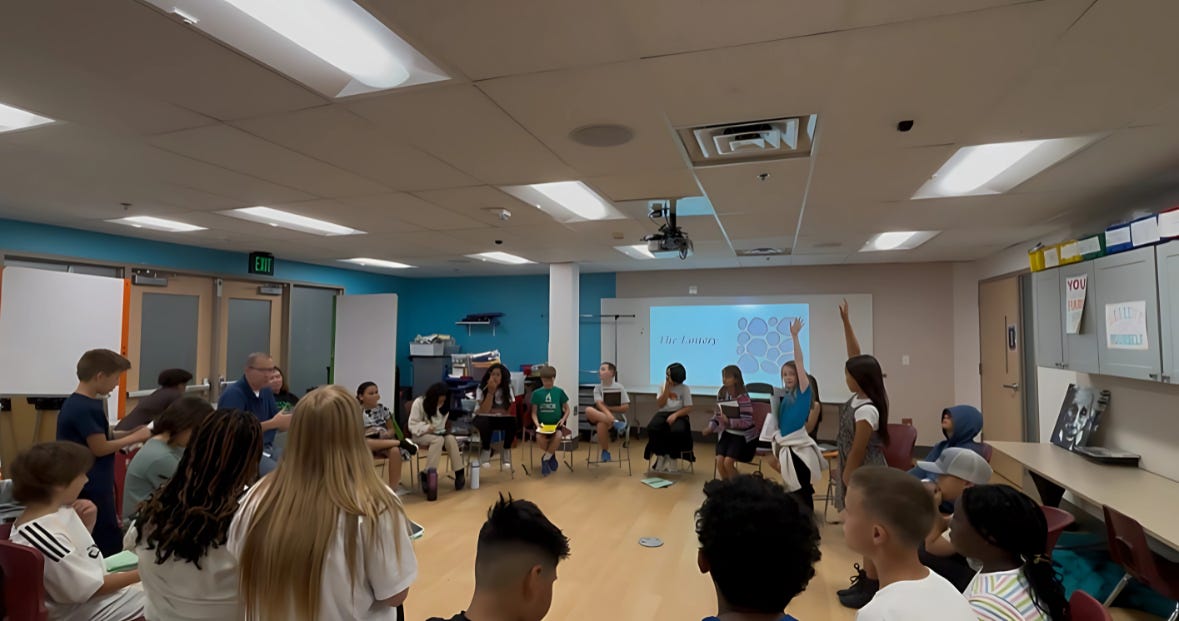
I was able to buy us an extra week. Knowing that our grade-level team was not fully prepared to implement our first 15 Day Challenge (of many), I successfully urged everyone to delay for a week. This gave me five free days to try something new with my students before we were all subjected to three weeks of identical instruction of a single standard, known colloquially in our school district as Same Way, Same Day.
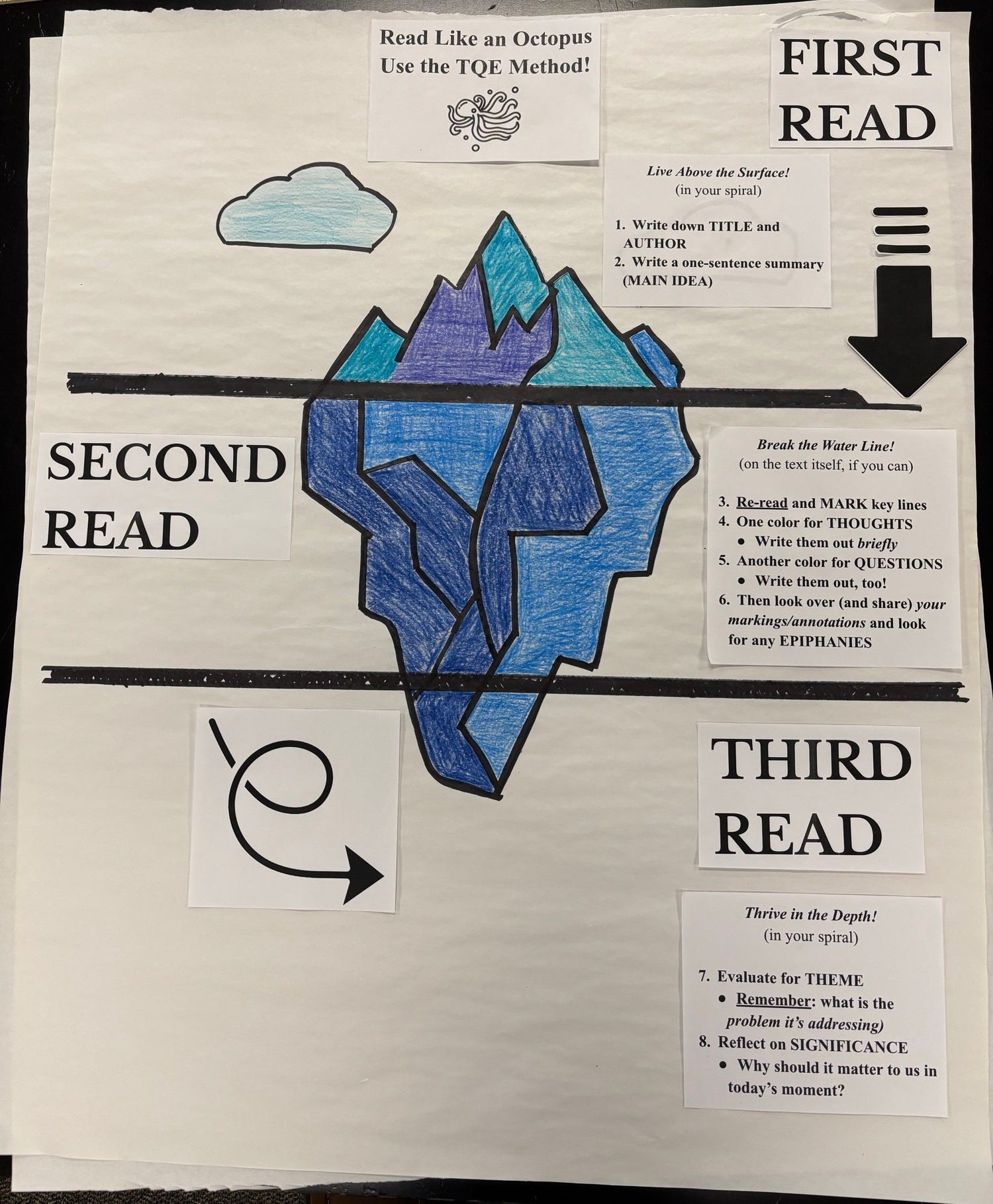
For the last six weeks, I have been teaching my students how to closely read, analyze, and discuss various short stories and poems. Using Marissa Thompson’s TQE Method as a foundational structure, students have been learning how ’s high school students Read Like an Octopus in their AP Literature course. By this point in the year, students are familiar with the process. FIRST READ: Students write down the title and author of the story, and a one-sentence summary. SECOND READ: Students highlight key lines from the text and annotate in the margins using Depth and Complexity Icons (What are your thoughts and questions?). They then compare their annotations with other students. THIRD READ: Students review their Dialectic Notebooks and highlighted text looking for epiphanies or big ideas/themes. What is the significance of this story/poem? What problem is the author addressing?
Each week, students have been reading, annotating, and discussing longer, more complex stories and poems.1 We recently read Rod Sterling’s teleplay, The Monsters are Due on Maple Street, one of my all-time favorite Twilight Zone episodes. The students loved reading, annotating, and then watching the Twilight Zone episode. It led to such a great conversation about prejudice, scapegoating, and mob mentality.
Now that I had this week of freedom, how would I use it? Would we read another short story and continue practicing annotating the text? I have been teaching my students how to have academic classroom discussions using Matthew Kay’s discussion guidelines from his books Not Light, but Fire and We’re Gonna Keep On Talking. Should we read another poem and discuss it as a class, or should I try something different?
The Socratic Method
Many are familiar with the origins of the Socratic Seminar. Developed by the Greek philosopher, Socrates (470-399 BCE), the Socratic Method is a dialogue between teacher and student. This method of questioning,
...This excerpt is provided for preview purposes. Full article content is available on the original publication.