Weekend Update #160: The US Becomes A Mouthpiece To Pass On Putin's Demands
Deep Dives
Explore related topics with these Wikipedia articles, rewritten for enjoyable reading:
-
Budapest Memorandum
13 min read
The article discusses US security guarantees to Ukraine and compensation for them. The Budapest Memorandum is the foundational 1994 agreement where Ukraine gave up nuclear weapons in exchange for security assurances from the US, UK, and Russia - directly relevant to understanding the historical context of US security commitments to Ukraine.
-
Finlandization
14 min read
The 28-point plan described appears designed to limit Ukraine's sovereignty and align it with Russian interests. Finlandization refers to the Cold War process where Finland maintained nominal independence while deferring to Soviet foreign policy - a historical parallel to what Russia seeks for Ukraine.
-
Molotov–Ribbentrop Pact
9 min read
The article describes a major power (US) essentially passing along demands from an authoritarian regime to a smaller nation. The 1939 Nazi-Soviet pact, which divided Eastern Europe between great powers without consulting the affected nations, provides historical context for how great power diplomacy can sacrifice smaller nations' sovereignty.
Hi All,
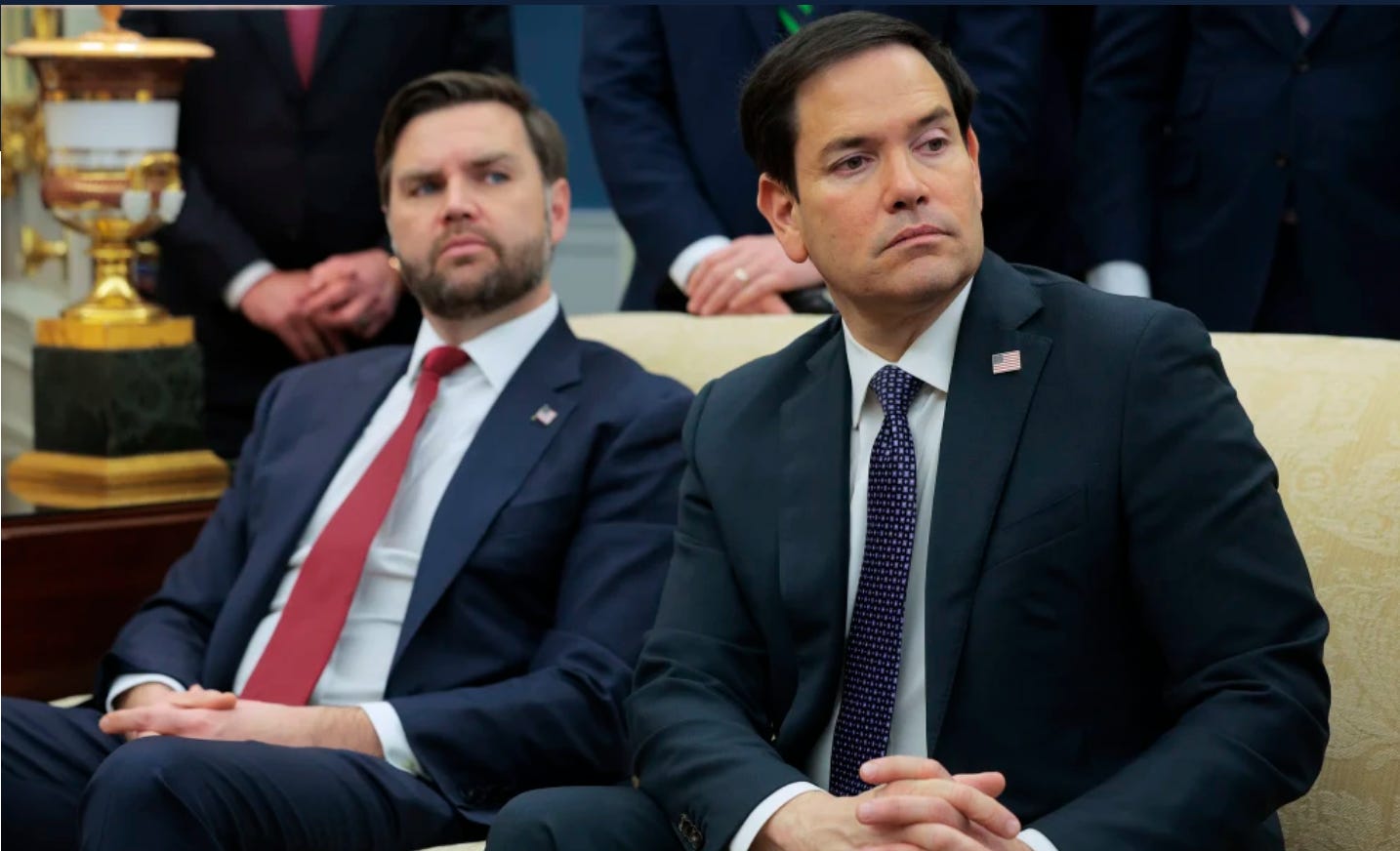
Well, what a difference a week makes. Last week there were still many loud voices discussing just how profound the Trump pivot towards Ukraine was in reality (ho, ho). People were focused on “crippling” sanctions on Russia, on Trump being angry at Putin, etc. Then on Wednesday rumors started coming out that the Trump administration had an approved “peace” plan for Russia-Ukraine and the rest, as the say, is tragedy. When the details on the 28 points of the plan were released they were shown to be a threat to the continuing existence of Ukraine as a free and sovereign state (though that did not stop some Ukraine-Trump backers from showing their true colors and saying what a solid plan it was). Then even more fascinating news broke. The peace plan seems to have been at least partly taken word for word from Russian documents—and then we ended up with some fascinating reactions from within the Trump administration with JD Vance playing a key role as a backer of the deal and Marco Rubio (possibly) trying to disassociate himself. Welcome to the 2028 election.
What will happen remains wildly indeterminate. The plan for now is and continues to be the official position of the US Government in upcoming talks with Ukraine, and the Ukrainians are supposed to have until Thursday to agree to them or not. None of that has changed.
The US Becomes A Mouthpiece To Pass On Putin’s Demands
I’m starting this update later in the week, yesterday, after the 28 points had been released, and while the Trump administration was in the process of threatening Ukraine if the Ukrainians did not agree to them. People started looking at the English-language text of the 28 points and noticed weird linguistic ticks. In a nutshell, many of the phrases were commonly used Russian phrases that seem to have been translated directly into English. Here is one story, and another story about the linguistic analysis. It certainly seems a strongly made case (though I am no expert on the passive voice of the Russian language).
First, we need to acknowledge what this means. Not only has the Trump administration ended its “Long Con” as I wrote yesterday—the con being that Trump and his acolytes were actually honest brokers and wanted to work with Putin and might hammer Russia. It has
...This excerpt is provided for preview purposes. Full article content is available on the original publication.