Which Songs Do We Replay the Most? A Statistical Analysis
Deep Dives
Explore related topics with these Wikipedia articles, rewritten for enjoyable reading:
-
Mere-exposure effect
14 min read
The psychological phenomenon explaining why repeated exposure to songs increases our preference for them - directly relevant to understanding why we binge-listen to tracks and why familiarity breeds fondness rather than contempt
-
Earworm
12 min read
The article opens by describing 'Smooth' as an unavoidable earworm. This cognitive phenomenon of involuntary musical imagery explains the neurological basis for why certain songs get stuck on repeat in our minds

Intro: Too “Smooth”
To listen to the radio in the early 2000s was to hear the song “Smooth,” a Latin pop-rock juggernaut by Carlos Santana and Rob Thomas that features the most recognizable guitar riff in modern music. The song’s overwhelming ubiquity has given it multiple lives: first as an unavoidable earworm, then as an overplayed annoyance, and finally as a nostalgia-driven meme.
Released in 1999, “Smooth” was a radio sensation, spending 12 consecutive weeks at No. 1 on the Billboard charts, a feat never achieved by The Beatles, Michael Jackson, or The Rolling Stones. I distinctly remember hearing a promo for the very radio station I was listening to that featured “Smooth,” immediately followed by the song itself, as if to say, “We’re a radio station that plays ‘Smooth,’ and here you go.”
The track remained a longstanding staple of mainstream culture and later became an ironic internet fascination for millennials. In 2013, The Onion lampooned the song’s inescapability with the headline: “Smooth Sweeps the Grammys for the 13th Year in a Row.” A few years earlier, Billboard ranked “Smooth” as the second most popular song in the history of the Hot 100—topped only by “The Twist.”
And then things got weird. In 2016, a picture of a fan-made T-shirt saluting the track was posted on Twitter and was later retweeted by Rob Thomas.
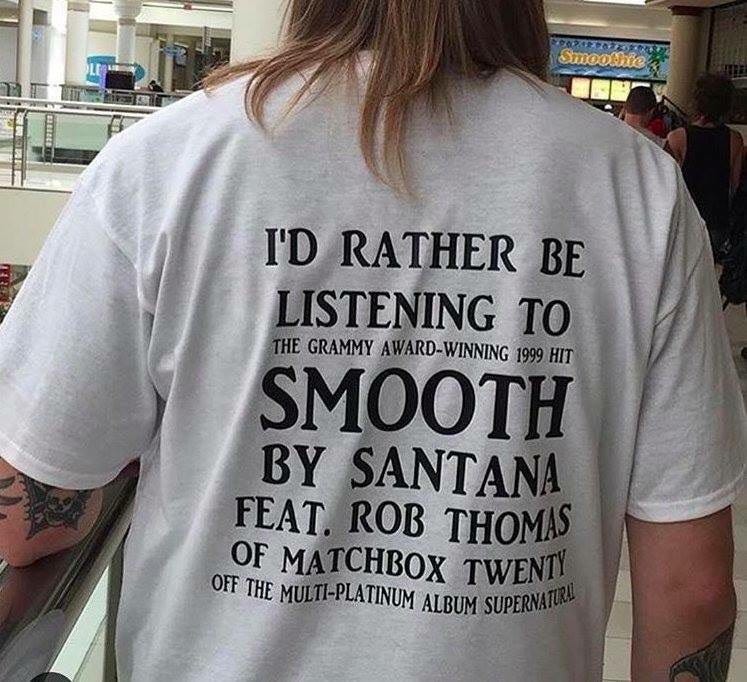
Suddenly, a 15-year-old song was back in the zeitgeist, as the internet rediscovered and ironically celebrated its former ubiquity.
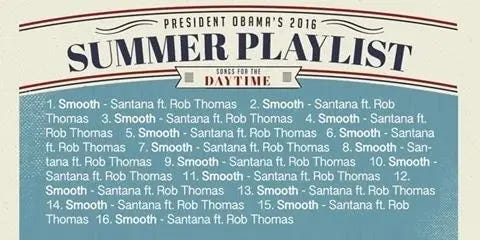

What fascinates me most about this “Smooth”-centric discourse was its meta quality: people were celebrating the song for having once been so universally celebrated. “Smooth” is one of many monolithic tracks binge-played to the point of meme-ification, alongside hits like “Wonderwall,” “The Dog Days are Over,” and “Ho Hey.”
Unlike film and TV, a single piece of music can be consumed multiple times in a concentrated period, with this repetition often enhancing its effect. This binge behavior raises a question central to today’s analysis: What dictates a song’s repeatability? Is there a quantifiable trend to the way music is repeatedly consumed (and later disposed)?
So today, we’ll explore the most repeat-worthy songs, how this behavior coincides with listener age, and how our relationship with binge-listening evolves as our cultural
...This excerpt is provided for preview purposes. Full article content is available on the original publication.