Trump’s Venezuela Rhetoric Echoes Bush Sr’s 1989 Push to Oust Panama’s Noriega
Deep Dives
Explore related topics with these Wikipedia articles, rewritten for enjoyable reading:
-
Gulf of Tonkin incident
12 min read
Linked in the article (36 min read)
-
United States invasion of Panama
13 min read
The 1989 Panama invasion is the central historical parallel the article draws. Understanding the full scope of Operation Just Cause—the military tactics, civilian casualties, international reaction, and long-term consequences—provides essential context for evaluating the current Venezuela situation.
-
Manuel Noriega
17 min read
The article extensively compares Maduro to Noriega but assumes familiarity with Noriega's complex history as a CIA asset, his relationship with multiple U.S. administrations, and his eventual prosecution. His full biography illuminates the pattern of U.S.-Latin American strongman relationships.
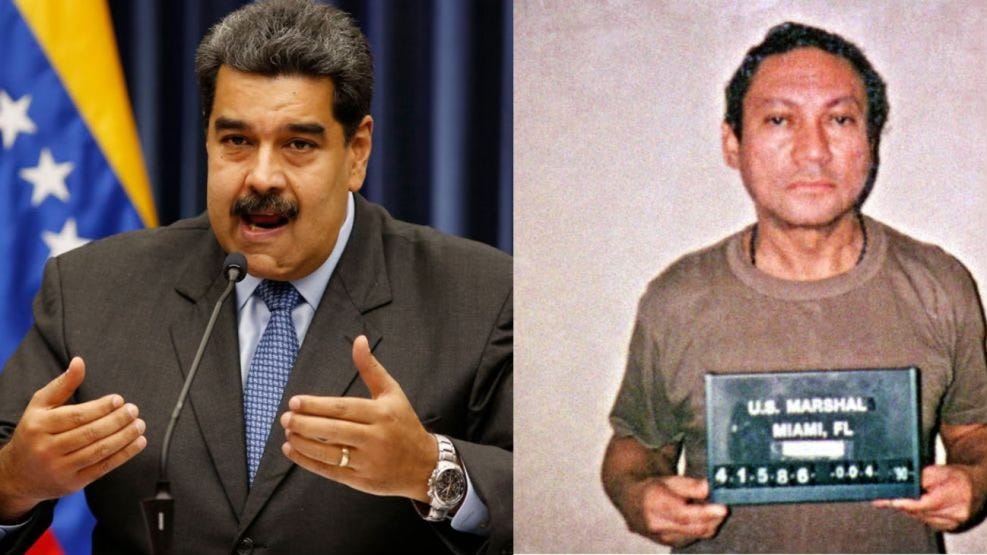
President Trump ratcheted up his pressure campaign against Venezuela on Wednesday, announcing that the United States had seized a “very large” oil tanker off the Venezuelan coast. “Largest one ever seized, actually, and other things are happening,” Trump declared. It was a dramatic escalation in the months-long confrontation between the two.
As the president searches for a saleable pretext for attacking Venezuela and overthrowing its leader, Nicolas Maduro, the United States is approaching a largely forgotten anniversary that helps explain what is happening: the Dec. 20, 1989 invasion of Panama.
Throughout 1989, President George H.W. Bush hunted for a justification to launch military action against a sometime U.S. ally, Gen. Manuel Antonio Noriega, the strongman of Panama. Trump has been following a similar playbook toward Maduro. In both instances, the presidents faced an authoritarian thug who was, in fact, persuasively charged with crimes: Noriega was eventually convicted of drug trafficking; Maduro is under investigation by the International Criminal Court for crimes against humanity. But in both cases, the issue of their crimes was a convenient distraction rather than the true policy driver.
The challenge for both presidents was a genuine casus belli—an immediate threat to national security. Bush, who already had U.S. military units stationed in bases in and around the U.S.-controlled Canal Zone, eventually seized on dubious pretexts--including a rhetorical “declaration of war” against the U.S. by Noriega. In fact, there was no such declaration. Panama’s National Assembly had passed a resolution in which it said a state of war “exists” because of U.S. actions. Bush also used the killing of a civilian-clad U.S. Marine lieutenant whose car ran a Panamanian checkpoint a few days before the invasion to say Noriega was endangering Americans.
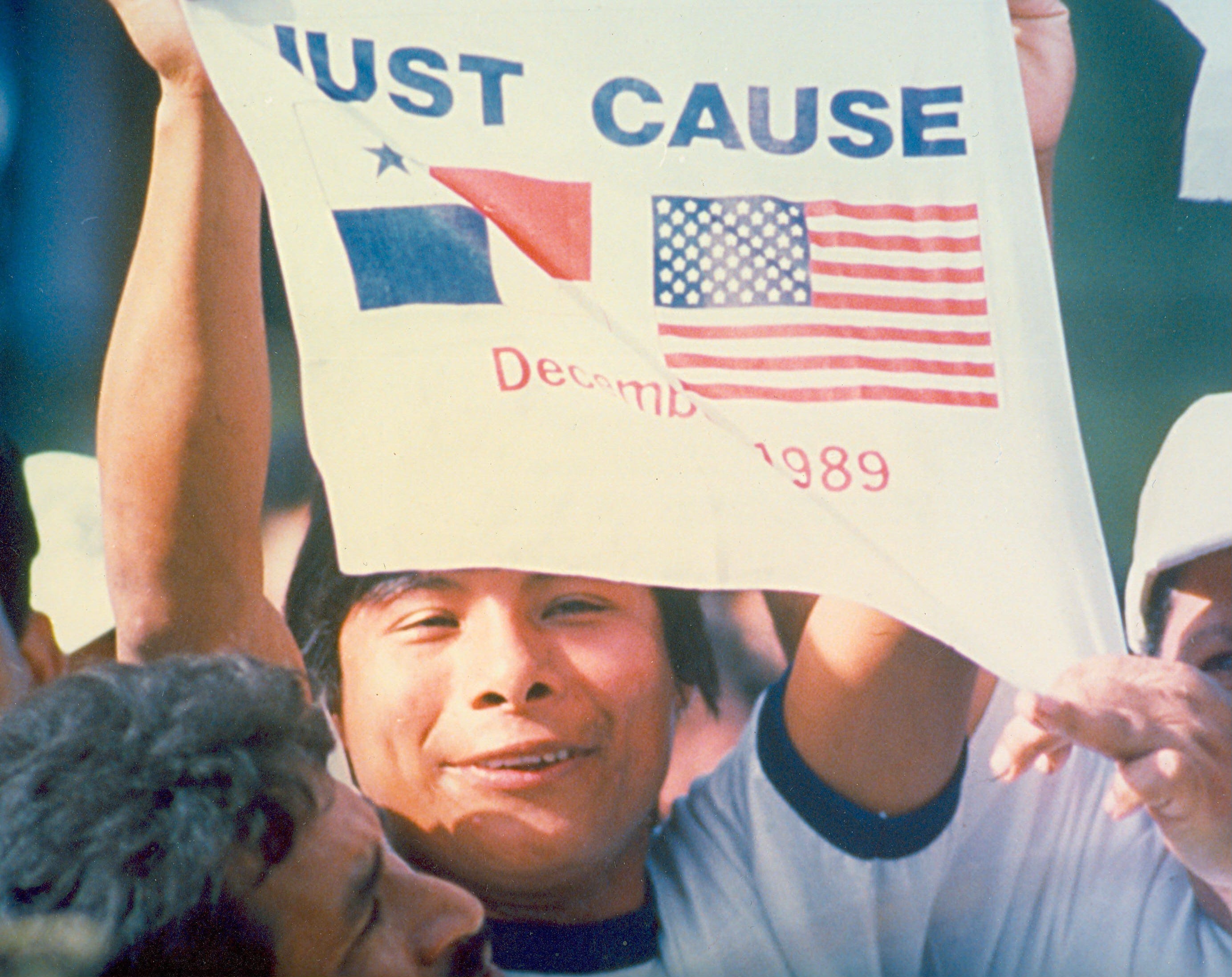
It remains to be seen whether Trump’s seizure of the oil tanker—Maduro has called it piracy—will provoke a military response from the regime. So far, Trump, lacking even a vague armed response from Maduro to exploit, has resorted to a fabrication: the claim that Maduro is flooding the United States with cocaine with the goal of killing Americans. This, too, mirrors Bush’s playbook for Panama. Bush claimed he invaded the isthmus “to safeguard the lives of Americans [and] to combat drug trafficking.” What
...This excerpt is provided for preview purposes. Full article content is available on the original publication.