Eliyan: The Ultimate Chiplet Interconnect
It’s been a while since we checked in on semiconductor startups, but they remain one of the best ways to glimpse the industry’s future. What problems are they solving, and what clever approaches are they taking?
With connectivity stocks running hot ( etc ), it’s a good time to spotlight Eliyan.
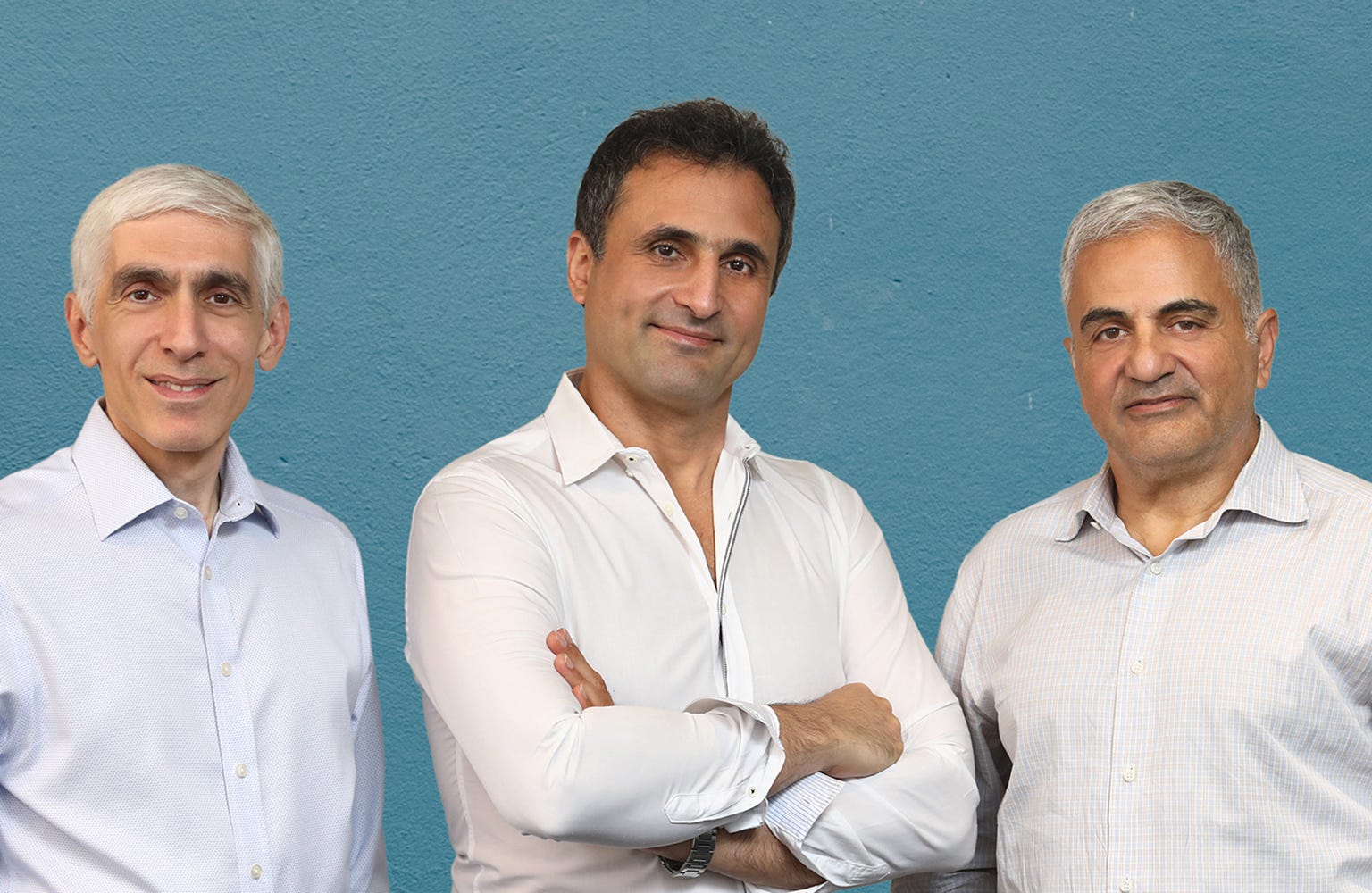
And here’s a fun segue to introduce Eliyan’s CEO Ramin Farjadrad.
Ramin Farjadrad’s Story
Just yesterday, Infineon announced it completed the acquisition of Marvell's Automotive Ethernet business for $2.5B. This particular line of business has roots back in Marvell’s 2019 acquisition of Aquantia for $450M. That’s a nice 5x flip btw!
Aquantia pioneered multi-gigabit Ethernet solutions that became IEEE standards and helped drive the company to a successful IPO before the acquisition. And Aquantia was co-founded by none other than Eliyan co-founder Ramin Farjadrad.
Here’s a fun video of Ramin at Aquantia talking about lessons learned as a serial technology entrepreneur from back in 2016:
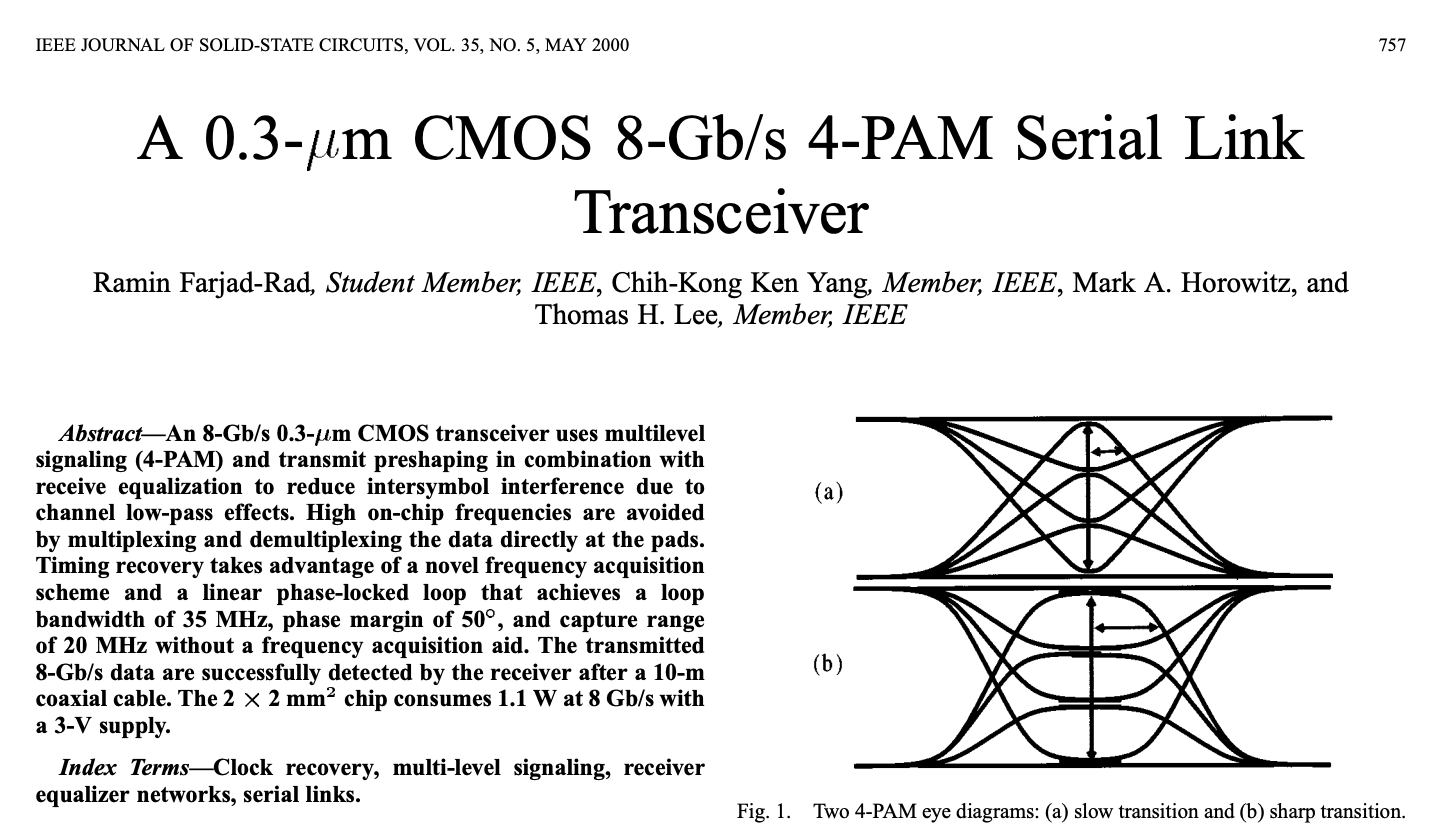
Ramin earned his Ph.D. in Electrical Engineering from Stanford, where he developed one of the first gigabit transceivers built entirely in CMOS. At the time, such high-speed links were almost exclusively made in exotic processes like GaAs. Farjadrad pushed performance from 1 Gbps to 10 Gbps, proving that mainstream CMOS could deliver multi-gigabit signaling without the cost or complexity of mixed-process designs.
Check out his May 2000 paper A 0.3-um CMOS 8-Gb/s 4-PAM Serial Link Transceiver:
After Stanford, Ramin founded Velio Communications to commercialize multi-gigabit SerDes for terabit-class optical switches, aiming to solve long-haul and WAN interconnect bottlenecks during the early internet buildout. The company secured substantial pre-orders of roughly $500 million from Nortel and Lucent, but the 2001 optical market crash caused demand to collapse almost overnight, ultimately forcing a sale of some assets to Rambus and the rest of the compay to LSI. In the YouTube video above, Ramin mentions how the experience underscored the risks of overconcentration in a single vertical and the importance of maintaining roadmap diversification.
Ramin went on to found Aquantia with the goal of leapfrogging the industry in 10 Gbps Ethernet over twisted-pair copper (10GBASE-T) at a fraction of the cost of optical modules. The company solved the technical barrier by reducing per-port PHY power from roughly 15 watts to under 5
...This excerpt is provided for preview purposes. Full article content is available on the original publication.