Monopoly Round-Up: Why Did Trump Just Attack the Fed and Corporate America?
Deep Dives
Explore related topics with these Wikipedia articles, rewritten for enjoyable reading:
-
TransDigm Group
13 min read
The article specifically mentions TransDigm as a 'bottom feeder' defense contractor that hikes prices by thousands of percent. Understanding this company's business model of acquiring sole-source military parts suppliers and dramatically increasing prices illuminates the defense industry financialization problem discussed.
-
Share repurchase
14 min read
Trump's executive order banning buybacks for defense contractors is central to the article. Understanding the mechanics of stock buybacks, their history since SEC Rule 10b-18 in 1982, and the debate over whether they benefit shareholders at the expense of workers and investment provides crucial context.
-
Institutional investor
13 min read
Trump's proposed ban on institutional investors buying single-family homes is a major policy discussed. Understanding what institutional investors are, their scale, and their growing role in residential real estate since 2008 helps readers grasp why this is politically significant.
Lots of monopoly related news, as usual. Google is now emailing children to tell them how to avoid parental controls, a price war brought down the price of weight loss drugs, there’s cool innovation by Lego toys, and the Trump administration actually blocked a merger!
Before getting to that, let’s focus on how Trump is managing the problem of affordability and politics. Over the past week, we got a clearer idea how this administration will set itself up for the midterm elections. The President announced attempts to crack down on credit card companies, big landlords, and defense contractors, and his administration is now pursuing a high-profile criminal investigation of the Chair of the Federal Reserve, Jay Powell. The moves are all happening, more or less, because of an increasing panic in the White House over high prices, as the President sees that the public is unhappy with his performance.
In short, a key political theme of the next year for the Trump administration and the Democratic opposition is affordability, with a lot of rhetoric of cracking down on wayward corporations. Will it work? Is it sincere? That’s the lens I’m going to use in looking at the events of the past week.
To answer these questions, I’ll observe another less noticed move last week that I find more significant. The Justice Department waived through a multi-billion real estate brokerage merger in what looks like a corrupt deal to create a home buying monopoly. Though few noticed this deal, it is one of many below-the-radar choices that will likely raise consumer costs. There is, in other words, tension between the announced agenda and the real one.
From Make America Wealthy Again to Affordability
Ok, let’s start with the political context. The theme of the President’s domestic economic policy in his first year was not affordability, it was, in Trump’s words, Make America Wealthy Again. It is best summarized by this picture at the inaugural.
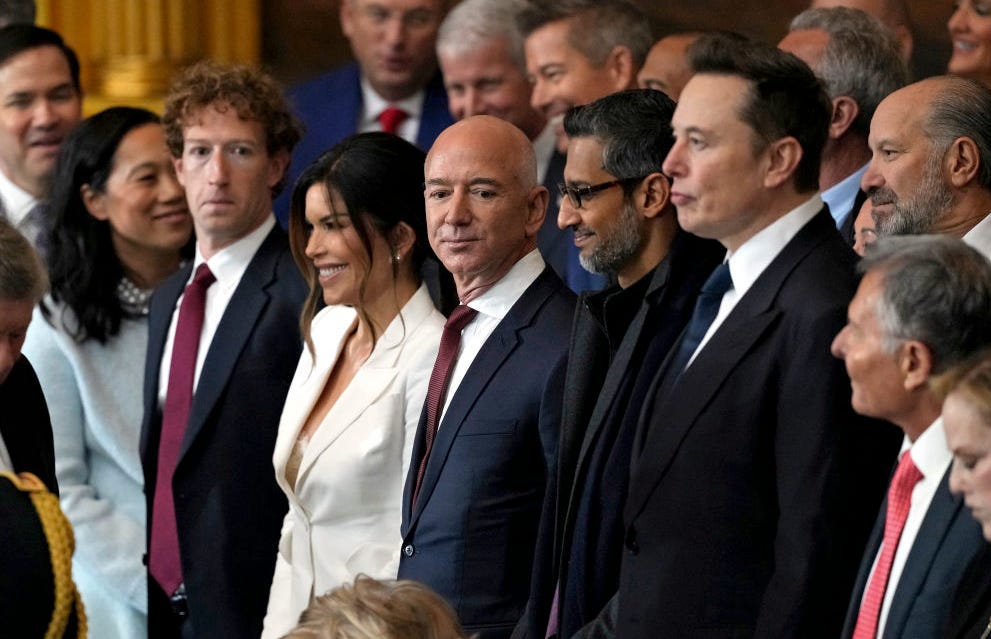
There were some tariffs, and DOGE, but mostly Trump pursued tax cuts for big corporations as a mechanism to engineer prosperity, with the view that large businesses would do much more investment if they had a lighter tax burden and fewer government rules. The elections of 2025, when Democrats romped, and Democratic socialist Zohran Mamdani won a shocking upset in New York City, show that this agenda hasn’t delivered politically. The public is upset with high
...This excerpt is provided for preview purposes. Full article content is available on the original publication.