A phony peace process to appease Trump
Deep Dives
Explore related topics with these Wikipedia articles, rewritten for enjoyable reading:
-
Budapest Memorandum
13 min read
The article discusses security guarantees as a core Ukrainian demand. The Budapest Memorandum is the 1994 agreement where Ukraine gave up nuclear weapons in exchange for security assurances from Russia, the US, and UK - directly relevant to understanding why Ukrainians demand ironclad guarantees this time.
-
Minsk agreements
11 min read
The article frames current negotiations as potentially 'phony' - the Minsk agreements (2014-2015) are the most relevant historical precedent of failed Ukraine-Russia peace processes, showing how previous diplomatic efforts collapsed and why Ukrainians are skeptical of Russian commitments.
-
Valerii Zaluzhnyi
10 min read
The article mentions Zaluzhnyi's op-ed and notes he's a potential challenger to Zelenskyy. His biography as the architect of Ukraine's early defense and his complicated relationship with the government provides essential context for understanding Ukrainian internal politics during wartime.
Editor’s note: Think we’re doing something unique and worth supporting? Upgrade today to get access to all our reporting.
Your subscription goes towards batteries, rent, first aid kits and body armor for our team.
In return you get the ability to comment on our stories, read our behind-the-scenes reporter’s notebooks section, and receive our breaking news alerts!
The 28 point plan presented by the Russians and Witkoff raises an interesting question: what outcome would Ukraine see as a victory?
It’s worth thinking about because it informs what the Ukrainians want most, and what they would be last to barter away in any peace negotiation.
If you look at what Zelenskyy, his diplomats and his senior officials have said over the last three years, you come across a few recurring criteria. Only one relates to territory – many have said they want the restoration of the 1991 borders, which include Crimea.
Beyond that are two other commonalities: firstly, that there be prosecutions for Russian war crimes, and secondly, that Ukraine must be given alliances or security guarantees that prevent a war like this from ever happening again.
The 28 point plan ran over all of these criteria. And yet Ukraine did not reject the points outright. Over the last couple weeks, Ukrainian diplomats negotiated with this patently unacceptable proposal as the unfortunate backdrop.
Russia’s proposal suggests it has not abandoned its original plans of subjugating Ukraine: prohibiting it from joining NATO, limiting the size of its military, and impunity for war crimes.
All these things imply that Ukraine will not be a sovereign country, able to make its own decisions about its own diplomatic relations, how it defends itself, and how it seeks justice.
Even as Zelenskyy and his colleagues are negotiating, it seems like they are performing a theater of sorts. The theater has an audience of one: Donald Trump.
And it shows how much U.S. foreign policy has fallen over the last year. A year ago, the United States was contributing significant military and humanitarian aid to its Ukrainian ally. Now Donald Trump is making nastier and nastier demands, even as he holds less and less leverage.
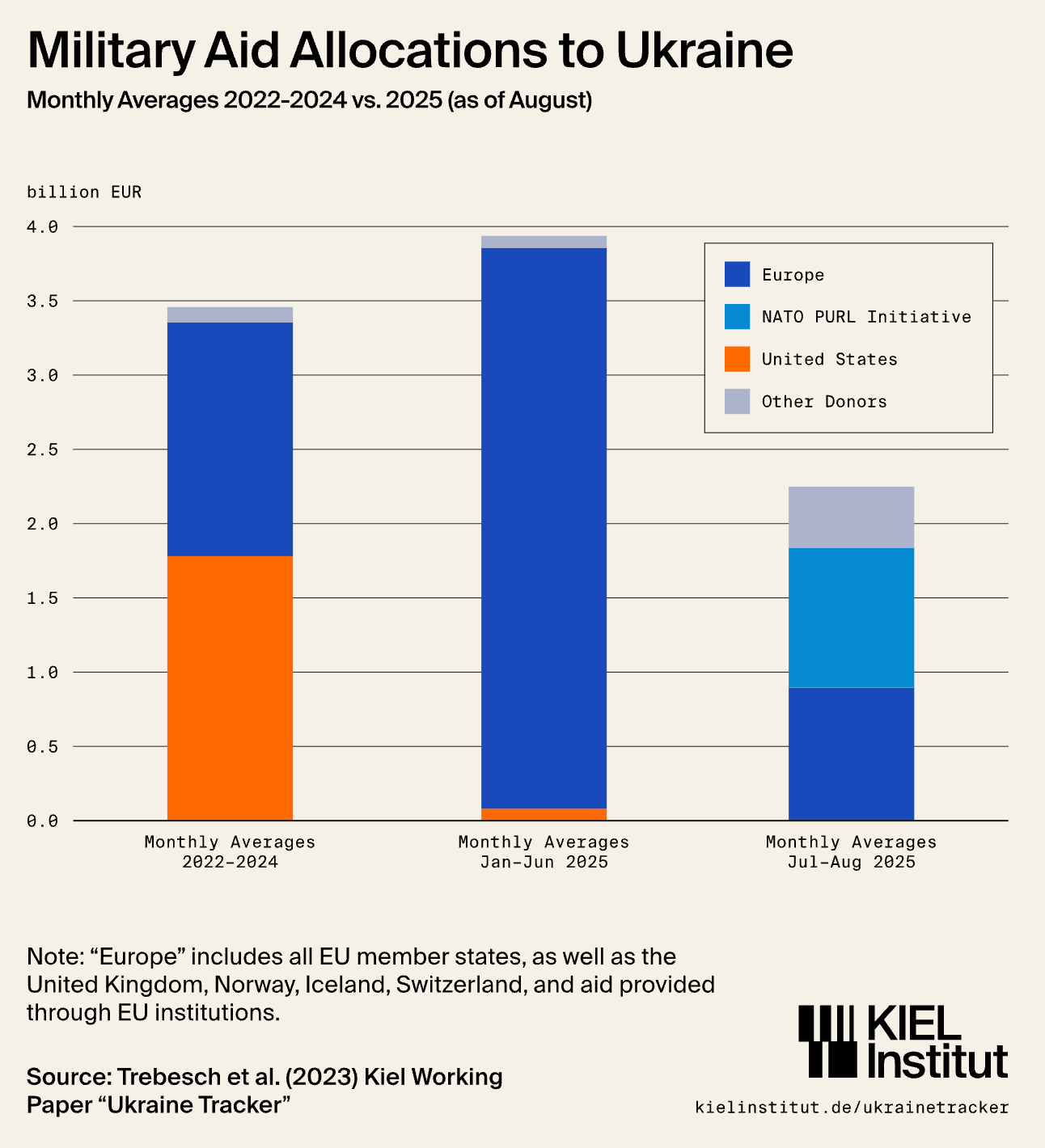
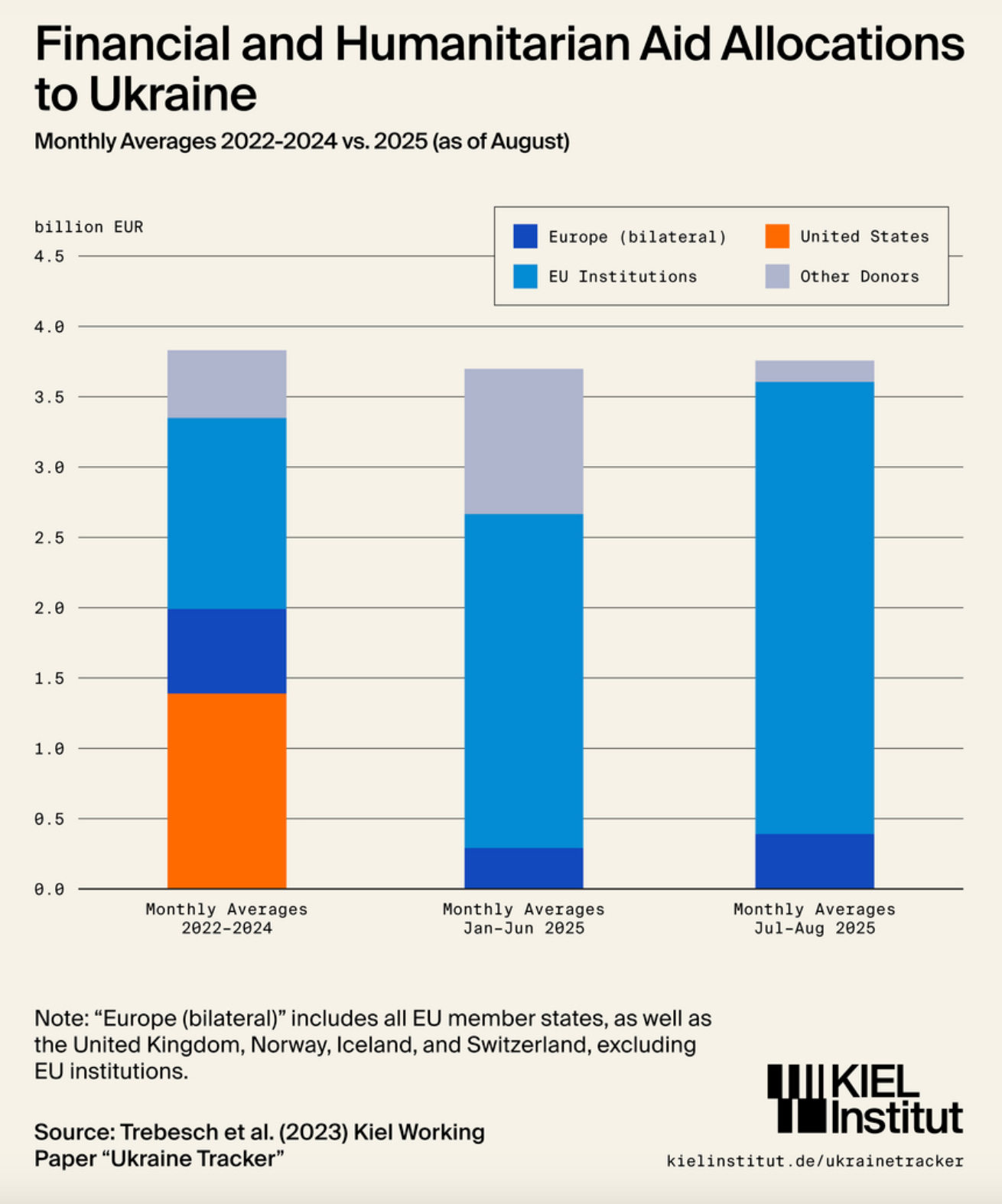
Research by the Kiel Institut shows that American humanitarian and military aid has
...This excerpt is provided for preview purposes. Full article content is available on the original publication.