What Captures Our Attention in an Algorithmic Age? A Statistical Analysis
Deep Dives
Explore related topics with these Wikipedia articles, rewritten for enjoyable reading:
-
Zeitgeist
10 min read
The article's central question revolves around defining and measuring the zeitgeist in 2025. Understanding the philosophical and cultural history of this German concept—how it emerged from Hegel and Romantic philosophy to describe the 'spirit of the age'—would give readers deeper context for why capturing collective cultural attention matters.
-
Filter bubble
14 min read
The article discusses 'algorithmic personalization' and 'siloed, algorithm-driven consumption' as forces fragmenting culture. The filter bubble concept, coined by Eli Pariser, provides the theoretical framework for understanding how recommendation algorithms create personalized information environments that reduce shared cultural touchstones.
Intro: What is the Zeitgeist in 2025?
In 1998, movie theaters noticed an inexplicable phenomenon surrounding the release of Meet Joe Black, a forgettable drama starring Brad Pitt and Anthony Hopkins. While the film itself was nothing special, moviegoer behavior was cultish and bizarre. A few minutes into the movie, many audience members simply got up and left the theater, with this confounding trend playing out in cinemas nationwide.
Theaters were baffled: Why did consumers purchase a full-price ticket only to leave shortly after the film began? Well, it turns out Meet Joe Black wasn’t the main attraction.
The real draw was the debut trailer for Star Wars: Episode I — The Phantom Menace, which played before Meet Joe Black. The Phantom Menace was the first expansion of Star Wars’ cinematic universe in over fifteen years. Fans were so eager to catch a glimpse of George Lucas’ long-awaited prequel that they were willing to pay $15 to see ten minutes of a completely different film.
The premiere of The Phantom Menace was arguably the most feverishly hyped movie opening of the 1990s. Fans waited for hours in lines that wrapped around entire city blocks just for a decent seat (or a ticket). If you’d asked the average person what that month’s biggest cultural event was, nearly everyone would have said “Star Wars.”
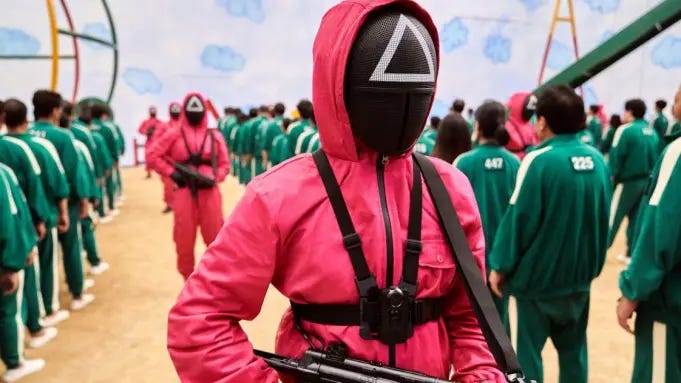
Flash forward to today, a time when popular culture is routinely described as “fragmented” or “siloed.” In 2025, identifying a single, unifying cultural touchstone is far more difficult. Two decades of content abundance—filtered through the kaleidoscopic prism of algorithmic personalization—have given rise to a complicated, perhaps unanswerable question: What does the zeitgeist look like in 2025? For better or worse, I decided this was the perfect jumping-off point for an analysis: an attempt to quantify the (ostensibly) unquantifiable.
So today, we’ll explore how collective culture has changed over the past two decades, what dominates the zeitgeist in an age shaped by personalization, and how the notion of event-ization has evolved post-pandemic.
Today’s newsletter is sponsored by Refind.
Brain Food, Delivered Daily

Every day, Refind analyzes thousands of articles and sends you the best reads explicitly tailored to your interests—delivered straight to your inbox.
Sign up for free and join 551,000 curious minds who love a good read
What Captures Our Attention: 2007 vs. 2024
Perhaps the most challenging aspect
...This excerpt is provided for preview purposes. Full article content is available on the original publication.