The Week Observed: August 1, 2025
What City Observatory Did This Week
ODOT"s big lie about transportation spending. ODOT's claim that Oregon spends less on roads than neighboring states was a key talking point in trying to sell a higher transportation tax in the 2025 Legislature.
Based on ODOT"s data, legislators repeatedly claimed that Oregon spends less on roads than other Western states.
The trouble is it's not true. The biggest source of the apparent difference is state sales taxes on cars--which Oregon doesn't have. Other states do charge sales taxes on car sales, but this money goes to general funds, not to road construction and repair.
Independent national comparisons prepared by the widely respected Brookings Institution, using Census Bureau data from all 50 states shows Oregon spends almost the same on roads as neighboring states, about $630 per capita in 2021.
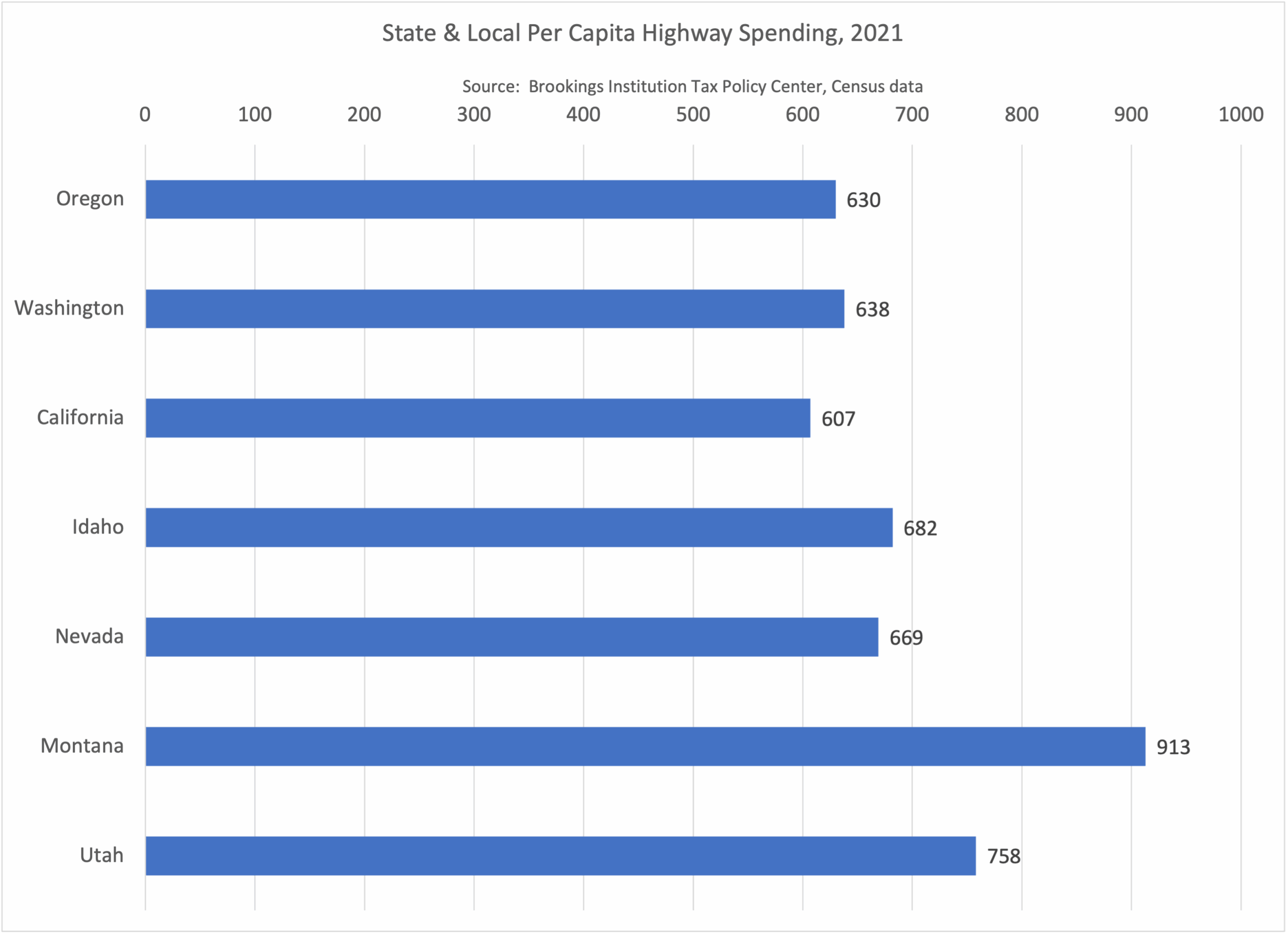
ODOT's numbers are a bogus and deceptive sales technique, not an objective analysis. There's no evidence Oregon spends significantly less on roads that neighboring states.
Must Read
Going in Circles. Chuck Marohn of Strong Towns writes about an elaborate and expensive interchange project in Baxter Minnesota that encapsulates all of the zany and perverse logic of highway investment. It features six roundabouts to connect to major highways with an associated big box and national retail chain shopping area.
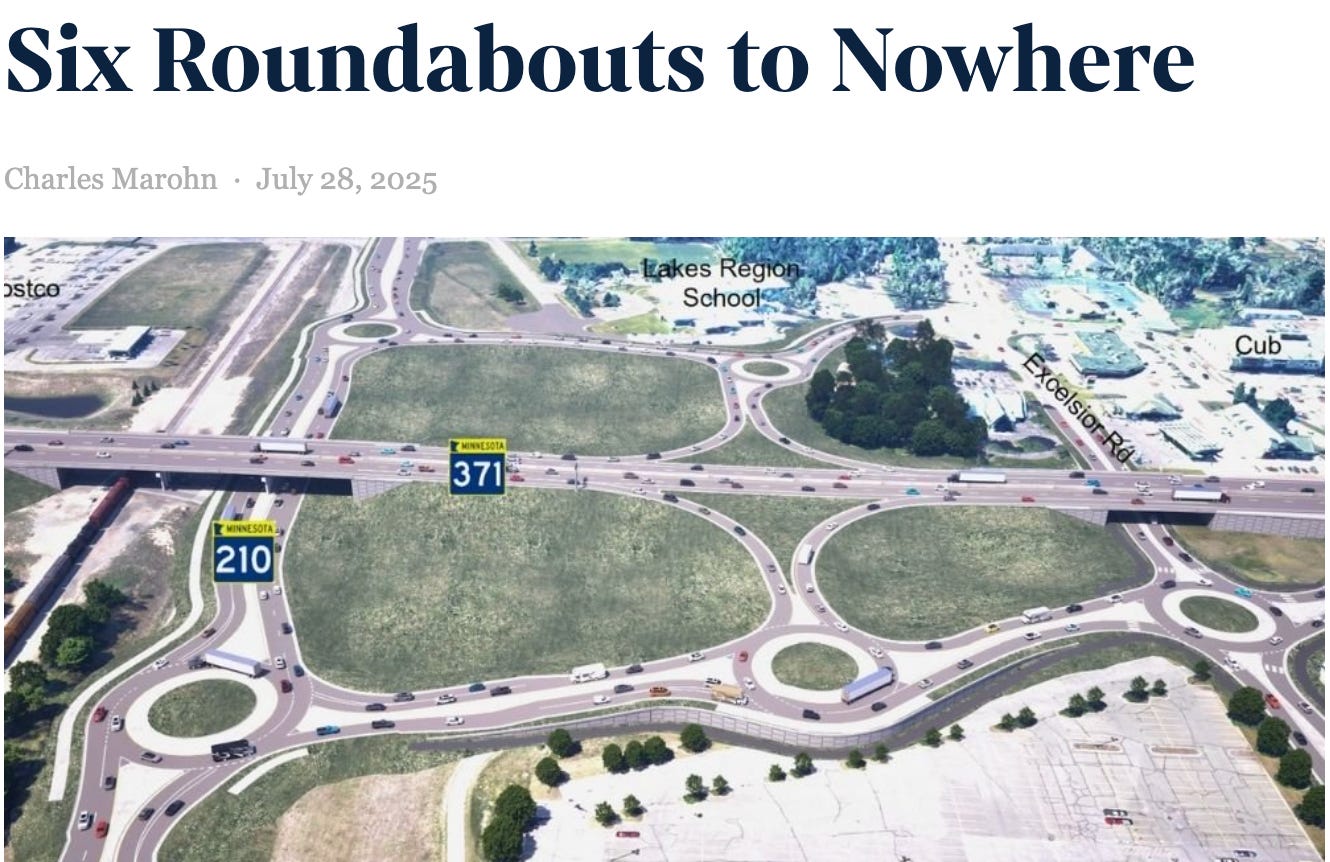
This is the highway department's way of remediating (but also ultimately exacerbating) the damage the highway construction did decades ago when it sucked the stores (and much of the life) out of the downtowns of both Baxter and nearby Brainerd. As Marohn explains the bizarre logic:
. . . reducing congestion isn't the priority here. The goal is to preserve — at ridiculous expense — access to strip retail along a high-speed highway corridor. MnDOT wants to move cars quickly through Baxter. Baxter’s (largely national franchise) retailers want the drivers of those cars to stop and shop. The resulting compromise satisfies no one, costs a fortune, and looks plainly ridiculous to anyone not steeped in the cult of traffic modeling. This is a project designed by engineers with too much funding, too few ideas, and no clear guidance on prioritization.
There's nothing wrong with roundabouts, but as the illustration shows, this version is really just an alternative reality for creating an even more automobile-dominated environment. Like the diverging diamond highway interchange in Natick, MA, this is project that purports to make things better,
...This excerpt is provided for preview purposes. Full article content is available on the original publication.