BRICS Summit 2025 in Rio: What You Need to Know
The 17th BRICS Summit wrapped up this weekend in Rio de Janeiro—and it had all the markings of a geopolitical blockbuster: high-stakes speeches, leader no-shows, climate promises, and carefully worded jabs at the West.
But underneath the fireworks? A bloc still trying to prove it’s more than just a photo op.
Here’s what actually happened.
📌 The Big Picture
This was the first BRICS summit with 11 full members (Brazil, Russia, India, China, South Africa, Egypt, Ethiopia, Iran, United Arab Emirates, Saudi Arabia, and Argentina), following last year’s expansion. Hosted by Brazil, the event pushed a bold agenda: inclusive governance, climate finance, AI regulation, and a multipolar world order.
And yes, the vibe was very “let’s fix global governance,” but not everyone showed up for the group photo.
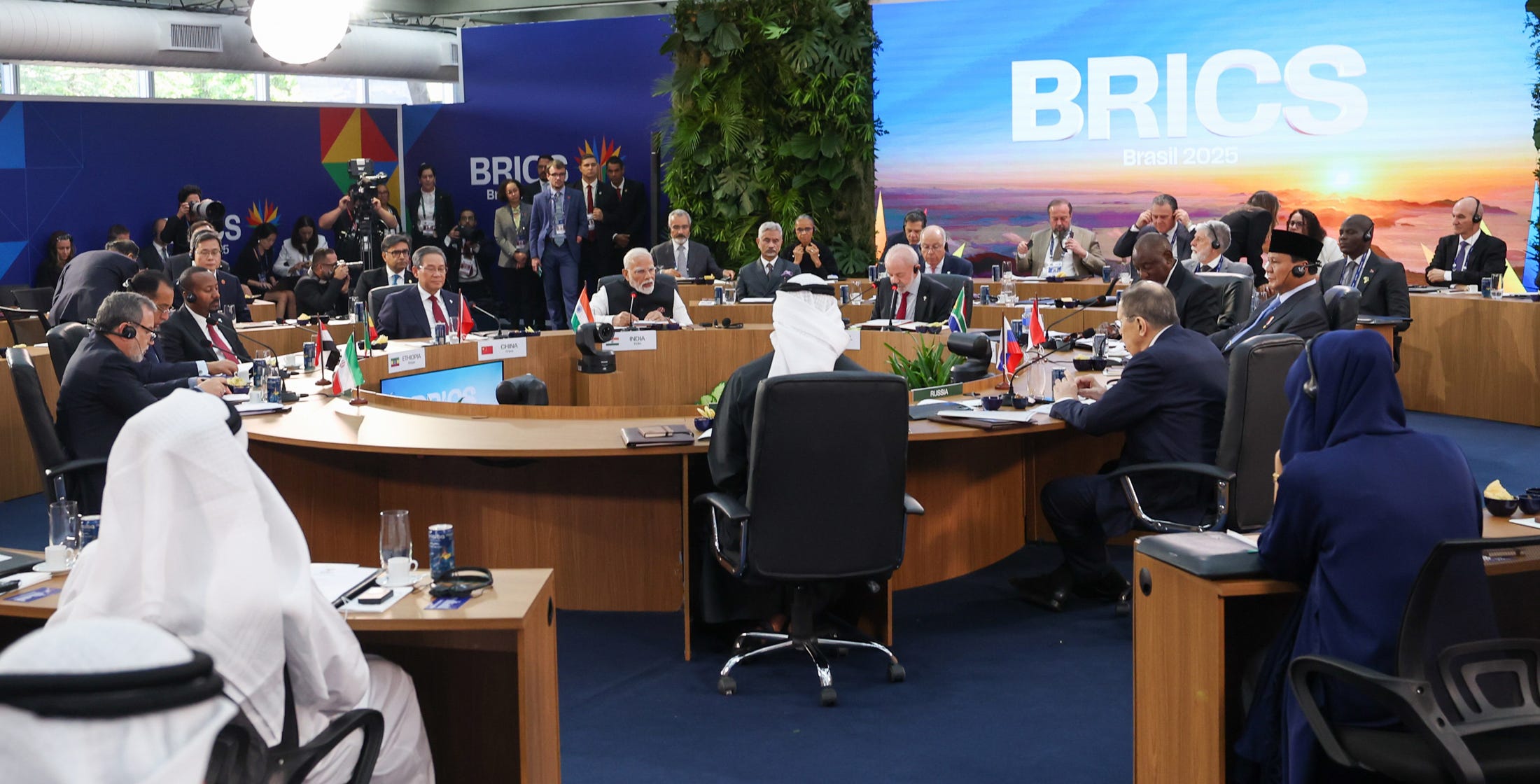
💡 Key Takeaways
1. Lula wants a new system—badly
Brazilian President Lula da Silva opened the summit by calling multilateralism “collapsed.”
He wants reform across the UN, IMF, and World Bank.
Finance Minister Fernando Haddad went even further, proposing taxes on the ultra-rich to fund global development and climate goals. Bold.
2. Xi and Putin were a "no-show"
Xi Jinping sent Premier Li Qiang. Putin participated remotely from Russia.
And yes, Brazilian media hinted at diplomatic tension with China after a supposed protocol misstep involving Brazil’s First Lady, though no official statements confirmed it.
3. Trade, but make it local
The summit emphasized de-dollarization—the shift away from reliance on the U.S. dollar in international trade and finance—and boosting trade in local currencies, with BRICS Pay quietly gaining traction—a proposed digital payment system that would allow cross-border transactions among member countries using local currencies instead of the U.S. dollar.
On the final day, Trump’s 10% tariff threat dominated headlines. Lula called the move irresponsible, but the group’s final declaration maintained a cautious tone—avoiding direct reference to the U.S. dollar in international trade and finance—and boosting trade in local currencies, with BRICS Pay quietly gaining traction (a proposed digital payment system) that would allow cross-border transactions among member countries using local currencies instead of the U.S. dollar.
Dilma Rousseff, now head of the New Development Bank, reported that 31% of the New Development Bank’s $32B in financing is already happening in local currencies.
4. Climate took center stage
Brazil pushed hard on environmental priorities, spotlighting its Tropical
...This excerpt is provided for preview purposes. Full article content is available on the original publication.