Why America's extremes will both fail
These days it seems like the only things to write about are politics and AI. I wrote about AI last time, so today I’ll write about politics.
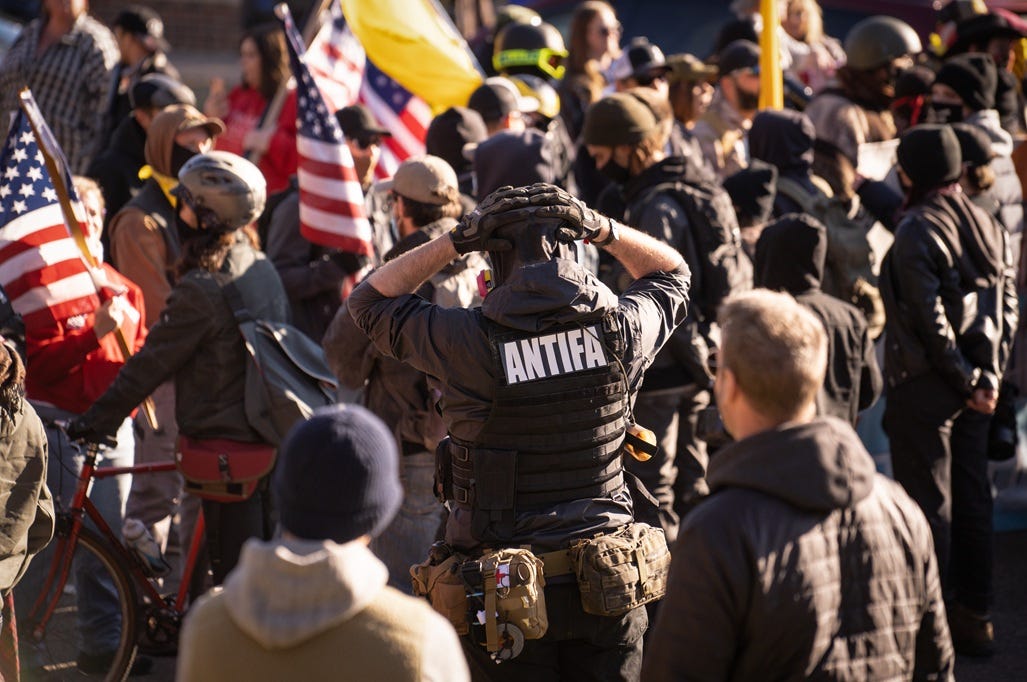
Here is my basic theory of American politics in the 2020s: The United States is a nation of moderates ruled by a fringe of extremists. The extremists rule because they are more engaged than the moderates — they spend more time thinking about politics and doing political activism. In Martin Gurri’s terms, the extremists are the “public” and the moderates are the “populace”.
There are several reasons why American politics is dominated by extremists. The well-known one is the closed-primary party system. Republicans win primaries not by aligning with the median voter, but by aligning with the median Republican voter — usually in an area that’s already right-leaning to begin with. The same is true of Democrats.
But that has been true for a while. The fundamental reason why American politics is more extremist-dominated than in the past is technological. Modern social media bypasses traditional hierarchies and institutions and gathers together communities of like-minded extremists who then create challenges to traditional institutions; it also provides these extremists a platform in which their emotionally charged messages are more likely to go viral than messages of positivity and reason.
The moderate majority increasingly avoids the politically charged, extremist-dominated online spaces. That gives lots of Americans more peace of mind, but it also means that online spaces become more and more extremist as moderates leave.1 This is the conclusion of Törnberg (2025):
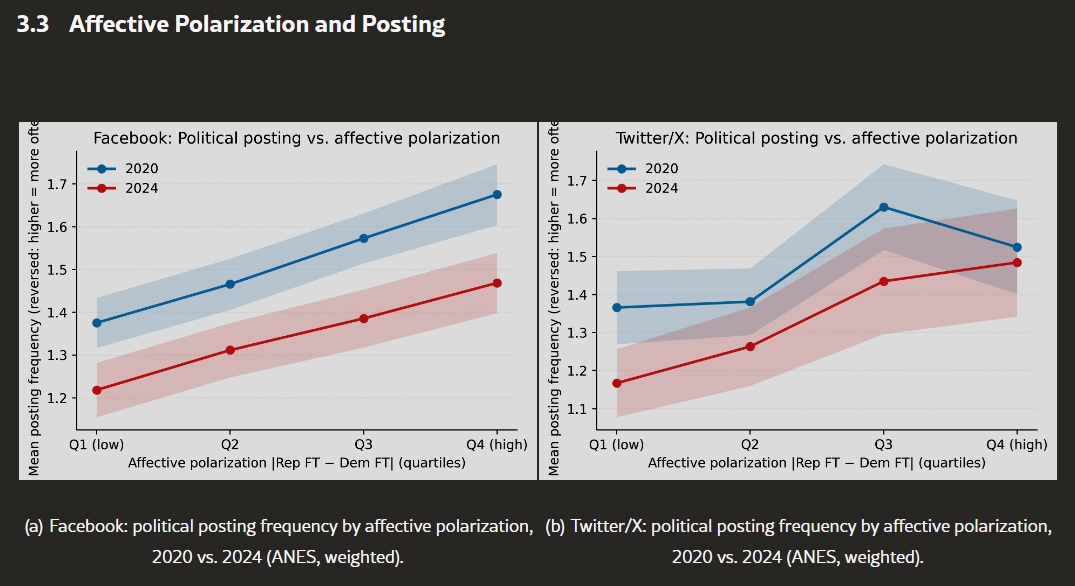
Using nationally representative data from the 2020 and 2024 American National Election Studies (ANES), this paper traces how the U.S. social media landscape has shifted…Overall platform use has declined, with the youngest and oldest Americans increasingly abstaining from social media altogether. Facebook, YouTube, and Twitter/X have lost ground, while TikTok and Reddit have grown modestly, reflecting a more fragmented digital public sphere….Across platforms, political posting remains tightly linked to affective polarization, as the most partisan users are also the most active. As casual users disengage and polarized partisans remain vocal, the online public sphere grows smaller, sharper, and more ideologically extreme. [emphasis mine]
In case you like charts, here’s one from the paper showing that extremists post more than moderates:
This excerpt is provided for preview purposes. Full article content is available on the original publication.