Many Indigenous Mothers Must Travel Hundreds of Kilometres to Give Birth. Meet the Midwives Changing That
Deep Dives
Explore related topics with these Wikipedia articles, rewritten for enjoyable reading:
-
Canadian Indian residential school system
12 min read
The article explicitly mentions residential schools as part of the assimilation policies that fractured intergenerational relationships and disrupted the transmission of traditional knowledge about pregnancy, birth, and parenting. Understanding this system is essential context for why Indigenous midwifery nearly disappeared.
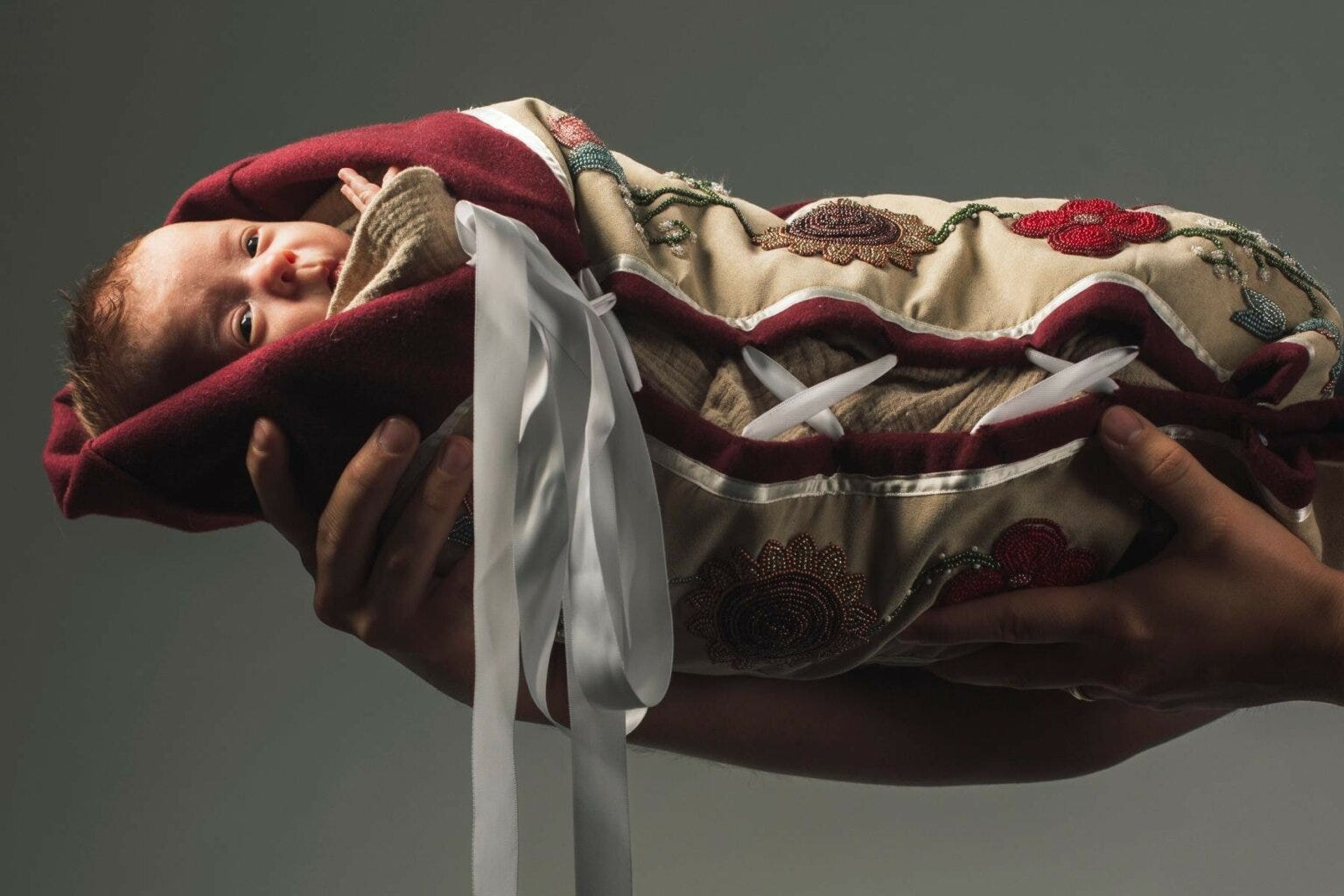
Kelsey Moore’s son in a moss bag in Regina, Saskatchewan, on Tuesday, October 1, 2019. His name is being withheld to protect his privacy.
This story was originally published on thewalrus.ca
Photography by Amber Bracken
Imagine you are a pregnant Canadian, close to your due date, when the government tells you to fly to Denmark to deliver your baby. After all, Denmark has better outcomes for birthing parents and infants compared to Canada. But you will have to give birth alone, far from your community and family, in a place with unfamiliar food and a language you do not speak. Supposedly, this is in the best interests of you and the baby, despite the disruption, the isolation, and the incredible expense. Refusing this plan, you are told, is selfish and ignorant—even though there’s no evidence to support its promised benefits. This thought experiment has been the reality for Indigenous birthers across Canada for decades.
Until the middle of the twentieth century, Indigenous babies were usually delivered by traditional midwives, and birthing parents were surrounded by community and tradition. Nearly every community had someone who caught babies—and that person also led ceremonies, cared for families, and guided others through important transitions in life and death. But then the Canadian government implemented a birth evacuation policy, which forced Indigenous birthers in rural and remote communities to leave, to travel, often alone, often hundreds of kilometres from home, to give birth in a hospital—far from extended family, language, and culture. All the while, assimilation policies, including residential schools, were fracturing the intergenerational relationships through which knowledge about pregnancy, birth, and parenting was handed down.
While most Canadian parents take it as a given that they will be able to give birth close to home, choose their care provider, have their partner in the room with them when they deliver, and be treated with respect, Indigenous parents have been denied that autonomy as their traditional structures of care have been systematically dismantled. The profession, the practice, of Indigenous midwifery was nearly erased.
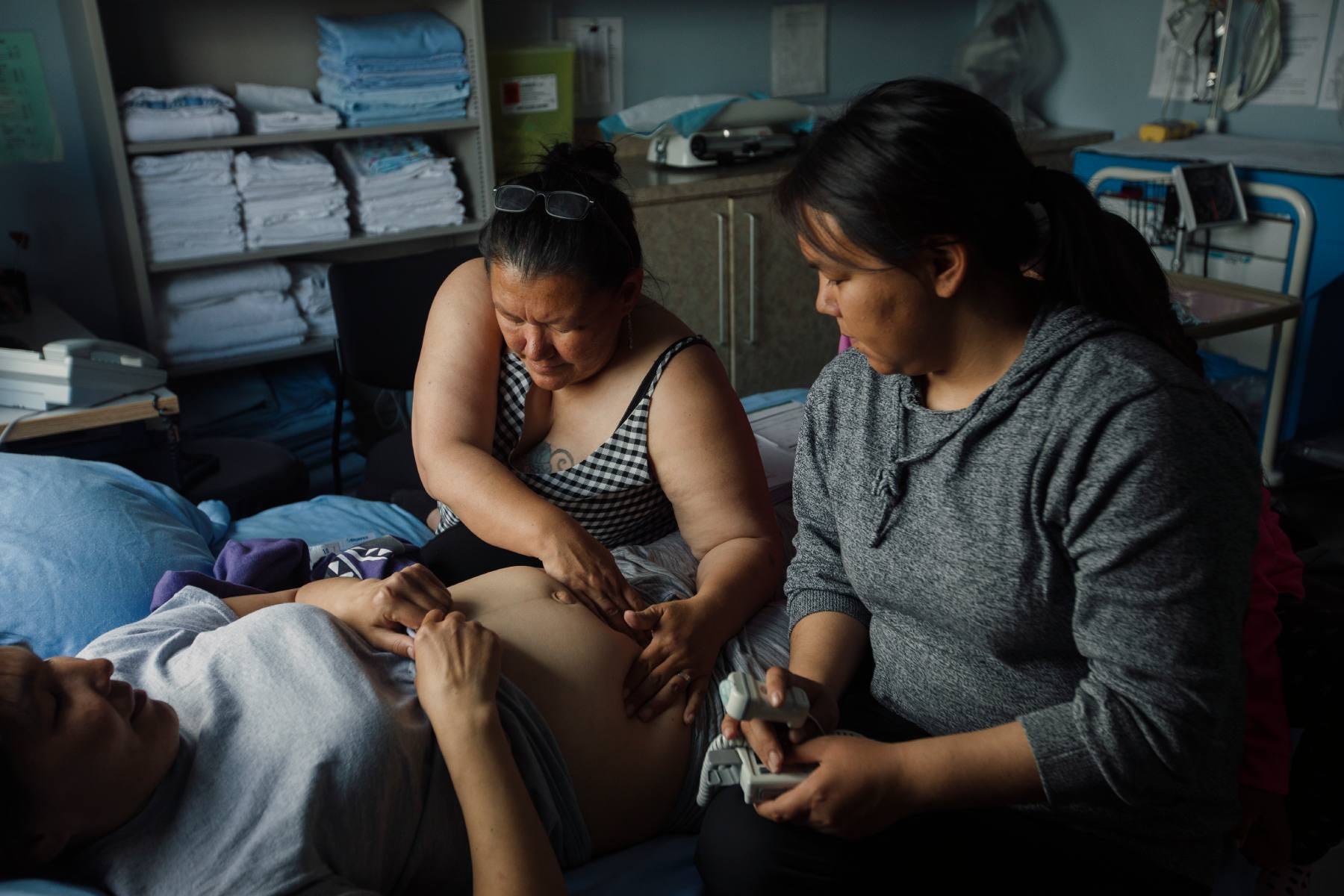
Brenda Epoo checks Rita Lucy Ohaituk, thirty-six, left, as student midwife Mary Naluktukruk, right, looks on in Inukjuak, Nunavik.
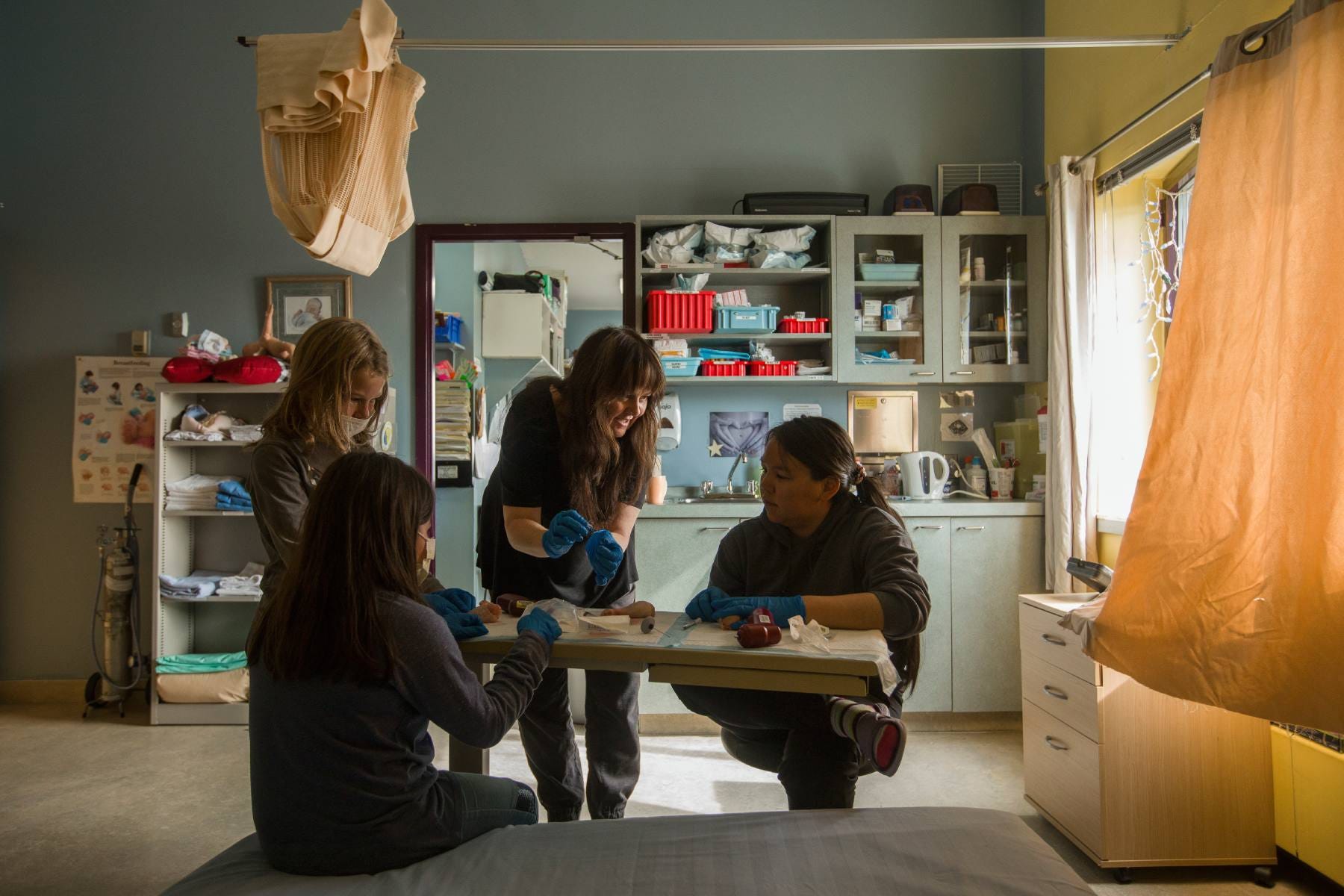
Patrice Latka teaches intraosseous medication delivery, an emergency technique, to Naluktukruk using a newborn dummy and chicken bones in Inukjuak. Her son Quincy and their friend Hailey look on.
“We were one plane crash away from extinction,” says Carol Couchie,
...This excerpt is provided for preview purposes. Full article content is available on the original publication.