Decolonization I: "the biggest reconfiguration of world politics ever seen"
Decolonization, in other words, signifies the biggest reconfiguration of world politics ever seen.
—Martin Thomas The End of Empires and a World Remade: A Global History of Decolonization (2024), p. 7
Reports of the end of decolonization, like Mark Twain’s death, are greatly exaggerated.
Many would say decolonization was that three-decade period between 1945 and 1975 when European colonial empires disappeared and were replaced by independent nations. In the centre of that thirty year period stood the 1960 UN General Assembly Declaration on the Granting of Independence to Colonial Countries and Peoples, monitored through a Special Committee on Decolonization. Eighty former colonies have joined the United Nations. Some would say that after 1989 former colony-like entities of the former Soviet Union and Communist bloc also joined the United Nations. This process drove the increase in UN membership in phases from the original 51 members of 1945 to 144 members in 1975 and the post-Cold War surge to 193 members by 2011. Since 1945 the number of people who lived in territories that were dependent on colonial powers fell from 750 million people (a third of the world’s population then) to fewer than two million (one fortieth of one per cent of the world’s population today). All these states enjoy formal sovereign equality under the UN charter, and all these peoples attained the independence, in the words of the 1960 UN resolution to, “for their own ends, freely dispose of their natural wealth and resources without prejudice to any obligations arising out of international economic cooperation, based upon the principle of mutual benefit, and international law.” At least they did so in principle.
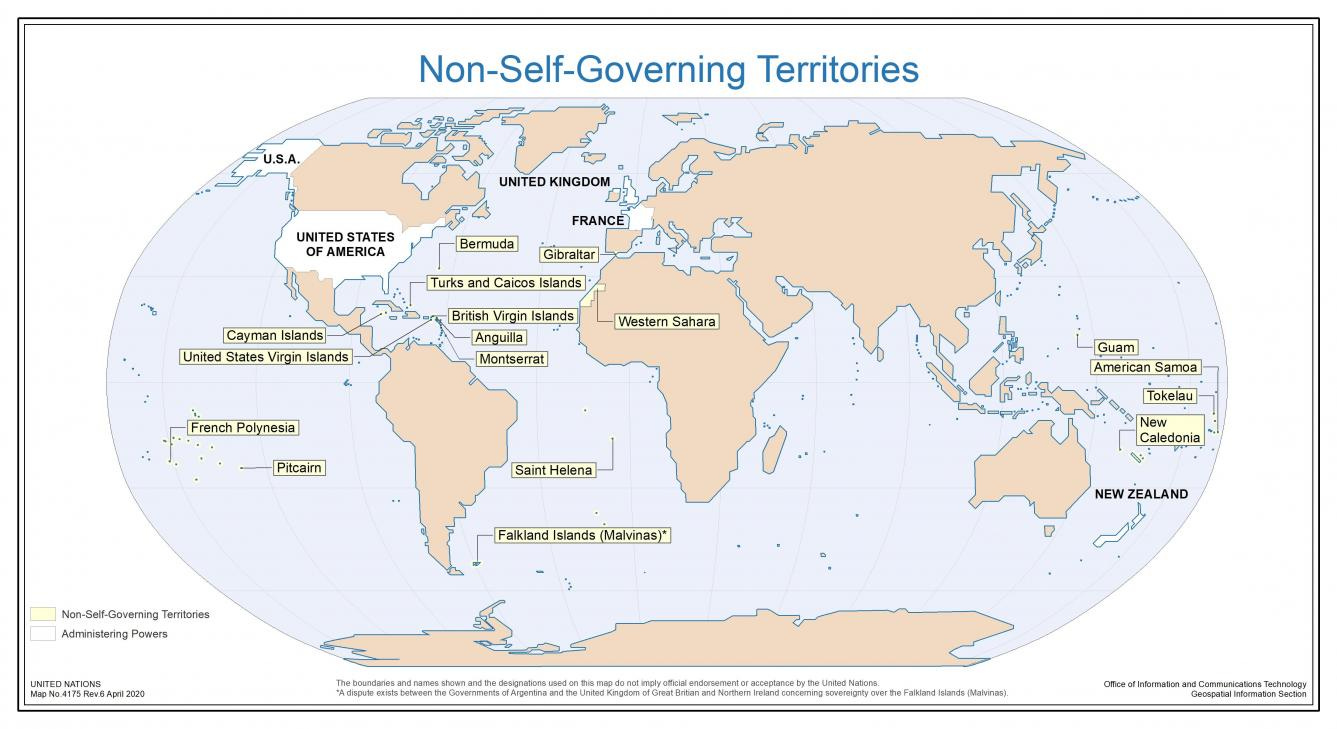
But the historical reality was different. Most of the new states were constrained in how they disposed of their resources. One champion of national independence and freedom, the USA, prioritised its power and primacy above all other nations. The USA was also paradoxically one of the remaining colonial powers. Seventeen non-self governing territories remain today, controlled by the NATO allies of USA, Britain and France. The gap between formal jurisdictional equality and real independent power for post-colonial states remains. Many assume, when they use the term ‘vassal state’, that even former European colonial powers - including Britain and France - have been re-colonised by the USA because they do as they are told by the White House. More substantially, many
...This excerpt is provided for preview purposes. Full article content is available on the original publication.