The Lies Americans Tell Themselves to Justify State Violence Against Migrants
Deep Dives
Explore related topics with these Wikipedia articles, rewritten for enjoyable reading:
-
Rodney King
14 min read
The article explicitly references King's beating as a pivotal moment in documenting police violence, and the subsequent acquittal despite video evidence. Understanding the full legal and social context of this case illuminates the pattern of state violence justification the author describes.
-
Killing of Philando Castile
14 min read
Directly cited as an example where Americans 'hallucinated' threats to justify police violence. The case details—including the dashcam footage, the acquittal, and the public discourse around it—demonstrate the exact psychological phenomenon the author analyzes.
-
Just-world fallacy
12 min read
The psychological phenomenon the author describes—where observers invent justifications for violence against victims—is the just-world hypothesis in action. This cognitive bias explains why people 'hallucinate weapons' and assume victims 'must have done something' to deserve state violence.
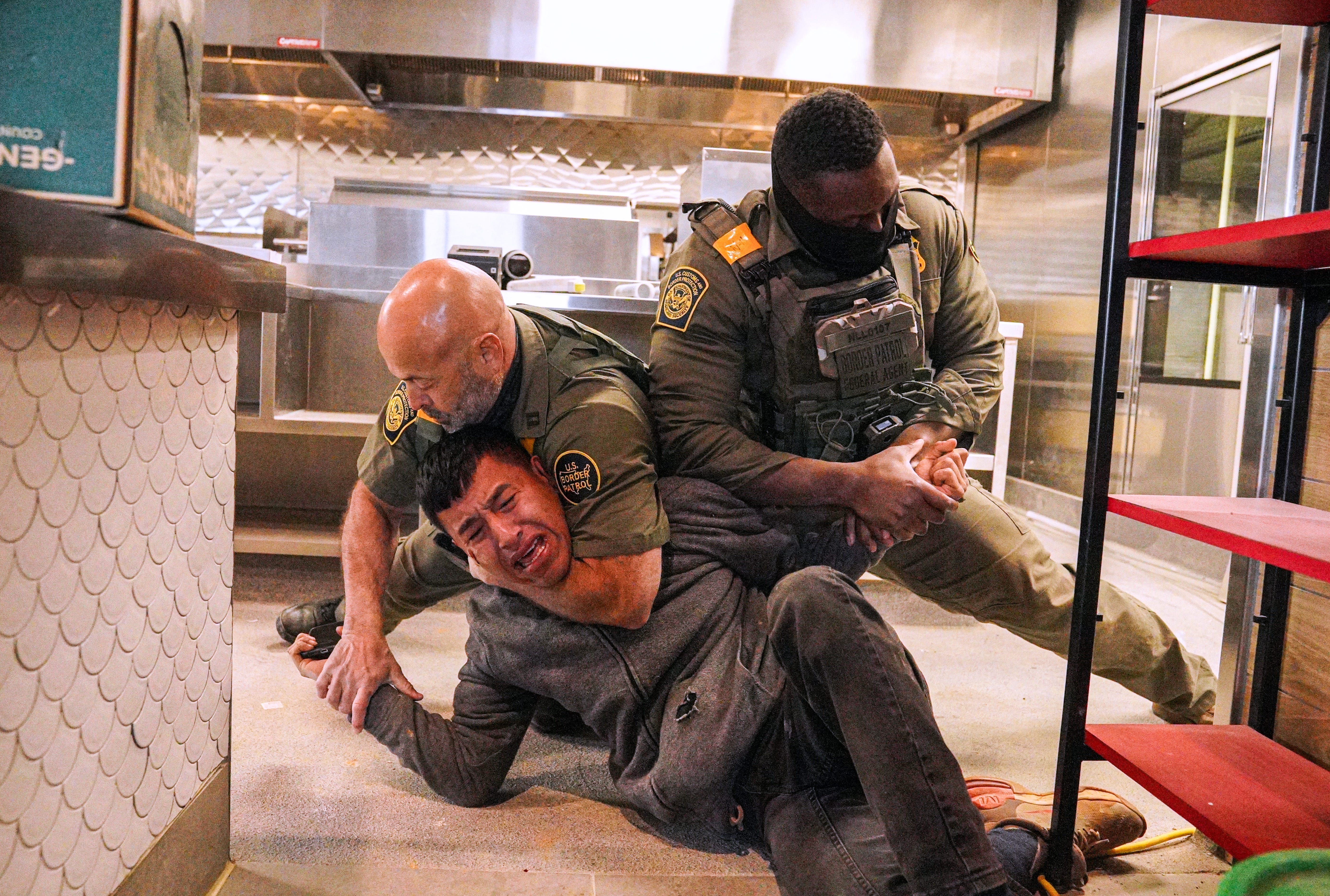
The first time I saw the photo, I stopped breathing.
A man, who appeared to be a restaurant worker in Charlotte, North Carolina, pinned to the floor of a commercial kitchen, his face twisted in pain. One federal agent’s arm locked around his neck. Another officer forcefully driving the man’s arm behind him. The scene was captured by an image taken by a Getty photographer.
After serving for nearly a decade as a public defender in Brooklyn, I know the names prosecutors give to what I was looking at: Assault. Strangulation. Felony. Every state has different ways to describe it and different punishments associated with it. I looked up the law in North Carolina, where this took place: “Assault inflicting physical injury by strangulation,” I learned, is a Class H violent felony, punishable by up to three and a half years in prison.
I posted the photo on X and shared the language of the statute above it. My point – though unstated – was simple: If any of my clients had done what those agents did, they would already be in handcuffs facing years behind bars. But when the state does it, it’s rebranded as “enforcement” or even “safety.”
Millions of people saw the tweet. And then the replies came.
Some were straightforward and, though upsetting, expected: “He’s illegal. He deserves it.”
Others proclaimed the force was somehow justified because the man was “resisting arrest.” I saw that same allegation play out countless times as a public defender. So often, when I met a client at first appearance, read the charges, and saw “disorderly conduct,” “obstruction of governmental administration,” “resisting arrest,” or “assault” of an officer, I would then meet a bloodied and bruised person, disproportionately Black or brown. The logic was always the same: if the police action was excessive, officers just invented a lawful reason to justify their violence.
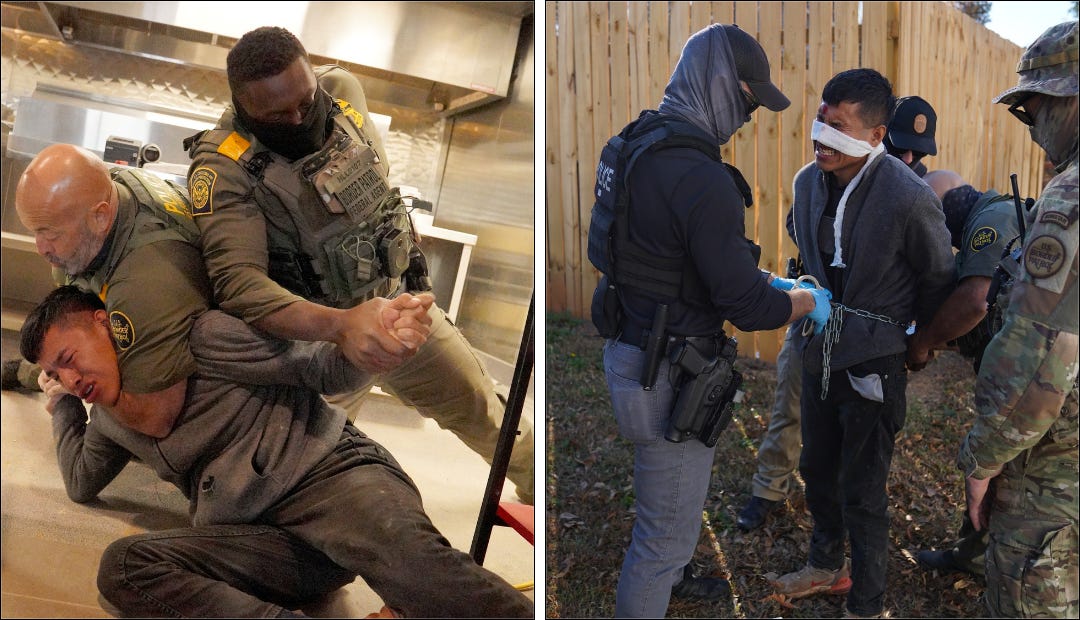
But the most revealing replies weren’t the openly racist ones or the predictable “resisting” chorus. It was the people who insisted that the man had a knife in his hand.
He didn’t. The photo clearly shows a
...This excerpt is provided for preview purposes. Full article content is available on the original publication.