What's Next For Japan
Deep Dives
Explore related topics with these Wikipedia articles, rewritten for enjoyable reading:
-
Japan Innovation Party
1 min read
Linked in the article (15 min read)
-
Sanae Takaichi
19 min read
The article centers on Takaichi's rise to power as Japan's new Prime Minister, describing her as 'Abe's protégé' with 'Japan First' instincts. Understanding her background, political career, and ideological positions would give readers essential context for interpreting her policy agenda on defense spending, immigration, and intelligence reform.
-
Liberal Democratic Party (Japan)
11 min read
The article extensively discusses LDP internal dynamics—factions, leadership elections, the balance between moderates and conservatives, and coalition politics with Komeito. Understanding the LDP's unique structure, factional system, and decades of near-continuous rule would help readers grasp why these internal machinations matter so much for Japan's governance.
Japanese politics have brought a lot of drama these past few months. To catch us up, we interviewed , author of the Observing Japan newsletter.
We break down how Takaichi triumphed and what her rise means:
How LDP moderates fumbled their chances and handed victory to the right,
Takaichi as Abe’s protégé and policy wonk — and her “Japan First” instincts,
Why Takaichi is pushing for higher defense spending, a tough line on the foreign population, and a CIA-equivalent for Japan,
The intricate political maneuvering that secured her power — rewarding allies, sidelining others, and turning Cabinet appointments into chess moves,
The coalition challenges ahead and why Japanese politics feels like The Hunger Games,
Japan’s hawkish international stance, the Trump visit, and the limits on the Japan-America love affair.
Thanks to the US-Japan Foundation for sponsoring this episode.
Listen now on your favorite podcast app or on YouTube.
Japanese Electoral Drama
Jordan Schneider: Tobias, on the last show we did, Ishiba was on the ropes. Why don’t you pick the storyline up from late July 2025?
Tobias Harris: We last spoke during that weird interregnum. There had been some premature media reports saying Ishiba was going, which he then denied. After that, the pressure from within the LDP for him to leave just ratcheted up. He had lost two elections and lost the LDP’s control of the Diet — how could he not take responsibility? He managed to push that off for about a month.
Finally, in early September, the LDP released its Upper House election autopsy, analyzing what went wrong and how they got into this situation. The report’s overall conclusion was that the LDP had lost touch with too much of the electorate. There were sins of omission and sins of commission, but the bottom line was that Ishiba had not done enough to fix the situation. The subtext, of course, was that he was going to have to go. His situation became untenable, and within a few days, he was out.
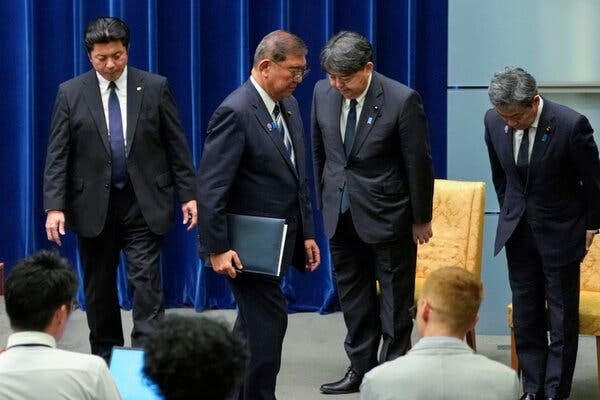
This led into September and a relatively more subdued leadership campaign compared to last year. We had five candidates instead of nine, though in practice, it was really a race among three. The campaign was shorter and involved less crisscrossing the country. The ambitions of the candidates seemed scaled back. It was just a
...This excerpt is provided for preview purposes. Full article content is available on the original publication.