China and Russia on the Iran war
There is war in the Middle East again. This edition will examine the potential implications of the Trump and Netanyahu administrations’ decision to bomb the Khamenei regime, concentrating on Iran dynamics, oil markets, and China-Russia ties.
If you’re a new subscriber, or would like additional context on some of Beijing and Moscow’s actions in the lead-up to the crisis, I’d start with this analysis of the Xi-Putin phone call, which appeared to focus on Iran. To set the stage for the bilateral heads-of-state call, the Chinese foreign minister, Wang Yi, delivered a subtle but public hint to Sergei Shoigu, the secretary of the Russian Security Council, warning, in a likely reference to Iran, that the two sides had distinct interests. Finally, the PLAN skipped naval exercises with their Iranian and Russian counterparts just ahead of the conflict.
Below are some initial thoughts. The analysis is split into two sections: Iran dynamics and China-Russia dynamics. I want to emphasize that there is a huge amount of uncertainty at the time of this writing.
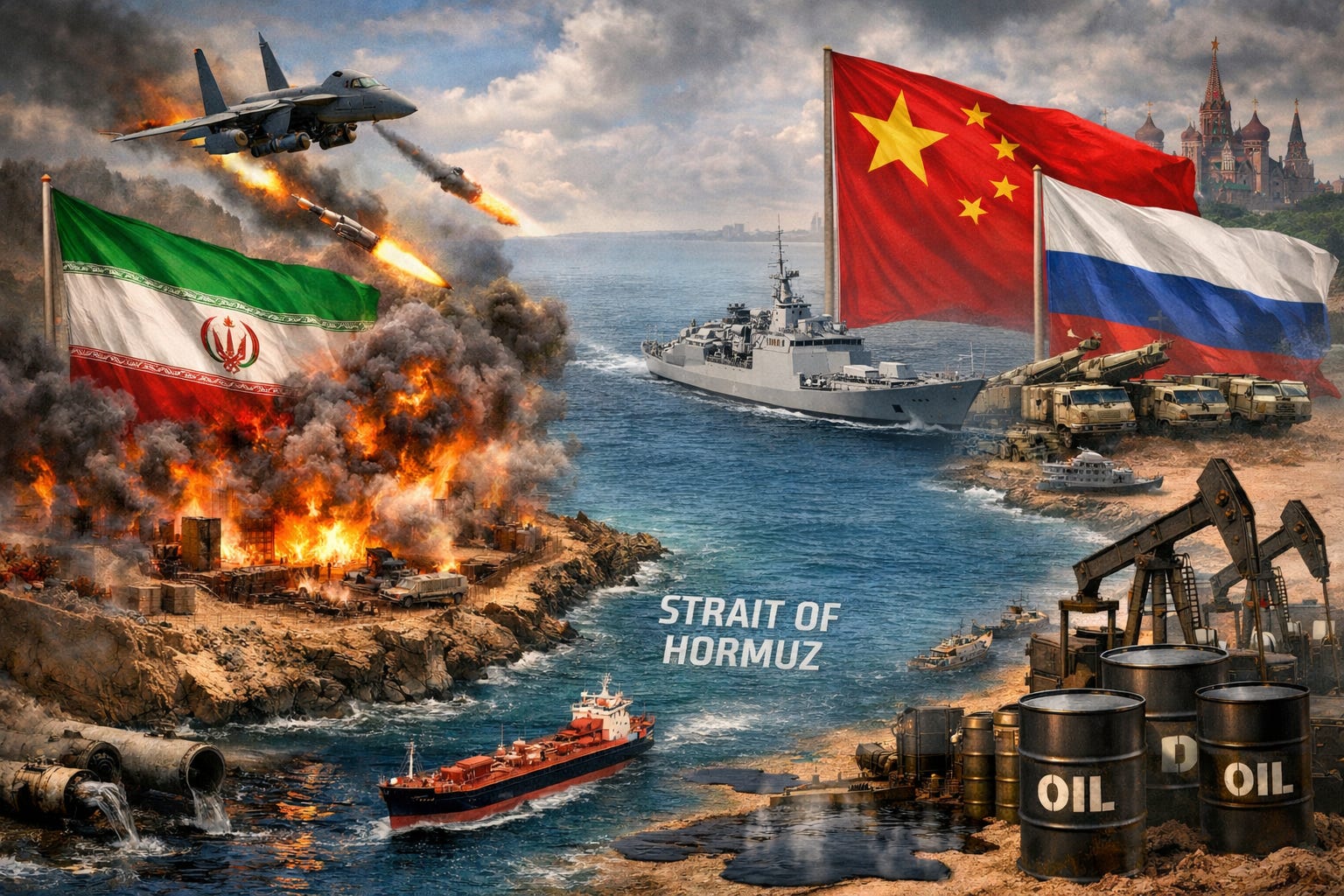
Image Generated by ChatGPT 5.2
Iran dynamics
There’s a lot we don’t know. Here’s what we do know: owing to the skill, professionalism and bravery of the U.S. military and intelligence services, the initial salvo of the campaign has gone very well. Khamenei is dead, a large swathe of Iran’s political leadership has been destroyed, and Israel reports that half of Iran’s ballistic missile launchers have been destroyed.
What comes next is highly uncertain. In an interview with The Atlantic this morning, President Trump reported that Iran’s new leadership seeks to re-enter negotiations. Iranian Foreign Minister Araghchi claims that Iran seeks negotiations – but also that the IRGC is acting independently and attacking targets in Oman, based on instructions given in advance. So, who speaks for the remnants of the Khamenei regime, and is the Iranian military acting semi-independently? As Vali Nasr writes, the Khamenei regime intentionally “dispersed operational authority and decentralized decision making to survive decapitations.”
The Iranian government – or whatever is left of it – can very likely disrupt Strait of Hormuz shipping for weeks, months, or even years, if it is willing to endure the considerable costs. There are several parallels to the Houthi disruption around the Bab el-Mandel chokepoint along the Red Sea, although it is not a perfect analogy.
Despite limited missile stockpiles and U.S./coalitional air dominance, the
...This excerpt is provided for preview purposes. Full article content is available on the original publication.