My latest #ThoughtoftheDayonChina: Trump’s world view offers Beijing a window of opportunity on Taiwan amid rising diplomatic rift between Beijing and Tokyo
Deep Dives
Explore related topics with these Wikipedia articles, rewritten for enjoyable reading:
-
Taiwan Relations Act
13 min read
The article mentions this Act as a key mechanism for US support of Taiwan but doesn't explain its legal framework, history, or specific provisions that make it so strategically important in US-China relations
-
One China
1 min read
The article distinguishes between China's 'one-China principle' and America's 'one-China policy' without fully explaining the nuanced diplomatic distinction that has maintained peace in the Taiwan Strait for decades
-
Retrocession Day
13 min read
The article references China designating October 25 as a commemoration day for Taiwan's 'restoration' in 1945, but the historical context of Japan's surrender and Taiwan's transfer—and how it's contested—provides crucial background for understanding current sovereignty claims
Since Donald Trump’s return to the White House, a growing chorus of Chinese officials and analysts have talked of an unprecedented window of opportunity for Beijing to recalibrate its domestic and international strategies. At its heart lies the Taiwan question, a perennial flashpoint in relations between Washington and Beijing.
As the Trump administration ramps up its “America first” policies abroad, the US – the self-appointed world’s policeman for seven decades – has embarked on an unprecedented retreat from global commitments and treaties.
More critically, Trump’s signature transactional diplomacy has ignited imaginations in China, especially among nationalists, who see the moment as ripe for Beijing to pursue reunification with Taiwan.
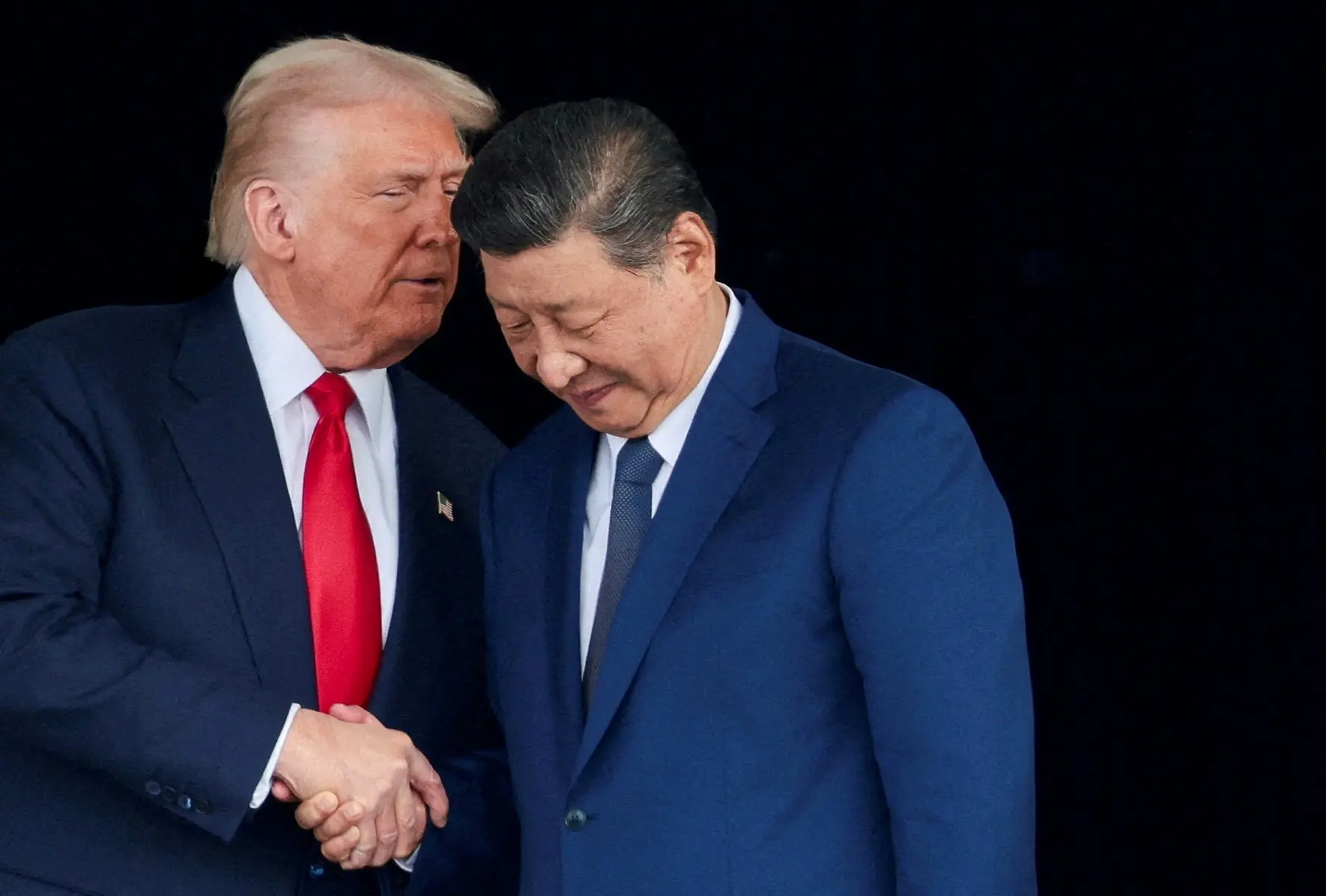
This backdrop provides context for the China-Japan tensions, preceded and followed by high-level US-China exchanges.
Japanese Prime Minister Sanae Takaichi, a staunch US ally, recently suggested that Tokyo could respond militarily if Beijing moved on Taiwan. Her remarks prompted a backlash from Beijing. The dynamics unfolding in the coming months could reshape geopolitics across the Taiwan Strait and beyond.
Speculation about Beijing’s intentions towards Taiwan has surged since President Xi Jinping assumed power in late 2012. Xi has intensified Chinese drills in the Taiwan Strait and South China Sea. Things escalated after William Lai Ching-te – known for his pro-independence proclivities – took over as Taiwan’s leader in 2024, prompting more frequent and expansive mainland exercises.
The US remains Beijing’s chief obstacle, bolstering Taiwan through consistent arms sales and the Taiwan Relations Act.
Since formalising diplomatic ties with China in 1979, Washington has navigated the issue with calculated ambiguity. Chinese leaders have consistently invoked the one-China principle, urging reduced US support for the island.
In response, the US endorses a “one-China policy” that acknowledges Beijing’s position without endorsing it, while maintaining strategic vagueness on potential intervention in a cross-strait conflict.
As Taiwan represents one of Washington’s strongest leverage points against Beijing, relinquishing it has seemed improbable, until now.
Trump’s dismissive rhetoric towards Taiwan – accusing it of stealing America’s semiconductor dominance – has emboldened Beijing’s hawks. To them, Trump’s world view prioritises bilateral horse trading over ideological crusades, viewing alliances as transactional burdens rather than sacred oaths.
Against this evolving US-China landscape, Beijing’s recent orchestrated signals on Taiwan, alongside its sharp rebukes of Japan, warrant close scrutiny.
One notable cue came in September, when China’s state broadcaster aired a prime-time 39-episode drama, Silent Honour, chronicling the real-life exploits of Wu Shi,
This excerpt is provided for preview purposes. Full article content is available on the original publication.