A rough flu season may be taking shape
Deep Dives
Explore related topics with these Wikipedia articles, rewritten for enjoyable reading:
-
Antigenic drift
6 min read
The article explains how H3N2 flu mutated from J to K subclade through 'drift' - understanding the molecular mechanism of antigenic drift would help readers grasp why vaccines become less effective and why flu is so unpredictable
-
Botulism
17 min read
The article discusses a significant outbreak linked to formula with 23 cases, but doesn't explain why infants are uniquely vulnerable to botulism or how it differs from adult cases - this would provide crucial medical context
-
Measles resurgence in the United States
15 min read
The article mentions Canada losing WHO elimination status and the US facing review, plus the natural 5-year surge pattern - this Wikipedia article covers the historical and social factors behind measles returning in previously eliminated regions
The government shutdown is over, and a few things are finally back online: CDC data, SNAP funding, and flights returning to something resembling normal (or at least as “smooth” as air travel ever gets). That’s the good news.
The bad news? We could be heading into a brutal flu season. The infant botulism outbreak linked to formula is climbing, and the U.S. may soon face a review of its measles elimination status, following Canada’s loss of theirs last week.
And with the gears turning again in Washington, health policy questions are back in play. One we got recently: was the Affordable Care Act ultimately helpful or hurtful? (See our answer below.) As always, we’ll end with some good news.
Infectious disease “weather report”
Every Friday, the CDC updates their “influenza-like illness” (ILI) data. This is a database where providers tally patients who presented with ILI—a fever, a cough, and/or sore throat—at their offices. So these numbers are a general indication of the climate of respiratory health in the United States.
ILI is starting to creep up (particularly in Louisiana and Southern states) but is still below the “epidemic” level threshold. (This threshold is usually when I put on my mask when I’m at airports or crowded indoor places, because I don’t have time to get sick.) In other words, things aren’t bad yet.
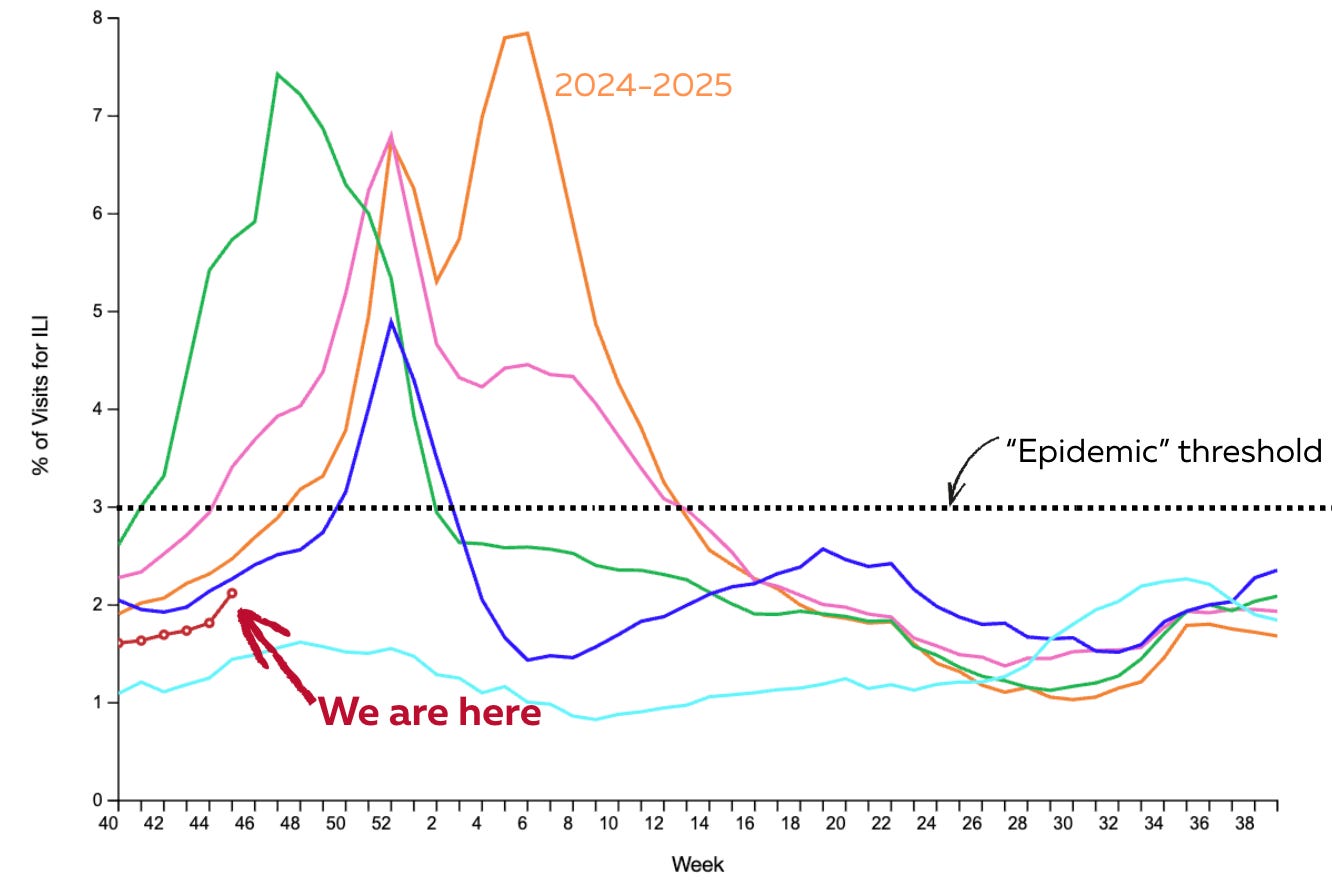
Flu
That said, buckle up for a potentially rough flu season. While the U.S. season is just ramping up, the U.K., Japan, and Canada are already seeing steep increases.
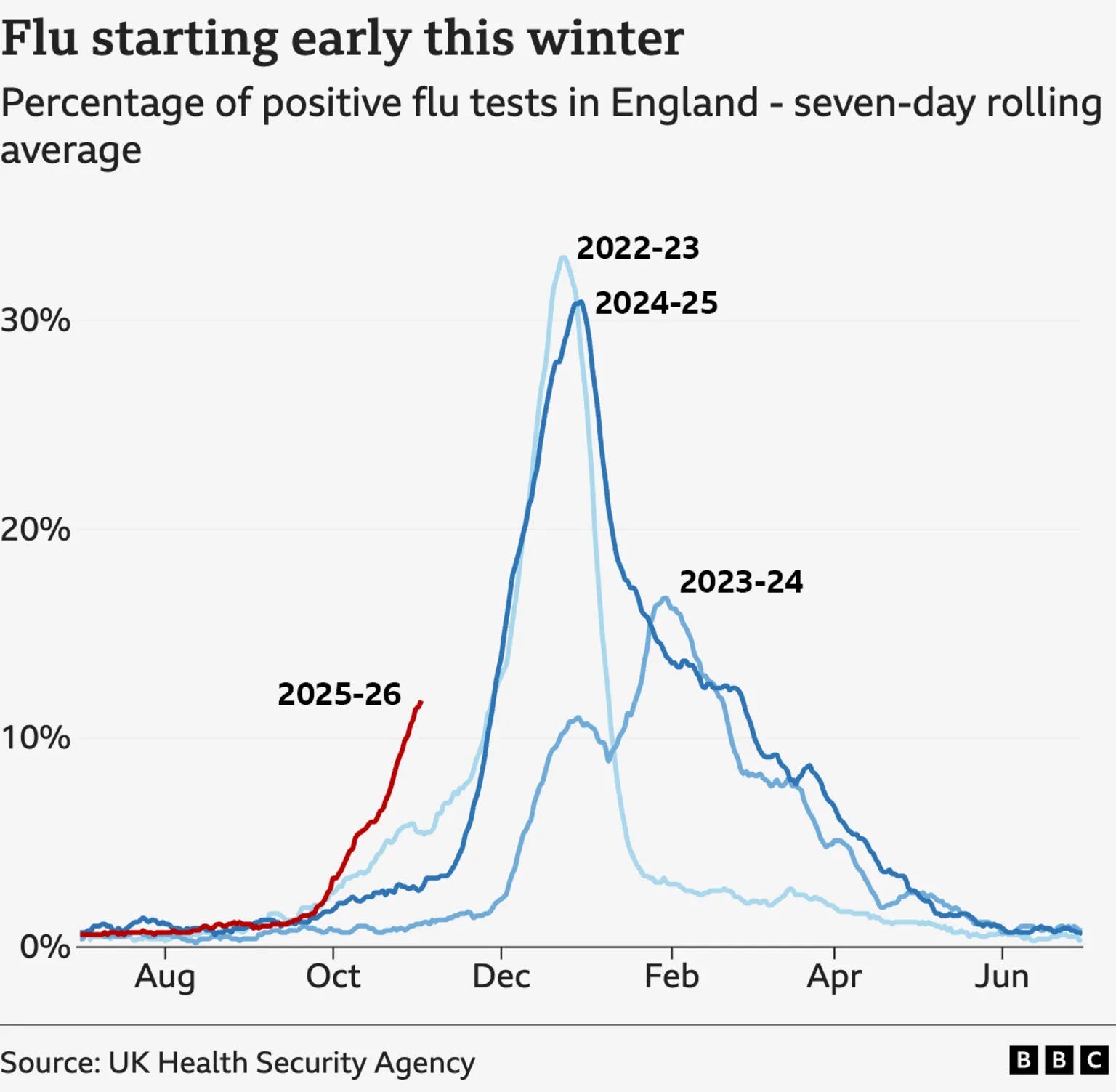
Why? One strain of flu—influenza A (H3N2)—mutated over the summer as it spread through the southern hemisphere. Specifically, it shifted from a J subclade to a K subclade.
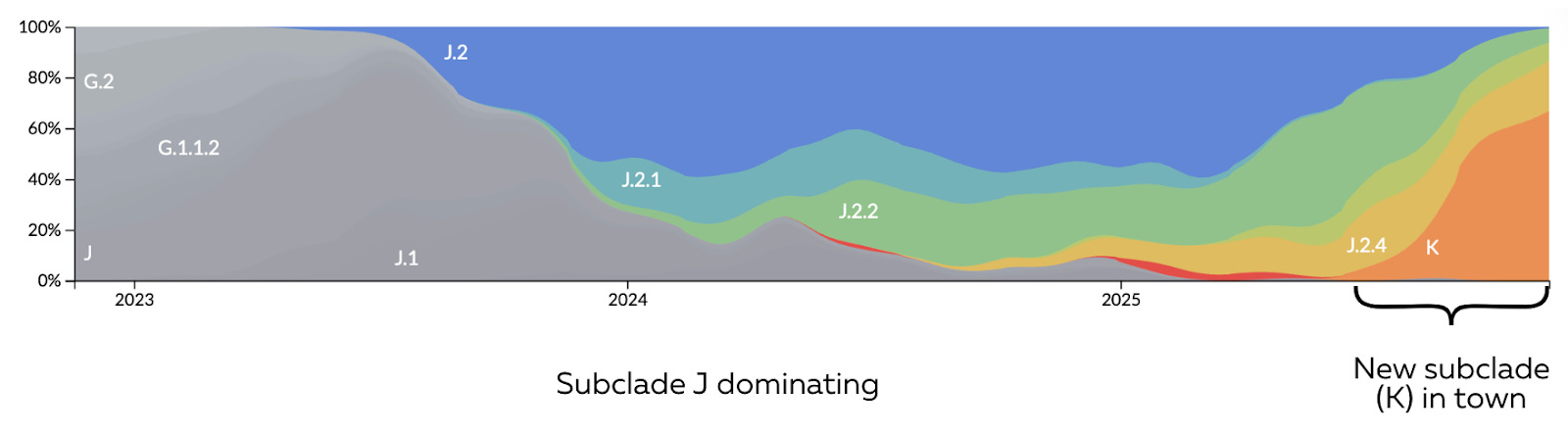
Mutations are normal for the flu. In fact, the flu is infamous for quick, unpredictable curveballs. But this particular change raises concern for two significant—but not catastrophic—reasons:
How much it changed. Flu can change in two ways:
Shift—a major overhaul that happens when two different flu viruses infect the same cell and swap genetic material, creating a new virus. This is the type of exchange that can spark pandemics because our immune systems have never seen that version of the virus before.
Drift—the smaller, incremental changes that happen as the
This excerpt is provided for preview purposes. Full article content is available on the original publication.