The cave where it happened: Denisova cavern’s congress of ancient peoples
Deep Dives
Explore related topics with these Wikipedia articles, rewritten for enjoyable reading:
-
Denisovan
16 min read
The article centers on Denisovans as a newly discovered human species. Wikipedia's comprehensive entry covers their discovery, genetics, geographic range, and interbreeding with other hominins—providing essential background for understanding the significance of Denisova 25.
-
Interbreeding between archaic and modern humans
13 min read
The article discusses multiple admixture events between Denisovans, Neanderthals, and modern humans. This Wikipedia article explains the genetic evidence and mechanisms of interbreeding between archaic and modern human populations.
-
Ancient DNA
13 min read
The article heavily discusses paleogenomic techniques like 30-fold coverage sequencing, environmental DNA, and mitochondrial DNA analysis. This Wikipedia entry explains the science behind extracting and analyzing genetic material from ancient remains.
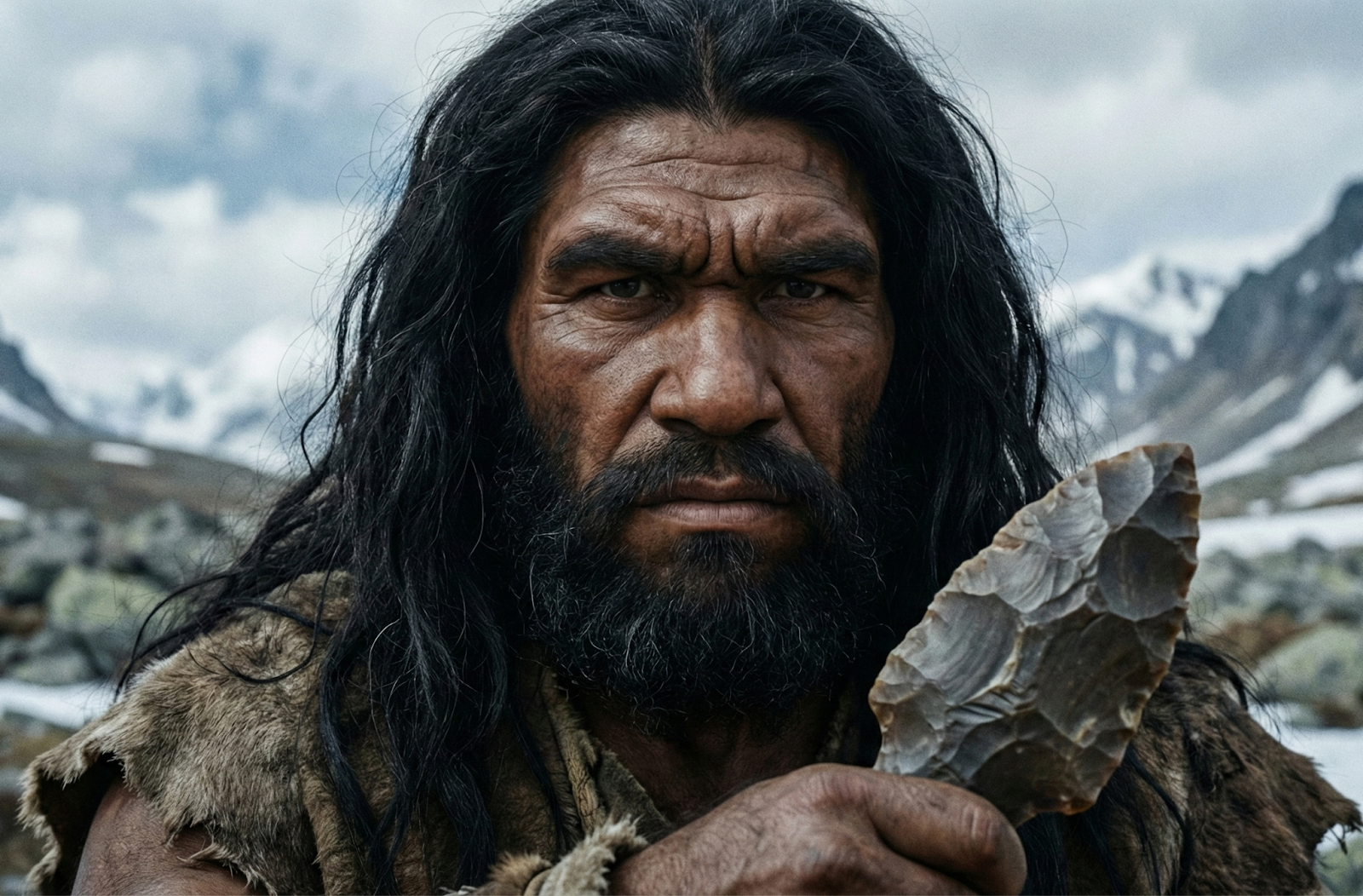
No one was looking for her or her kin when in 2010 scientists sequenced the genome of a woman who died in Siberia tens of thousands of years before modern humans arrived there. Digging into her genome, they beheld the first evidence of a whole new branch of humanity. From her genes alone, researchers identified the human population we now call Denisovans, drawing the name from that first source location, Denisova Cave, a cluster of high-vaulted caverns in central Siberia, north of the border with western Mongolia. To start, the team typed the woman’s mitochondrial DNA, tracing her direct maternal line. This was the first shock: her unknown human lineage was more distant from ours than Neanderthals are. Next, a whole-genome analysis, scanning all three billion base pairs, revealed more nuance. In fact, she was genetically more similar overall to Neanderthals than to our own out-of-Africa lineage; this realization spawned the neologism, “Neandersovans,” for the shared grouping of Neanderthals and Denisovans.
So this single genome from a woman interred in Denisova Cave brought the revelation that over 500,000 years ago a group of humans left Africa to spread out across Eurasia, trekking north and east, becoming Neanderthals and Denisovans respectively. With the abstruse arts of statistical genomics, researchers have since also inferred from that single genome that multiple admixture events with separate Denisovan lineages contributed trace ancestry to modern populations, from the Siberian Denisovans responsible for an average 0.15% of ancestry in East Asians today, to the southern Denisovans who contributed 4% of modern Papuan ancestry.
Even though a single genome is but a single human being born at a single point in time, at the molecular level, we truly cannot shake our past. The indelible ledger heredity smuggles into every genome makes any random being a decoder ring equipped to spill the population history of their species generations deep into their past. The millions of variable positions in any individual genome faithfully reflect population history, reporting highlights from an individual’s entire genealogy, allowing reconstruction of an entire vast lineage, with inferences fanning backward in an ever-branching ancestral tree.
Although we now have genetic material from many more than a single Denisovan (for example, mitochondrial DNA from 10 individuals), because all the other samples have been comparatively incomplete, for paleogeneticists the high-quality whole genome from 2010 has continued to do the load-bearing work. This
...This excerpt is provided for preview purposes. Full article content is available on the original publication.