We’ve Had a Nationwide Immigrant Strike Before. We Can Do It Again.
You don’t have to imagine what a nationwide strike in defense of immigrants could look like. It’s already happened.
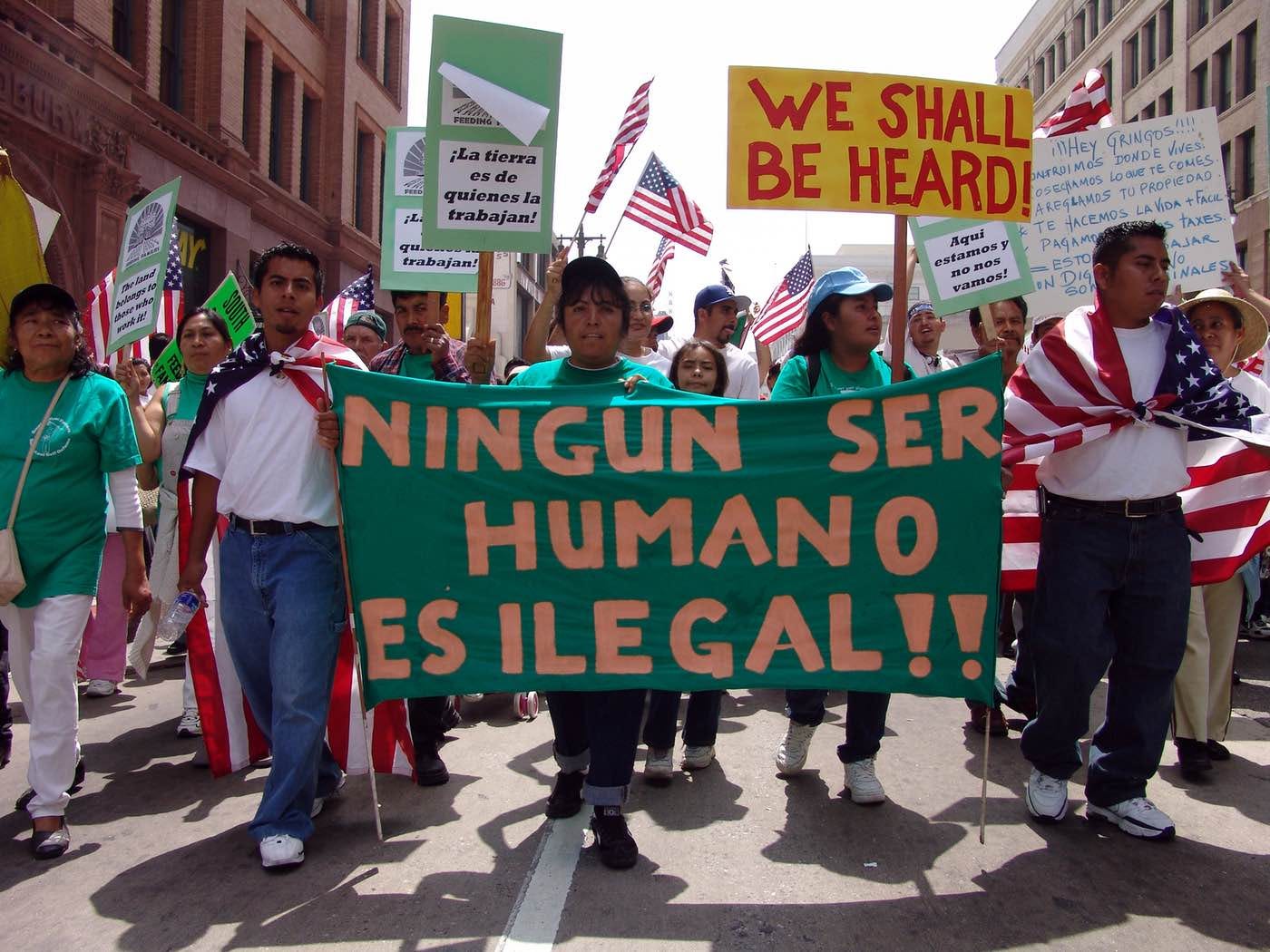
Everyone looking to stop ICE today has a lot to learn from the explosive mass movement that culminated in the “Day Without an Immigrant” on May 1, 2006. The spark was H.R. 4437, the Sensenbrenner bill, which passed the House of Representatives on December 16, 2005. Sensenbrenner’s bill would have made it a felony for immigrants not to have papers, while also criminalizing acts of support and solidarity.
The threat was clear and the response spread fast. As one Los Angeles protest sign put it, “You’ve kicked a sleeping giant.” In the spring of 2006, between 4 and 5 million people marched in over 160 cities. And on May 1, over a million people walked out and poured into the streets across the country. Ports slowed; classrooms emptied; restaurants, shops, and job sites went short-staffed or dark. Chris Zamora, a marcher in Los Angeles, described what that collective power felt like on the ground: “It gives me chills to be a part of it. Thirty years from now, I’ll look back and say, ‘I was there.’”
The mass marches and economic disruption worked: Sensenbrenner’s bill was killed by the Senate in late May. It was a historic victory for the immigrant rights movement and the American working class.
History doesn’t repeat, but it is definitely rhyming a lot these days. Sensenbrenner’s nightmarish vision has become a reality under Trump. The good news is that today’s fights against ICE don’t have to reinvent the wheel—we just have to learn from the last time America’s immigrants flexed their power and came out on top. Here are some key lessons from the spring of 2006.
Let Youth Lead
Before May Day 2006 became a national work stoppage, the spark jumped where sparks often jump first: young people. Thousands of high school walkouts erupted across the country in late March, showing millions that non-violent disruption was possible.
Youth catalysis is a common pattern in social movements. But this dynamic is especially prominent among immigrants because children of undocumented parents more frequently have papers, more often speak English, and more often feel rooted enough to intervene in American politics. Unsurprisingly, one study found that over 51% of May Day participants were between the ages of 14 and 28. A
...This excerpt is provided for preview purposes. Full article content is available on the original publication.