Engraving Across Time
Welcome! We’re here with another issue of the Animation Obsessive newsletter. And, this Thursday, we’re talking about a rare technique.
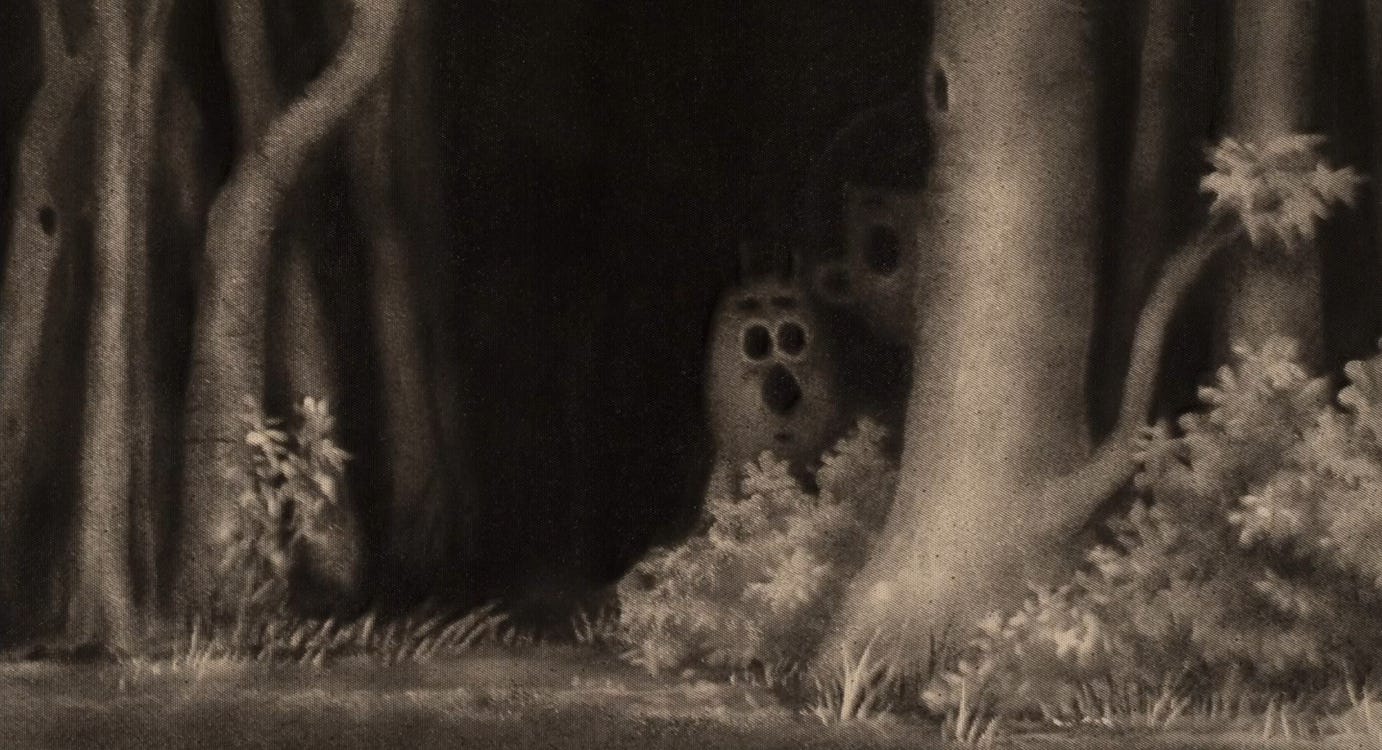
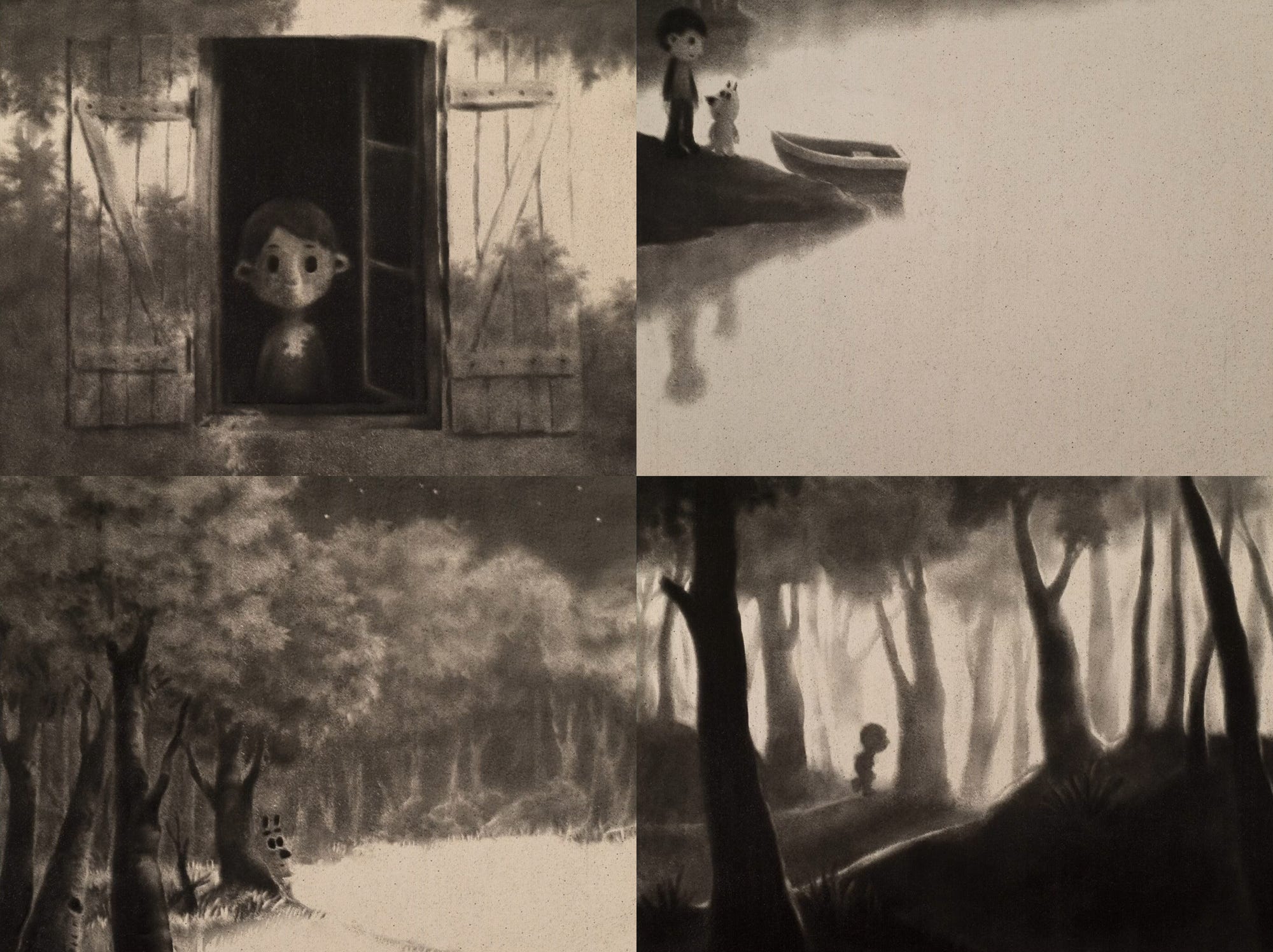
The Night Boots has been a big winner on the festival circuit this year, and the hype is earned. It’s a children’s film about a boy who sneaks out of his room and into the woods one night. His companion on the adventure is a small monster — a harmless one. They spend a low-key, magical, surprisingly moving few hours outside.
The film comes from France, from animator Pierre-Luc Granjon. He went for something that doesn’t match the times, purposely. “It is important to keep tenderness alive even when so many things seem [to be] going the wrong way,” he recently said.1
Key to The Night Boots’ special feel is its look. It’s abnormal. Everything’s in warm grays, and there’s a softness to the edges and a depth to the shading. Lines are absent: instead, Granjon rendered his cartoony designs in a painterly way. He got results that feel like great children’s book illustrations.
What allowed him to do it was a pinscreen.
Few people have seen a pinscreen in person. Only a handful exist — Granjon was already a professional when he ran into his first one. Yet he was drawn to “this object that seemed to sculpt and animate shadow and light,” he said. After the French government bought a pinscreen and had it carefully restored in the 2010s, Granjon was able to study the method and create a pinscreen short. The Night Boots followed.2
Pinscreen animation is a language with few speakers. France’s government is trying to keep it alive. It’s a cultural treasure — one that originated in the country.

This excerpt is provided for preview purposes. Full article content is available on the original publication.