How Hungary Became Putin’s EU Favorite
Deep Dives
Explore related topics with these Wikipedia articles, rewritten for enjoyable reading:
-
Fidesz
1 min read
The article centers on the transformation of this party from a liberal youth movement to an authoritarian right-wing force under Orbán. Understanding Fidesz's full history provides essential context for how Hungary's political trajectory shifted.
-
Hungarian Revolution of 1956
15 min read
The article mentions Hungary's 1989 independence declaration on October 23rd—a date deliberately chosen because it was the anniversary of the 1956 uprising against Soviet control. This historical parallel illuminates Hungary's complex relationship with Russian influence.
-
Illiberal democracy
1 min read
The article describes Hungary becoming 'more illiberal' and warns of 'backpedaling on Western liberal values.' Orbán himself has championed 'illiberal democracy' as a governing philosophy, making this concept central to understanding Hungary's political model.
Featured comment: The Counteroffensive was the first (and only) Substack I subscribed to. I make a point of being careful about how many subscriptions I have as they can really add up. But in an era where deep and quality journalism is increasingly seen as an anachronism of the past, outlets like the Counteroffensive are more important than ever. I just wish there was a way to magnify and amplify the incredible work you do. Keep it up!
By our subscriber Rob
Political liberalism, human rights, freedom of speech — not phrases you’d expect to hear in Viktor Orbán these days, right?
But those were the exact ideals embraced by István Hegedűs and other early members of the political party Fidesz when they initially joined with Orbán back in 1988, when it was just a youth organisation.
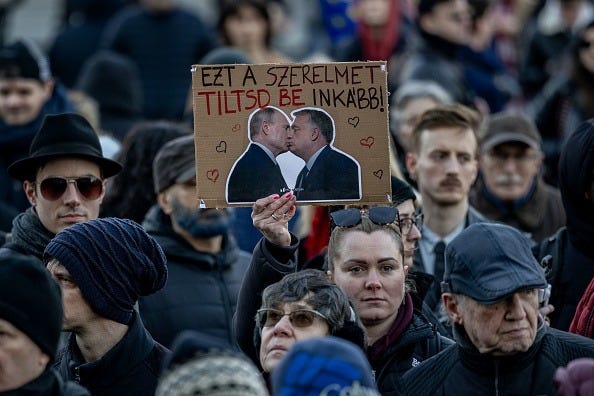
Orbán’s ties with Putin makes him the biggest EU antagonist of Ukraine, even with a number of other countries moving forward with Kyiv’s effort to join the European bloc. It’s this antagonism that made Hungary an ideal location of the recently-canceled Trump-Putin summit.
Hungary’s story is a warning of how easy it is to backpedal on Western liberal values. Countries that rely on Russian natural resources risk following Budapest’s example, sliding toward authoritarianism.

Hegedűs once hoped that democracy in Hungary would be reborn, but over time, he could barely recognize what was left of the party he once connected to.
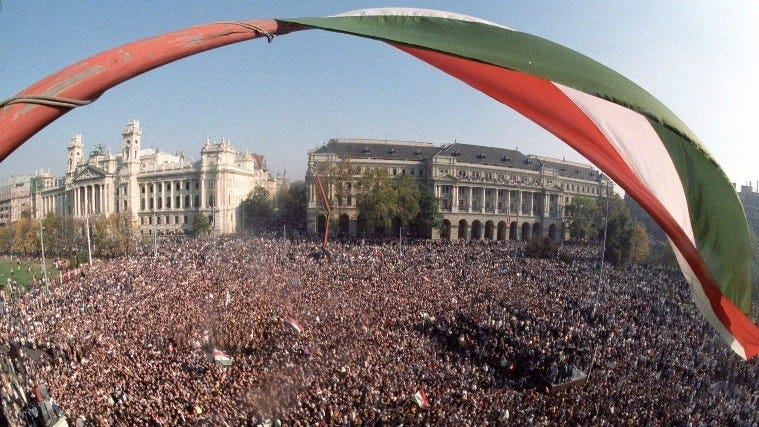
The internal split within the party over shifting from a liberal-centrist vision to a right-wing one forced István to leave in 1994 and never return to parliament.
After that István had to watch from the sidelines the growing popularity of Fidesz. The country ultimately selected Orbán as prime minister, who spread nationalist narratives and made his country more illiberal and pro-Russian.
After the paywall:
Why István left the Fidesz Party;
How Orbán gradually turned into a far-right authoritarian;
Hungary as a free zone for dictators in Europe
The opposition growth in Hungary and why it’s important for Ukraine.
This excerpt is provided for preview purposes. Full article content is available on the original publication.