GPT-5 Set the Stage for Ad Monetization and the SuperApp
To many power users (Pro and Plus), GPT5 was a disappointing release. But with closer inspection, the real release is focused on the vast majority of ChatGPT’s users, which is the 700m+ free userbase that is growing rapidly. Power users should be disappointed; this release wasn’t for them. The real consumer opportunity for OpenAI lies with the largest user base, and getting the unmonetized users who currently use ChatGPT infrequently in their day-to-day to indirectly pay is their largest opportunity.
Analysts focused on the model capabilities are missing the much larger context of network effects that ChatGPT is gaining quickly. In November of 2023, ChatGPT wasn’t even in the top 100 websites; now it is number 5. Larger than X/Twitter, Reddit, Whatsapp, Wikipedia, and quickly approaching Instagram, Facebook, Youtube and Google. On the top 10 list, every single property is much older than ChatGPT.com, and the sheer number of unmonetized users is staggering.
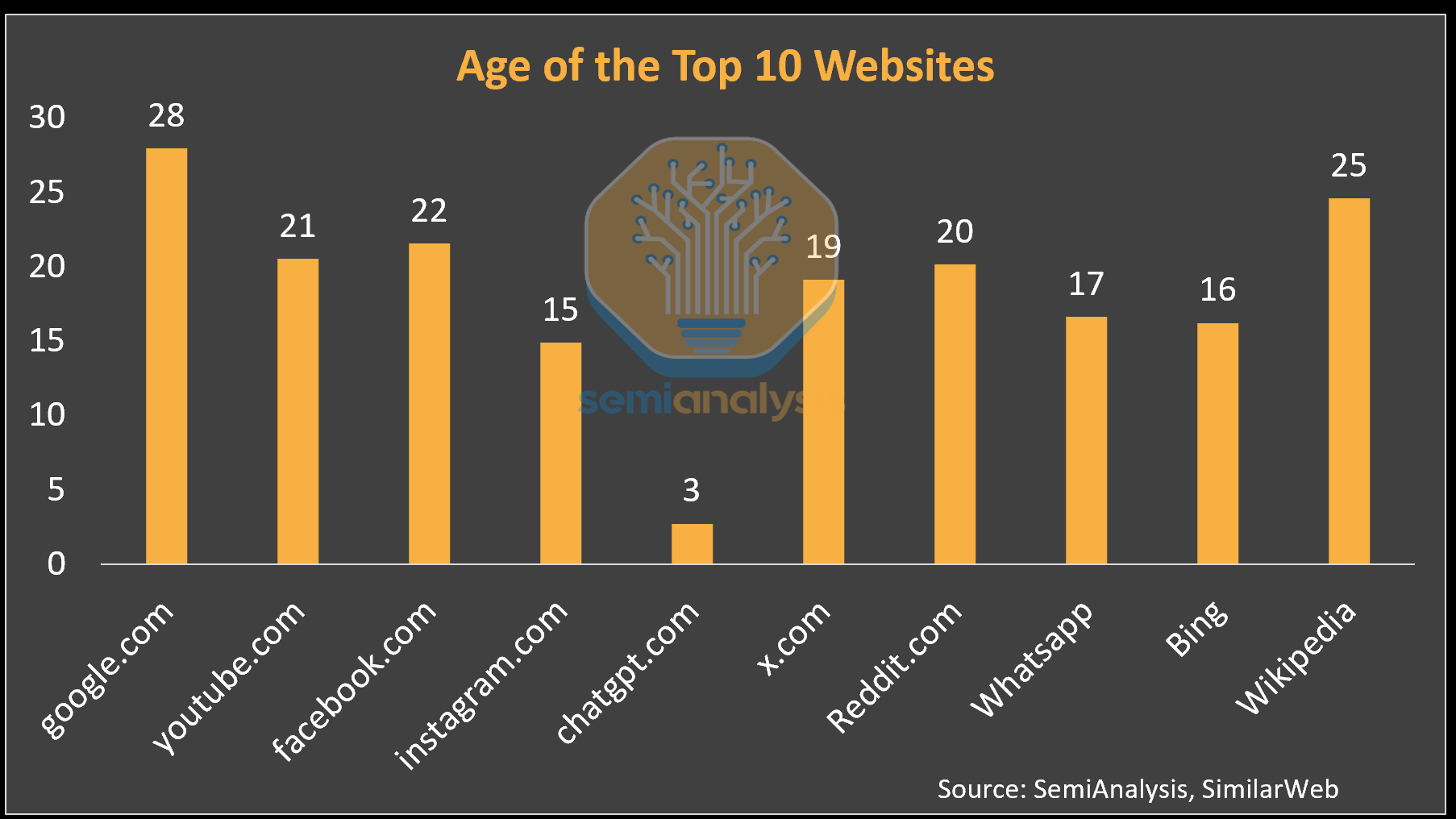
But that changes with GPT-5. OpenAI is laying the groundwork to monetize one of the largest and fastest-growing web properties in the world, and it all begins with the router.
The Router is the Release
On OpenAI’s release website, the second paragraph is about the “One United System,” specifically focused on the router. The wording is instructive.
GPT‑5 is a unified system with a smart, efficient model that answers most questions, a deeper reasoning model (GPT‑5 thinking) for harder problems, and a real‑time router that quickly decides which to use based on conversation type, complexity, tool needs, and your explicit intent (for example, if you say “think hard about this” in the prompt). The router is continuously trained on real signals, including when users switch models, preference rates for responses, and measured correctness, improving over time. Once usage limits are reached, a mini version of each model handles remaining queries. In the near future, we plan to integrate these capabilities into a single model.
The router serves multiple purposes on both the cost and performance side. On the cost side, routing users to mini versions of each model allows OpenAI to service users with lower costs. On the performance side, it will enable many users to use thinking aka CoT (Chain of Thought) reasoning for the first time. Over 99% of the free users have yet to interact with a thinking model like o3, and for the average user, ChatGPT just got a huge
...This excerpt is provided for preview purposes. Full article content is available on the original publication.